And there were in the same country shepherds abiding in the field, keeping watch over their flock by night. And, lo, the angel of the Lord came upon them, and the glory of the Lord shone round about them: and they were sore afraid. And the angel said unto them, Fear not: for, behold, I bring you good tidings of great joy, which shall be to all people. For unto you is born this day in the city of David a Saviour, which is Christ the Lord. And this shall be a sign unto you; Ye shall find the babe wrapped in swaddling clothes, lying in a manger. And suddenly there was with the angel a multitude of the heavenly host praising God, and saying, Glory to God in the highest, and on earth peace, good will toward men. And it came to pass, as the angels were gone away from them into heaven, the shepherds said one to another, Let us now go even unto Bethlehem, and see this thing which is come to pass, which the Lord hath made known unto us. And they came with haste, and found Mary, and Joseph, and the babe lying in a manger. And when they had seen it, they made known abroad the saying which was told them concerning this child. (Luke 2:8-17)
There are many who would try to tell you that Jesus was not a real historical figure. There are also those who would tell you that Jesus was not a real man, who was flesh and blood. This belief is associated with Docetism, it is an early Christian heresy. Some churches in the Oneness Pentecostals and Unitarians stress the divine, spiritual nature of Jesus. What the gospels give us is several eyewitness accounts to the birth, life, death, and resurrection of a real true to life, flesh and blood man, who was of divine origin. He was not a creation of man, nor of God, rather he is God. The gospel of John says that he is the very word of God who created all things. Christmas is our remembrance of when God came down and dwelt among his people, and then laid himself down as a sacrifice for the sin of man. Once this penalty was paid. He (Jesus Christ) picked up his life and returned to his throne at the right hand of the Father. Make no mistake, these things happened.
There are also several other witnesses concerning Jesus, that are extra-biblical. There are historical accounts from ancient Roman and Jewish historians and official. These accounts corroborate the existence of a real man who is named Jesus. These documents support the gospel accounts of the crucifixion of Jesus under Pontius Pilate. They document the early growth of the church and their early belief in the deity of Jesus.
Flavius Josephus (Jewish Historian, c. 90 AD): Mentions Jesus, James (his brother), and reports of him as the Messiah, aligning with Gospel accounts. [1]
This is the approximate time that many believe that the Apostle John wrote his 3 letters and the Revelation of Jesus Christ.
Tacitus (Roman Historian, c. 110 AD): Confirms Jesus’ execution by Pilate and the early Christians’ worship of “Christus”. [2]
Pliny the Younger (Roman Governor, c. 112 AD): Wrote to Emperor Trajan about Christians worshipping Christ as a god, confirming his historical reality. [3]
Mara bar-Serapion (Syriac Philosopher, c. 73 AD): Wrote about the Jews killing their “wise king,” connecting it to the fall of the Jewish kingdom. [4]
This is the time shortly after most of the New Testament letters were written and would have been in deep circulation in the Christian communities
Lucian of Samosata (Greek Satirist, c. 180 AD): Sarcastically noted Christian’s worshipping “that crucified sophist,” confirming his followers and crucifixion.[5]
So, the Roman Empire, Jewish historians, and Greek philosophers and satirists knew that Jesus was born, dies on a cross, and was believed to be resurrected. They knew that he was a physical man who was born, and that he did die. They may not have believe that he was also divine, however, they knew that others believed in the resurrection and the divinity of Jesus Christ.
Among the gospel accounts, we have Luke. He was a physician who was a close companion to Paul, who is an Apostle of Jesus Christ. I say “is” because the gospel of Mark states, He (God) is not a God of the dead, but the God of the living. (Mark 12:27, emphasis mine)
Luke is the author of the Gospel of Luke and the Book of Acts. He was not an eye-witness. But apparently for Theophilus he undertook this query into the truth claims of the Apostles by interviewing eyewitnesses and conducted thorough research. Under the direction of the Holy Spirit, he wrote an orderly, accurate account for a Gentile (non-Jewish) audience of the actions and beliefs concerning Jesus of Nazareth. He found ample evidence and credibility of the witnesses to put his name, reputation, and life on the line for the biography and historical record he produced.
This is why Luke speaks with full confidence and authority when he writes.
Forasmuch as many have taken in hand to set forth in order a declaration of those things which are most surely believed among us, Even as they delivered them unto us, which from the beginning were eyewitnesses, and ministers of the word; It seemed good to me also, having had perfect understanding of all things from the very first, to write unto thee in order, most excellent Theophilus,That thou mightest know the certainty of those things, wherein thou hast been instructed. (Luke 1:1-4)
Luke tells us that the things he has taken down and proclaimed to us are the things that are most assuredly believed by the followers of Jesus Christ. This is resemblant of his mentor and fellow servant Paul, who wrote the Corinthians saying, “For I have received of the Lord that which I also delivered unto you…” As Paul, Luke has given us a trustworthy testimony of Jesus Christ.
Photo by u041cu0438u0445u0430u0438u043b u041au0440u0430u043cu043eu0440 on Pexels.com
Concerning the manuscripts, there are vast numbers of copies of manuscripts containing various parts or all of Luke. Papyrus 75 (P75) contains large portions of the writings of Luke and John which dates back to the 2nd or 3rd century. Codex Sinaiticus and Vaticanus are fourth century manuscripts that offer an almost complete witness of the New Testament including Luke. We can trust the transmission of this gospel account through history with these evidences of preservation.
We can trust the gospel of Luke. It tell us a lot concerning the birth of Jesus the Christ. It tells us that he was born in the city of David (Bethlehem). His father Joseph was of the lineage of David and because if a census he was required to return to his familial home. This caused the fulfilment of prophecy where it tells us the messiah will come out of Bethlehem. Luke’s gospel account tells us that on the same night that Jesus was born, angels appeared to nearby shepherds.
Something you may not know about these nearby sheep and the proximity of Bethlehem to Jerusalem. But Bethlehem is just a short walking distance to Jerusalem and to the Temple. The “Tower of the Flock” is located near Bethlehem and was historically linked to the raising of sacrificial animals… suggesting that the flocks were nearby. For the Passover the lambs for the sacrifice for the sin offing had to be without blemish. Tradition tells us that these shepherds near Bethlehem were watching these flocks of lambs intended for Temple sacrifices. How fitting that theses angels were sent to the Shepards, whose duty was to watch over the lambs of God.
John the Baptist declared two times that Jesus is the Lamb of God which takes away the sin of the world (John 1:29). No this was no coincidence and we must see that this is revealed in this gospel for our benefit, so that we may believe on Jesus as the Lamb of God. As Paul put it, “Blessed be the God and Father of our Lord Jesus Christ, who hath blessed us with all spiritual blessings in heavenly places in Christ.” (Ephesians 1:3) We can now get a little understanding why the angels then sang their next report with joy and gladness, scripture:
And suddenly there was with the angel a multitude of the heavenly host praising God, and saying, Glory to God in the highest, and on earth peace, good will toward men
God has sent his son, in the flesh to do what we could not do. He would be the spotless lamb, a lamb without blemish. What man could not do because all men are already condemned under sin, Jesus could do because he was not tainted by original sin. Many believe that it is impossible for a men to not sin. Yet God requires it as though it is possible.
In the Gospel of John we are told of a woman who was caught in adulty and when Jesus forgave her. John 8:10-11 reads:
When Jesus had lifted up himself, and saw none but the woman, he said unto her, Woman, where are those thine accusers? hath no man condemned thee? She said, No man, Lord. And Jesus said unto her, Neither do I condemn thee: go, and sin no more.
Yet we still have this issue with sin. Because of the nature delivered to us from the fall. We were conceived in sin. We were born into sin. We were further conditioned into sin. Sin is all that we have known. We do not even have a reference for what it truly means to be righteous. But Jesus was not conceived in sin. The scripture tell is that the angel told Mary, what you have conceived is from the Holy Spirit and the baby is Holy. This made him spotless from before he was born. He had come to pay the debt for sin for the whole world. In order to do that he had to step into man’s place. Therefore, he had to become a man. Then in his sinlessness, God the Father imputed all our debt unto him. Then he judge him and put him to death. This paid the sin debt. So Jesus did what no one else could do. He removed sin.
Not just a sin, or your past sin. Certainly not just some sins. Instead, John the Baptist tells us that Jesus took away the sin of the world. That is all sin! Sin had been delt with.
1 John 2:2 – And he is the propitiation for our sins: and not for ours only, but also for the sins of the whole world.
1 John 4:10 – Herein is love, not that we loved God, but that he loved us, and sent his Son to be the propitiation for our sins.
John 3:16 – For God so loved the world, that he gave his only begotten Son, that whosoever believeth in him should not perish, but have everlasting life.
This propitiation means that Jesus Christ’s sacrificial death on the cross satisfied God’s righteous anger against sin, appeasing devine wrath and making it possible for mankind to be forgiven and reconciled to God. This act of justice through Christ’s blood atonement demonstrated God’s love while upholding his holiness. This is what led Paul to write the Romans saying:
For all have sinned, and come short of the glory of God; Being justified freely by his grace through the redemption that is in Christ Jesus: Whom God hath set forth to be a propitiation through faith in his blood, to declare his righteousness for the remission of sins that are past, through the forbearance of God; To declare, I say, at this time his righteousness: that he might be just, and the justifier of him which believeth in Jesus. (Romans 3:24-26).
This is why Jesus is the only way to eternal life. This is why Christmas is so important to remember. This is why we need to know that Jesus was not some made of person. This is why we need confidence in the manuscripts. It is because faith comes by hearing and hearing by the word of God. (Romans 10:17) Trust in Jesus and celebrate his birth, loud and proud, in confidence that what you know is the truth. – Amen
The Annals. Vol. Book 15, chap. 44, by Tacitus. Internet Archive, 109.
[1] (Josephus 1987) About a.d. 110. Tacit. Annal. 15.44.—Nero, in order to stifle the rumor, [as if he himself had set Rome on fire], ascribed it to those people who were hated for their wicked practices, and called by the vulgar Christians: these he punished exquisitely. The author of this name was Christ, who, in the reign of Tiberius, was brought to punishment by Pontius Pilate the procurator.
[2] (Tacitus 109) Consequently, to get rid of the report, Nero fastened the guilt and inflicted the most exquisite tortures on a class hated for their abominations, called Chrestians by the populace. Christus, from whom the name had its origin, suffered the extreme penalty during the reign of Tiberius at the hands of one of our procurators, Pontius Pilatus, and a most pernicious superstition, thus checked for the moment, again broke out not only in Judæa, the first source of the evil, but even in Rome, where all things hideous and shameful from every part of the world find their centre and become popular. Accordingly, an arrest was first made of all who pleaded guilty; then, upon their information, an immense multitude was convicted, not so much of the crime of firing the city, as of hatred against mankind. [Source: Annals, Book 15, Chapter 44]
[3] (PBS.org 1998) they assured me that the main of their fault, or of their mistake was this:-That they were wont, on a stated day, to meet together before it was light, and to sing a hymn to Christ, as to a god,
[4] (Jesus Skeptic 2021) A copy of the letter from Mara Bar Serapoin to his son concerning Jesus can be found here.
[5] (Lucianofsamosata.info 2015) Greater discussion on this letter and his comments and the other information available at this site.
And as he passed by, he saw Levi the son of Alphaeus sitting at the receipt of custom, and said unto him, Follow me. And he arose and followed him. And it came to pass, that, as Jesus sat at meat in his house, many publicans and sinners sat also together with Jesus and his disciples: for there were many, and they followed him. And when the scribes and Pharisees saw him eat with publicans and sinners, they said unto his disciples, How is it that he eateth and drinketh with publicans and sinners? When Jesus heard it, he saith unto them, They that are whole have no need of the physician, but they that are sick: I came not to call the righteous, but sinners to repentance.(Mark 2:14-17)
Many in society mistake the calling of Jesus. We tend to do to one extreme or the other. This story is one of those events that people love to use to take their side on “What Would Jesus Do?”.
There are those who look at this story and use it as a basis to say that Jesus loves everyone. They would not be in error to say that. These are also those who would say that Jesus accepts us the way we are. They would not be in error to say this either. In Matthew Jesus said, “They that be whole need not a physician, but they that are sick.” (Matthew 9:12, emphasis added). Keep in mind that the purpose of the physician is to make one well, not to leave a person in sickness and death. In addition, I want you to remember what Jesus said to Levi. He saw Levi at the seat of customs. He saw Levi in his sin, and going about his life, doing what Levi does. He say Levi heading to death because of his lifestyle. Then he called Levi and said, “Follow me”.
Jesus’ calling of Levi recorded in Luke 5:27-32 gives us a similar tale. Jesus saw Levi at the seat of custom. The seat of custom was a booth that was set up in a particular place where the taxes to Rome could be paid. It was near the city gate so that those who passed through the gates could easily be levied. Those who collected the taxes were referred to as publicans. They were despised by the Jews because they worked for the occupying government of Rome, and they were seen as traitors to their people and thieves. They were rightly seen as oppressors. Through their efforts the local garrison was funded at the expense of the occupied people.
Levi (also known as Matthew) was one of these Jewish tax collectors who worked for the Roman government. He was considered ceremonially unclean because of his association to the pagan government. In addition, no good Jew would be found socializing with such a vile traitorous person. As a Jew he was also raised up to know God. However, because of his occupation and the resulting stigma he was not allowed to enter the synagogue. He was an outcast to his own people, and quite possibly to his own family.
Like all tax collectors he has a reputation for being a thief. This is because in addition to the taxes collected, the collector could also keep any excess revenue they collected. This was considered their wages by the occupation forces of the Roman Empire. Tax collectors were heavy handed and were authorized to use force, the threatening of imprisonment, slavery, and in some cases execution for non-payment. The fact that Levi could host such a great feast to welcome Jesus and to show him off in front of all his friends is evidence that Matthew was good at his job. Levi would have been properly viewed as an extortioner of his own people. The combination of all of these things would mean that the only people that Levi could associate with were people who were like himself, or worse.
Levi (who would be Matthew), evidently did have a desire somewhere in his heart to know God. This account does not tell us much about Levi’s secrets, but one thing is that Jesus knew his heart was seeking. Jesus came into this crowded area that was full of people trying to see him. Matthew knew that he could not dare to come to see the prophet from Galilee that everyone was talking about. But he had a desire to speak with him. But he knew that he was unclean and there was no way that a prophet would speak to him, a sinner beyond redemption.
But he did speak to him. Jesus came for Matthew. Jesus looked right at him, and said, “Follow me…”. Matthew’s response was immediate. He left what he was doing and followed. He was excited and joyous that Jesus had chosen to speak to him. The biggest news maker since John the Baptist was here and wanting to eat at his house. So, he did what every young hotshot would do. He had a party. He invited everyone he could. He wanted everyone to see his guest.
Jesus and his disciples were now eating and drinking with sinners. They were with the rejects of proper Jewish society. These were the dregs who everyone looked upon as unredeemable. Even they themselves has believed that they were just too broken for God to love. What Jesus saw was the same thing that he saw in the Garden of Eden… Adam was hiding in shame. He was naked and afraid. God sought him out, picked him up, and clothed him. Adam deserved death, but God showed mercy to Adam and delayed the onset of his death. He even promised him that he would redeem Adam back to himself (God) in Jesus. This was a mystery that Jesus was beginning to reveal. How the Son of God would become the Lamb of God who takes away the sin of the world. Therefore, redeeming Adam and all of his descendants who would believe on Jesus as the Christ.
In this crowd at Levi’s home was undoubtedly a mixture of Jews and Gentiles. People from all walks of life, some important, some nobody knew their names. All were lost and needing to see the light, they all needed redemption. The mystery is finally revealed to us in full in the writings of Paul’s gospel. Paul charges that regarding sin, there is no difference between Jew and Gentile.
Romans 3:9-10 – What then? are we better than they? No, in no wise: for we have before proved both Jews and Gentiles, that they are all under sin; As it is written, There is none righteous, no, not one:
Romans 3:29 – Is he the God of the Jews only? is he not also of the Gentiles? Yes, of the Gentiles also:
According to this Apostle, there is only one God, he the God of all people. God created man (Adam), and since all men come from Adam, then God is the God of all men, the only God.
For the grace of God that bringeth salvation hath appeared to all men (Titus 2:14)
But not as the offence, so also is the free gift. For if through the offence of one many be dead, much more the grace of God, and the gift by grace, which is by one man, Jesus Christ, hath abounded unto many. (Romans 12:15)
There is the mystery, that one man brought sin in the world and it infected everyman since. In order to kill the infection and heal all of men, then if would take one man. This man would have to be sinless in order to do the job. Since no man can be sinless, it would have to be that God would become a man. Live sinlessly and pay the penalty for sin (death) so that Adam and his children could live with God. This is why Jesus is the only way to God.
Those who are highly religious cannot see the unfolding of the mystery in our daily lives. Our text reveals false piety. “And when the scribes and Pharisees saw him eat with publicans and sinners, they said unto his disciples, How is it that he eateth and drinketh with publicans and sinners?” How quick are we to forget that WE are only here because of the mercies of God? Sometimes we forget that we could not earn our own way. We had to have Jesus come to us where we were. He had to call us out of our sinful lusts and evil desires. He is the one who had to show the light upon our path and gently guided us to the safety of his shelter. He is the physician that healed our souls form the damages of sin.
The Psalmist wrote,
Remember, O Lord, thy tender mercies and thy lovingkindnesses; for they have been ever of old. Remember not the sins of my youth, nor my transgressions: according to thy mercy remember thou me for thy goodness’ sake, O Lord. (Psalm 25:6-7)
O Lord, let us never be so cold hearted to forget the redemption we have at the suffering of your holy servant, and the blood that he has shed for us all.
Jesus told the scoffers, They that are whole have no need of the physician, but they that are sick: I came not to call the righteous, but sinners to repentance. It is the sick who need the doctor, not those who are well. When we see a person who is diseased, do we tell them to turn away and to heal themselves before they can come to the doctor? Do we tell the blind to make your eyes whole so you can see the physician? No, we do not. We have urgent care clinics, emergency rooms, ambulances, and medivac aircraft for those who need such urgent care.
These hypocrites were put in those places and given those offices that they might guide those lost men, women, and children to God, not turn them away. They were to educate them on who God is, what his requirements were, but also to treat the wounded, anoint the sick, and pray for the dying.
But back to those who would say, What Would Jesus Do? Let’s see what he did when he say Levi. He said, “Follow Me”. Then he told the Pharisees, I have come to “call… sinners to repentance.”. Yes, Jesus met Levi in his sin, but, he did not leave Levi where he was. Jesus called him out of his sin. He called him to Repent, and to Follow. He called him to turn away from his old life and his old manner of living, thinking, believing. He called him to a new life. He called Matthew to follow his teachings. Jesus said, “Take my yoke upon you, and learn of me; for I am meek and lowly in heart: and ye shall find rest unto your souls.” (Matthew 11:29) He called him to be discipled. Not to just make a confession of faith, but to act on that faith in following him and submitting to his teachings.
Jesus expected Levi to accept the truth of God. He expected Levi to die to his old sinful life. Paul wrote, “Mortify therefore your members which are upon the earth; fornication, uncleanness, inordinate affection, evil concupiscence, and covetousness, which is idolatry.” (Colossians 3:5) Jesus expected Mattthew to live in the newness of the righteousness of God in him, Jesus. Like a good physician expects his good patient to trust his diagnosis and follow his treatment plan, Jesus expects you to trust in him. You too can have a good prognosis if you obey the Great Physician, Jesus Christ.
Let us daily give thanks to Jesus Christ our God that he is our healer. He is the one who called us out of darkness and death into his eternal light. Let us no more walk in the bondage of sin that he delivered us out of. Let our hearts say, Yes Lord, you are truth, you will be done in me as it is in heaven.
Islamic Apologist have made the claim that Jesus Christ was not the Son of God, nor God himself. They acknowledge that Jesus was a messenger of God. They equate him to Moses and other prophets. But they do not see Jesus as superior nor an equal prophet to Muhammad. Muslims maintain that Jesus was only sent to be a prophet to the Jews. Muhammad was a superior and final prophet that was sent to the entire world. There argument is a simple one that says there is no scriptural evidence that God would become a man. They point out that it is a fallacy of logic for the infinite to also be finite; like making a round square. They have said that there are no Old Testament scriptures that speak of the Son of God to come to the earth as a man. They argue that Jesus himself did not ever claim to be God, and so his disciples are wrong.
However, scripture does speak of God sending his Son as a child of men. Isaiah 9:6 specifically says that “a child is born” to us -to man. The title given to this child, born of men will be “the Mighty God, The everlasting Father”. This prophecy is in direct contradiction to Muslim claims that God never prophesied that he would come in the flesh. Here we see that God said a child is given and his name is God. The child is synonymous with the everlasting Father. This is a fulfilment of an earlier prophecy that God himself gives in the garden of Eden. Where, in Genesis 3, God speaks to the serpent and warns him that the offspring of the woman (child) would bruise the serpent’s head. Interestingly God says that a future descendant of the woman would bruise “his”, the serpent’s head. Not a future serpent offspring, but his head; the serpent that God is speaking to. Tied into this prophecy is the understanding that when the child bruises the head of the serpent, the serpent will also injure the child’s heal. The prophet Zechariah gives a chilling prophecy in relation to this point also. In speaking on God’s behalf he recounts what God said, in saying, “they shall look upon me (God) whom they have pierced” (Zechariah 12:10). This seems ample evidence from the Old Testament prophets that God said that he would not only come in the flesh, but that Israel themselves would look at him after they pierced him. What a clear reference to the crucifixion of Jesus, where they pierced his hands and feet and then stood there looking up at him as he hung on the cross. God hung on the cross while Israel looked upon his pierced hands with the blood of the sacrifice running down his arms. Then there is the sign that God told through the prophet Isaiah. “Therefore the Lord himself shall give you a sign; Behold, a virgin shall conceive, and bear a son, and shall call his name Immanuel.” (Isaiah 7:14) This maiden giving birth to the one who would be titled as Immanuel (God with Us) is the sign that God has given us his son, thus, God IS with us.
To alleviate the prophecy of the virgin birth they are willing to concede that Jesus was a significant prophet, the Messiah, and born of a virgin, but he was just a human servant of God, not divine and not equal to God. This approach is a weakness that even the Muslim can recognize, because they have to admit that God said the sign of his coming would be a miraculous birth that did not involve a human father, but a divine act of God. Once faced with this they will quickly switch to another approach. There next argument is that Jesus never claimed to be God.
As for the claim that Jesus never said that he was God, “In such words”. One can take a philosophical look at the error in this argument first. A claim to be someone or something is not necessary to be legitimate. Legitimacy is derived from a variety of sources. Claiming to be something or someone can give one limited credibility, however, true credibility is never accepted by one’s own mouth. There must be validations to establish the legitimacy of a claim. If someone claims to be a ruler, then they must have subjects to validate it. If one claims to be a teacher, then they must have students. If one claims to be a millionaire, then they must have financial statements. Witnesses, documentation, physical or historical evidence must be present to validate a truth claim. For instance, Muslim tradition attributes many physical miracles to Muhammad including the splitting of the moon, providing water and food for thousands, and healing the sick. However, the Quran itself presents a conflict for those claiming Muhammad performed physical miracles. Some Islamic scholars like Muhammad Asad argue the Quran establishes Muhammad never performed a single miracle other than bringing the Quran itself. It is not philosophically required of even profitable for Jesus to claim to be God. It is however necessary to have real witnesses, documentation, deeds, and historical, archaeological evidence, in this case, to validate the truth claim, that Jesus is God; of these we have no shortages.
Jesus may have never claimed to be the Son of God in the synaptic gospels. Nevertheless, there is no doubt that the author of the gospel of John viewed Jesus as God incarnate. John is very clear on his assertion that Jesus is the very Word of God who existed before the Creation, and who is the very Creator of everything that was created. He is, therefore, God (John 1:1-3). Furthermore, there is evidence in the Gospels that Jesus did make truth claims on being God. He said in John 14:12, “…because I go unto my Father.” . Making a direct claim to be the Son of God. In John 8:58 Jesus said, “Verily, verily, I say unto you, Before Abraham was, I am.” This statement says that he was the God that Abraham worshipped. These are just a few of many statements where Jesus affirmed his deity.
However, Islam does not accept the witness of the New Testament writings. They believe that the writings of the New Testament and especially the gospels have been altered and changed over time. They believe that the belief of Jesus being God was a slow change that occurred over time, after the ascension and after the death of the apostles. Of course, Muslims do not give credit to the Bible as a whole, not even to the New Testament. The Quran declares that the Injil (the Gospel) was revealed as the Word of God. The Muslim speaker, in the debate in question, quickly developed another argument: No matter what the other books of the Bible can say, Jesus is not God in the Gospels
The Quran expressly forbids the worship of Jesus, as Allah (God). Those who say, “Allah is the Messiah, son of Mary,” have certainly fallen into disbelief. The Messiah ˹himself˺ said, “O Children of Israel! Worship Allah—my Lord and your Lord.” Whoever associates others with Allah ˹in worship˺ will surely be forbidden Paradise by Allah. Their home will be the Fire. And the wrongdoers will have no helpers. (Sura 5:72)
So this approach is common for the Muslim to take in controlling the parameters of what they will accept as suitable defenses to their argument. The Muslim has removed the Christian’s right to use his holy scriptures, yet asserts the authority of the Quran over the New Testament as being more reliable. While questioning the sacred scriptures of other religions, Islam cannot accept the scrutinizing of their writings. In continuation of this limiting of the scope, the Muslim apologist then turns to rely on the Textual Criticism theory of scholars like Bart Ehrman, who argues that the concept of Jesus’s divinity evolved over time, and that not even the apostles or the early church believed that Jesus was divine.
Cliffe Knechtle, and Christian apologist has numerous videos where Muslims have used this argument. When asking Cliffe to prove the deity of Chrit, they say that he cannot use the Gospel of John. The reasoning is that the Gospel of John is believed to be the last gospel written, around 90-95 AD and that it has subsequently been altered to agree with the new Christian view of the deity of Christ. This gospel speaks explicitly of the deity of Jesus. However, these anti-Christian apologists believed that all the previous writings in the New Testament did not call Jesus God, and the church did not believe nor worship Jesus as God until way alter and the Gospel of John was rewritten to include the deity for future generations. The reliability of this gospel is called upon, because of its strong announcement of the deity of Jesus.
Therefore, to the Muslim, the Gospel of John becomes a tainted argument for the deity of Christ. Scholars like Bart Ehrman, MDiv, PhD, a New Testament scholar focusing on textual criticism of the New Testament, and the historical Jesus and early development of Christology came about, also claim that the church did not believe in the deity of Christ until the Nicene creed was adopted in 325 AD. Dr. Ehrman commented in his Introduction to his book, How Jesus Became God: The Exaltation of a Jewish Preacher from Galilee,
One of my theses will be that a Christian text such as the Gospel of Mark understands Jesus in the first way, as a human who came to be made divine. The Gospel of John understands him in the second way, as a divine being who became human. Both of them see Jesus as divine, but in different ways.
This is a concept that is made more popular by the book and movie, The Da Vinci Code.
Hence the Islamic apologist will not listen to the Christian who turns to John 3:16 to defend his claim on the deity of Christ. He has deemed this gospel of no use in the debate. This is like telling a mechanic to repair an engine without using any tools. However, there is other evidence that can be used to see that Jesus is the Son of God. The anti-Christian is counting on the ignorance of the average Christian to be unable to overcome this layered attack, which is primarily based on inaccurate fact-finding and blatant lies.
The deity of Jesus Christ is not a last-ditch effort to deceive Jews and Muslims into converting to Christianity. The deity of Jesus Christ is a foundational truth of Christianity. Without the belief in the deity of Christ, there would be no such thing as Christianity. This belief is supported by compelling evidence from the New Testament, including Jesus’ self-proclaimed divine titles, the fulfillment of Old Testament prophecies, miraculous works, Jesus’ exercise of divine authority, historical records, and even archeological finds. The Apostle Peter wrote, “But sanctify the Lord God in your hearts: and be ready always to give an answer to every man that asketh you a reason of the hope that is in you with meekness and fear:”. (1 Peter 3:15) We should have a great understanding of the gospel of Jesus Christ because it is the power of God unto salvation to everyone that believes. (Romans 1:16). The Apostle John said that he wrote his Gospel so that you could believe on Jesus Christ as the Son of God, and in believing you could have eternal life. If we must not use the writings of John to prove the truth of Jesus as the Son of God, then how can we?
When confronted by these Islamic apologists Cliffe Knechtle used some very simple logical arguments. They did not depend upon flowing from one point to another. Which is good, because every time he started to answer a question, the Muslim would interrupt and change the condition of the question or move to another question altogether. Cliffe continued with his answer and incorporated the new question into his answer. His method was that he used an orderly framework on the understanding of Christ, his person, his works, the manner in which he was addressed, and even Jewish customs and practices at the time. This would most definitely include the strong-rooted monotheistic practices rooted in the Mosaic Law. His framework was similar to the HANDS method discussed by Robert Bowman Jr. and Ed Komoszeshi in their book, Putting Jesus In His Place: The Case For The Deity of Christ.
The HANDS method is a simple acronym used to organize your knowledge about Jesus Christ and is quite useful in giving an answer for the reason of your faith in Jesus, as the Son of God. The acronym can be easily adapted to things you already know and understand as a Christian. It can be easily recalled because it also is related to a story most of us know concerning “doubting” Thomas in the Gospel of John.
Bowman explains, “Just as an examination of the nail prints convinced Thomas he was beholding the hands of deity, a closer look at the Bible reveals Jesus shares the HANDS of God.” The acronym stands for: Honors, Attributes, Names, Deeds, and Seat of God. In looking at these you can organize your thoughts into arguments that are not impacted by the changing or rephrasing of the question. At the root of the answer is that Jesus has been given and accepts the same honors that are due God. Jesus also, has the same unique attributes that God exhibits which make him God. Attributes would be things like omnipotence, omniscience, omnipresence, eternal, holiness, and those things which originate from who God is. Jesus also identifies himself with the same names or titles that are only used by God to refer to himself; titles like “I AM”. In scripture Jesus also performs the same deeds that can only be done by God. An example of this would be the healing of the diseased, or the raising of Lazarus from the dead. Then also, Jesus has the same authority of God and therefore shares the same seat as God.
In using this framework an apologist does not need to memorize endless amounts of scripture. The believer in Jesus can find one or two scriptures per category and memorize those. He can even use the spelling out of HANDS in his mind to keep a logical flow to the argument. By way of example the H that represents HONORS we only need to consider how honors are shown to military commanders, foreign dignitaries, or magistrates. For those we see red carpets are rolled out for their entry, displays of military prowess are shown, trumpets and honor guards are presented, and gifts may even be exchanged. An awareness of importance in the dignitary is openly shown.
An example from the Old Testament can be found in Exodus 20:2-3 where God tells the Israelites that they will worship no other God, because he alone is God. This is an expectation of honor that is only due to God. He is supreme and honors will not be given to any other god. In the book of Hebrews, the author tells us that Jesus is more honorable than Moses. Moses was compared to a house, and Jesus as the one who built the house (Moses), so he has more honor than Moses. (Hebrews 3:1-5) When we see a feat of architecture, we might admire the building. However, all the praise and admiration go to the architect who designed and oversaw its construction. The book of Hebrews which was written somewhere between 64-68 AD also tells us that Jesus is to be glorified forever. (Hebrews 13:21) Remember in Exodus, cited above, the Jews were forbidden to worship anyone of anything as God except God himself, yet Matthew records, “Then they that were in the ship came and worshipped him, saying, Of a truth thou art the Son of God.” (Matthew 14:33) The gospel of Matthew was written somewhere around 50-60 AD. This is within 20-30 years of the ascension of Christ. Yet these lifelong Jews who were forbid by the Law of Moses, and the traditions of their ancestor to worship anything, or anyone else as God, worshiped Jesus as God before he was even crucified.
This basic technique of using the HANDS of God (Jesus) to defend one’s belief in the deity of Jesus is quite simple and easy to speak to. The same types of arguments can be progressed through the rest of the acronym to show scriptures from the Old Testament on the Attributes of God. Then you can match those with verses in the New Testament that show the same attribute of God in Jesus. The key thing here is that studying and memorization of the scriptures is principal. Many who do not believe on Jesus prey on the ignorance and unpreparedness of the believer. They exploit the believers lack of knowledge in their own bible and cultural history. To tell people about the Honors, Attributes, Names, Deeds, and Seat of God, you must know God and the honor that is due him. You must know what the attributes of God are. You need to be acquainted with the names and titles of God are and what they mean. You should also recognize the authority that comes with the seat of God. An ambassador cannot represent or speak to things that they do not know. Modern Christians are not the only ones who have been deceived because of their ignorance. From a historical viewpoint it is true that some early people who called themselves Christians did not believe the same things concerning Jesus. The apostle Paul wrote the Galatians concerning these false gospels.
I marvel that ye are so soon removed from him that called you into the grace of Christ unto another gospel: Which is not another; but there be some that trouble you, and would pervert the gospel of Christ. But though we, or an angel from heaven, preach any other gospel unto you than that which we have preached unto you, let him be accursed. As we said before, so say I now again, If any man preach any other gospel unto you than that ye have received, let him be accursed. (Galatians 1:6-9)
Paul said, “so soon removed”, he had recently taught the Galatians the truths about the Gospel of Jesus Christ and the Kingdom of God and could not understand how they could listen to lies presented by others. These false teachers had no apostleship, and no connections with the true church. We suffer from the same issues today. Kieth Green, a Christian evangelist and musician, was fond of saying, “Going to church doesn’t make you a Christian any more than going to Mac Donald’s makes you a hamburger.” Jesus said, “Not every one that saith unto me, Lord, Lord, shall enter into the kingdom of heaven;…”(Matthew 7:21a) From the very 1st Century there were early departures from the true doctrines of the church that included Arianism, Adoptionism, and Docetism. However, this does not mean that the church did not believe that Jesus was the Son of God. Historical evidence for the belief in Jesus Christ’s divinity comes from both biblical sources and early Christian writings, as well as from the actions and writings of the early church, and writings of those who witnessed the church in action. These sources demonstrate that the belief in Jesus’ divinity was not a later development but was present from the earliest days of Christianity. The gospels and even the earliest books of the New Testament attest to Jesus as being worshiped and honored as the Son of God.
The apostle Paul was an avid evangelist who continued to stay in touch with the churches of Asia through letters that taught the doctrines of the church in his absence. His earliest writings of 1 Thessalonians are believed to have been between 49-51 A.D. This puts them within 15 years of the ascension of Jesus Christ into heaven. Prior to the writing of these letters Paul had been spreading the preaching of Jesus being the Son of God throughout the region. He had been to Antioch Syria, Cyprus, Perga, Pisidian Antioch, Iconium, Lustra, Derbe, Pamphylia, and even to Jerusalem by this time, suffering for the cause of the deity of Jesus Christ. Paul had been starved, beaten, stoned, left for dead all for the gospel of Jesus. Surely, he would not have suffered all of this if he did not fully believe in Jesus as God.
In 1st Thessalonians Paul opens with, “…unto the church of the Thessalonians which is in God the Father and in the Lord Jesus Christ: Grace be unto you, and peace, from God our Father, and the Lord Jesus Christ.”, Thus he equates Jesus with God. Later in chapter 3 Paul claims that Jesus is God again, “Now God himself and our Father, and our Lord Jesus Christ, direct our way unto you.” (1 Thessalonians 3:11). Colossians is another letter from Paul written from 60-62 AD where Paul says that Jesus is the Creator (God) who created everything. “For by him were all things created, that are in heaven, and that are in earth, visible and invisible, whether they be thrones, or dominions, or principalities, or powers: all things were created by him, and for him: And he is before all things, and by him all things consist.” (Colossians 1:16-17).
Paul, according to the book of Acts, was originally a zealous persecutor of the church. He was a devout Jew from a sect called the Pharisees. These members of the Pharisees were looked upon with great respect in the Jewish community because they were distinguished by their strict observance of the traditional (Oral) law and the written law (Torah). He was a well-educated man, from a proud tribe of Isreal, in the original line of King Saul. Perhaps even named after him. Saul (Paul in Greek) caused great fear in the Chrisitan, so much that they fled Jerusalem. Then he was given special papers of authority to hunt down and imprison Christians so that they could be brought back for trial. Paul thought that every Christian should be stoned to death for worshiping Jesus as God. Then he met the risen Jesus on the road. This meeting with Jesus changed what Paul believed concerning the deity of Jesus.
Paul, an early convert who at first did not believe in Jesus, came to believe that Jesus is the very God of Genesis who created and who sustains everything. This was written and distributed prior to the writing of the Gospel of John. In the book of Acts (9:20) it tells us that when Paul was converted, “straightway he preached Christ in the synagogues, that he is the Son of God.”. This means from the very start, the church taught that Jesus is the Son of God. Within a matter of months, Paul was persecuting Christians and having them stoned to death because they believed in Jesus as God, and then he himself began to teach the same thing after he met Jesus, as God.
In looking at extra biblical references of believers who believed that Jesus is the Son of God prior to the Nicene creed we can look at the writings of Clement of Alexandria (AD 150-215), Tertullian (AD 150-225), Polycarp (AD 69-155), and Ignatius of Antioch (AD 50-117). These are all church fathers who believed in the deity of Jesus Christ. In 93 AD Josephus, an early Jewish Historian, published the Jewish Antiquities. In a portion of this known as The Tesitmonium Flavianum, Josephus records what many believe is a testimony about Jesus Christ and it shows that 1st Century Christians believed that Jesus was the Messiah and Son of God.
About this time there lived Jesus, a wise man, if indeed one ought to call him a man. For he was one who performed surprising deeds and was a teacher of such people as accept the truth gladly. He won over many Jews and many of the Greeks. He was the Messiah. And when, upon the accusation of the principal men among us, Pilate had condemned him to a cross, those who had first come to love him did not cease. He appeared to them spending a third day restored to life, for the prophets of God had foretold these things and a thousand other marvels about him. And the tribe of the Christians, so called after him, has still to this day not disappeared.- Jewish Antiquities, 18.3.3 §63(Based on the translation of Louis H. Feldman, The Loeb Classical Library.)
This and other comments made by Josephus, do not say that Josephus believed that Jesus was the Christ of the Son of God, but they do demonstrate that early Christians did believe in the deity of Jesus from the very beginning of Church history. Not only that it shows that they believed that Jesus was the fulfillment of prophecy concerning the Messiah, the Son of God. These letters are a small sampling of many more. There are also archeological finds that support the early belief the of the church that Jesus is God.
In the area of Megiddo Prison, a discovery was made in 2005. This discovery has been dubbed as the greatest find since the Dead Sea Scrolls. It is called the Megiddo Mosaic and dates to the early third century A. D. This site is one of the earliest found Christian worship centers in northern Israel. In this mosaic at this location is the earliest known inscription to identify Jesus as God. The inscription simply states it is to the “God Jesus Christ”.
Archeology can also refute the claims of the authenticity and reliability of the Gospel of John. Papyrus 52 (P52) is a witness discovered in Egypt which dates to the early mid-second century A. D.; approximately 125 A.D. This is long before the Nicene Creed. P52 is the oldest surviving manuscript evidence of any canonical text of the Christians. It contains on one side the verses of John 18:31-33 and on the other side, John 18:37-38. In these verses Jesus is on trial before Pilot. Jesus answers Pilots inquiries by stating that he “came into the world for this purpose”. He is fulfilling the will of the Father, he existed prior to his becoming a man. He is the truth of God. He came for this trial, this condemnation, this death on the cross, this resurrection.
When Jesus was asked what was his sign to show that he was the Messiah, he said, “An evil and adulterous generation seeketh after a sign; and there shall no sign be given to it, but the sign of the prophet Jonas:” (Matthew 12:39) Jesus told them that as Jonah was in the belly of the fish for three days and nights, so would the Son of Man (God) be in the heart of the earth (the grave) for three days and three nights. He also told them that if you destroy this temple, he will restore it in three days; meaning the temple of his body. The Apostle Peter recorded the importance of the resurrection in 1 Peter 1:3, “Blessed be the God and Father of our Lord Jesus Christ, which according to his abundant mercy hath begotten us again unto a lively hope by the resurrection of Jesus Christ from the dead.”
Paul reinforces this belief in Jesus being revealed as God and the hope that exists because of the resurrection many times. Once such reassurance is this, “And he is the head of the body, the church: who is the beginning, the firstborn from the dead; that in all things he might have the preeminence.” (Colossians 1:18) As if Paul had to confront the same questions in the past, as are asked today, he wrote the Romans from 56-58 A.D. this testimony,
Paul, a servant of Jesus Christ, called to be an apostle, separated unto the gospel of God, (Which he had promised afore by his prophets in the holy scriptures,) Concerning his Son Jesus Christ our Lord, which was made of the seed of David according to the flesh; And declared to be the Son of God with power, according to the spirit of holiness, by the resurrection from the dead: (Romans 1:1-4)
Paul is very clear about his office and relation to Jesus. He is his servant, his apostle. He was sanctified by God to share his gospel, the gospel of Jesus Christ. He is also clear that the gospel of Jesus that includes that he is the Son of God come in the flesh, crucified, buried, and resurrected was all foretold in the scriptures of what we call the Old Testament. Paul believes these things and these are very evidently things that he has been teaching from the beginning.
To preach a false gospel and Christ is to be damned (Galatians 1:8-9) If your Christology is not correct them you are not saved. Salvation comes from believing in Jesus as Christ and as the Son of God and the shedding of his blood for the atonement of sin. John 20:31 states, But these are written, that ye might believe that Jesus is the Christ, the Son of God; and that believing ye might have life through his name. This is why the Muslim seeks to remove the Gospel of John from the discussion of the deity of Christ. Because it is written that you might believe, and in believing, you have eternal life. Bless the Lord that God has recorded the truth in other parts of scripture, in historical testimonies, in archaeology, and in the hearts of men who believe.
The Apostle Peter recorded, “Simon Peter, a servant and an apostle of Jesus Christ, to them that have obtained like precious faith with us through the righteousness of God and our Saviour Jesus Christ:” (2 Peter 1:1). Clear words from Peter, a 1st hand witness to Jesus’ ministry, confirming his belief that Jesus is God and Savior. Paul, passed down to a young pastor Titus, “Looking for that blessed hope, and the glorious appearing of the great God and our Saviour Jesus Christ;” (Titus 2:13). Paul wanted to confirm the faith of this pastor and teacher that Jesus is God and Savoir.
The Deity of Jesus Christ is defensible. It is a true testimony that is given by the Holy Apostles from before Jesus was crucified. It is a true testimony given by the earliest of Jesus’ disciples as recorded in the Acts of the Apostles and the writings of John, Matthew, Peter, Mark, James, Jude, and Paul. It was believed and taught by the next generation of Pastors like Timothy and Titus. It was taught by Apollos, Percilla, and many other teachers within the first 10 years of the resurrection of Jesus Christ. Roman officials wrote letters back and forth on how to deal with these kindhearted worshipers of Jesus Christ, who worshiped him as the only God. Archeology shows shrines over a thousand years old that are dedicated to the God Jesus. Then there are the hundreds of written witnesses from the forefathers of the early church, like Clement of Alexandria, Tertullian, Polycarp, and Ignatius of Antioch.
There are those who will refuse to see the truth. Their hearts have been hardened, and their eyes have been blinded. The truth falls upon deaf ears. But to those who are seeking the truth. The truth is Jesus is the Christ, the anointed of God, who is the Word of God, the Lamb of God who was sent into the world to redeem the world. He is God incarnate. Those who want to know God and are willing to hear the truth, and have faith in God, will be rewarded. “But without faith it is impossible to please him: for he that cometh to God must believe that he is, and that he is a rewarder of them that diligently seek him.” (Hebrews 11:6). There comes a point where one has to make a choice to believe the truth, or to reject it. Jesus saith unto him, I am the way, the truth, and the life: no man cometh unto the Father, but by me. (John 14:6)
The letter to the Ephesians was written by Paul around 61 AD. This letter is part of a group of letters that are believed to be written at the time of Paul’s 1st imprisonment in Rome. These letters are affectionately referred to as the Prison Epistles. They consist of Ephesians, Philippians, Colossians, and Philemon. As such they demonstrate the great love that Paul has for the church. Paul’s main concern with these letters is to encourage and further the education of the disciples of The Way to a stronger faith in Jesus Christ. He is not concerned with his own predicament, the coming trial, and ever possibility of his death by execution. In fact, Paul seems to be in expectation of his release and anticipates his return to the mission field.
Ephesus was a very important church for Paul. Christianity probably came to Ephesus via Aquilla and Pricilla when Paul made a short stop there in his second missionary journey recorded in Acts 18:18-19. During Paul’s third missionary journey he made Ephesus a base of operations in Asian Minor, for three years. This was also recorded in Acts 19:10. The city was a strategic city for the region and served as a cultural center for commercial, political, and religious interests. The church at Ephesus was a very influential piece in the spread of the gospel. Paul, then Timothy, and finally John (the revelator) made the city their headquarters.
Other places in Scripture where we hear of Ephesus
But when they knew that he was a Jew, all with one voice about the space of two hours cried out, Great is Diana of the Ephesians. And when the townclerk had appeased the people, he said, Ye men of Ephesus, what man is there that knoweth not how that the city of the Ephesians is a worshipper of the great goddess Diana, and of the image which fell down from Jupiter?
If after the manner of men I have fought with beasts at Ephesus, what advantageth it me, if the dead rise not? let us eat and drink; for to morrow we die.
Unto the angel of the church of Ephesus write; These things saith he that holdeth the seven stars in his right hand, who walketh in the midst of the seven golden candlesticks; I know thy works, and thy labour, and thy patience, and how thou canst not bear them which are evil: and thou hast tried them which say they are apostles, and are not, and hast found them liars:…
Ephesians outlines God’s broader purposes for the gospel: that all spiritual resources given through Christ and his Spirit are for the purpose of building up believers in unity as his body and as his ambassadors.
This Epistle speaks of:
“the riches of His (God’s) grace” (1:7)
“the unfathomable riches of Christ” (3:8)
“the riches of His glory” (3:16)
Believers are called to attain the unity of the faith, the knowledge of the Son of God, to mature to the fulness of Christ, and to be filled with the Spirit.
Riches are based upon
Christs grace (1:2, 6-7; 2:7)
His Peace (1:2)
His will (1:5)
His kind intention (1:9)
His purpose (1:9,11)
His glory (1:12, 14)
His calling (1:18)
His inheritance (1:18)
His power 1:19)
His love (2:4)
His workmanship (2:10)
His Spirit (3:16)
His gifts (4:11)
His sacrifice (5:2)
His strength (6:10)
His armor (6:11, 13)
The main theme of this epistle is God’s eternal purpose to establish his church (bride) for Jesus Christ, his Son.
Paul discusses such doctrines as:
Predestination (1:3-14),
Lordship of Christ over the Church (1:22-23; 4:15-16),
The Church as the Temple of God (2:21-22),
The Mystery of the Gentiles in Christ (3:1-21),
Spiritual Gifts,
The Church as the Bride of Christ.
Through this epistle we get to see the purpose of believers and the church in Christ. We get to understand what the position of the believer is as one who his chosen by the Father and sealed by the Holy Spirit, saved by Grace, united in one body, and equal in the sight of God across racial, ethnic, spiritual, and all human and divine boundaries in Jesus Christ. We were all equally atoned for because we are all in need of the atonement. We are all one son to the Father.
Since we are all equal before God, we have all the need to treat on another in that manner. Paul covers the practices of believers in relation to other believers, Spiritual Gifts, our former lives, evil, the Holy Spirit. He discusses what our home lives should be like, how we should act as both servants and as masters. Paul then discusses the protection of the believers and give us insight as to whome we need protection from, and how we are protected. We should always remember that is it not by our own strengths that we wage war against the evil that opposes God. Instead, we rely on the power of God and the authority of His Word. We should always be prepared for the fight and do everything we can to be prepared, by study and prayer, holding on to the confession of faith. We should be living in truth and righteousness of the gospel of peace. Remembering our salvation is based on the promise of God in Jesus Christ. We should never lose sight of his imminent return and always work to be found faithful upon his return. Watching for his return with all perseverance and supplication, praying for all the saints everywhere.
In the KJV there are:
6 Chapters
155 Verses
3,022 Words
Simple Outline of Letter to the Ephesians by Paul the Apostle
There has been a lot of resurging discussion lately on when Jesus was declared and worshiped as God. It appears that many believe that Jesus was declared God in AD 325. This was recorded at the Council of Nicaea in 325 AD in what has become known as the Nicene Creed.
The argument that many antichrist apologists make from this council meeting, is that the church did not see Jesus as God until 300 years after his death. That is became a part of church doctrine, but the original followers of Jesus and early church did not believe that Jesus was God, and they did not worship him as such. This argument is spread way to easy by those who do not understand history or church doctrine. Unfortunately many Christians do not study their own cultural history, or scriptures and leave themselves vulnerable to such an attack, which can be so easily defeated with the TRUTH.
This council of the Christian church was called by the emperor Constantine I. It was the hope of the emperor to put to rest a problem created in the Eastern church by Arianism. This problem stemmed from a heresy brought about from the teachings of Arius of Alexandria that stated that (Jesus) Christ was not divine but was a created being. The council condemned this as heresy and incorporated the work homoousios. This word is the key doctrinal term that affirms Jesus is the Son of God in equality with the Father. Thus, Jesus is divine. The Nicene Creed is the only ecumenical creed because it has been repeatedly reaffirmed in subsequent church councils, and it is accepted as authoritative by the Roman Catholic Church, the Eastern Orthodox, Church, the Anglican Church, and the Protestant churches of the Lutherans, Presbyterians, and Methodist. Although the Baptists do not subscribe the use of creeds in general, they are in agreement with the affirmation of the Nicene Creed.
The following is the wording of the Nicine Creed as shared by the United States Conference of Catholic Bishops.
The Nicene Creed
I believe in one God, the Father almighty, maker of heaven and earth, of all things visible and invisible.
I believe in one Lord Jesus Christ, the Only Begotten Son of God, born of the Father before all ages.
God from God, Light from Light, true God from true God, begotten, not made, consubstantial with the Father; through him all things were made.
For us men and for our salvation he came down from heaven, and by the Holy Spirit was incarnate of the Virgin Mary, and became man.
For our sake he was crucified under Pontius Pilate, he suffered death and was buried, and rose again on the third day in accordance with the Scriptures.
He ascended into heaven and is seated at the right hand of the Father.
He will come again in glory to judge the living and the dead and his kingdom will have no end.
I believe in the Holy Spirit, the Lord, the giver of life, who proceeds from the Father and the Son,
who with the Father and the Son is adored and glorified, who has spoken through the prophets.
I believe in one, holy, catholic and apostolic Church. I confess one Baptism for the forgiveness of sin, and I look forward to the resurrection of the dead and the life of the world to come. Amen.[i]
Therefore, the edit and resulting creed was not to establish Jesus as the Son of God and divine, but to affirm the belief that already existed in the face of an unfounded heresy. It simply confirmed the truth already accepted by the church.
There are other historical references that show this belief that include the following.
Thales – Palestinian historian – 232-245 A.D.
Tertillian – “Founder of Western Theology”, “Father of Latin Christianity” – 220 A.D.
Titus Flavius “Clement of Alexandria” – Theologian, Philosopher, Teacher – 200 A.D.
Bishop Irenaeus – 185 A.D.
Justin Martyr – author – 150 A.D.
Josephus – Jewish historian – 94 A.D.
These are just a few to show that there are extrabiblical writings showing that the church worshiped Jesus as divine long before the council of Nicene. Perhaps the most compelling arguments that support that the early church believed that Jesus is the Son of God comes from the scriptures themselves. All of the books of the New Testament were written no later than 110 A.D. It is commonly accepted that Jesus was resurrected around the year 33 A.D.
In these:
The gospel of John is believed to have been written as early as 90 – 110 A.D. John 10:30 reveals that Jesus claimed to be God. “I and my Father are one.” It further shows evidence that the Jewish leaders understood this claim made by Jesus (John 8:52-59). Later Thomas, one of Jesus’ disciples who at first doubted Jesus’ resurrection declared that Jesus was his Lord and his God. (John 20:28).
The gospel of Mark is believed to have been written between 64-70 A.D. In his gospel we hear of the Roman Centurian’s believe that Jesus is the Son of God (Mark 15:39)
When we factor in that these gospels and early writings had to be circulated and generally accepted by the early church through public readings, teachings, and personal studies, it is easy to draw the conclusion that the church has always believed that Jesus it the Son of God, divine, and always in existence.
Please, my dearly children, beloved of God and Jesus Christ, our Lord and our God, arm yourself with the truth. Believe upon the name that is above every name, Jesus the Christ. Remember the words of the apostle Paul to the Colossians where he declares that Jesus is the dear Son of God (1:13), “In whom we have redemption through his blood, even the forgiveness of sins:” (Colossians 1:14) Walk in strength of knowledge and in the power of heavenly wisdom. Be at peace and answer the heretic with unwavering faith, love, and hopeful anticipation that the truth will set them free also.
But thou, O Daniel, shut up the words, and seal the book, even to the time of the end: many shall run to and fro, and knowledge shall be increased.
Daniel 12 gives us a great picture of the end-of -the-age, and the deliverance of Israel. In this chapter there is one telling sentence that many scholars say that points a prophecy that is being fulfilled in our very time. That scripture referenced is this verse, Daniel 12:4, where it says. “many shall run to and fro, and knowledge shall be increase”. Some say that this is the telling sign that is bring fulfilled in our generation. The sign of going to and from and the increase in human knowledge. They point out the dynamic speed at which we can obtain knowledge on a subject these days via the internet. With apps like “hey Google”, “Alexis”, “Siri”, and other AI technologies we can find information on anything, and write our own dissertation, or even a book on knowledge that we did not have two minutes ago. It can then be published to the whole world in a matter of seconds. The availability of specialized and advanced training and collage has exploded across the globe. These institutions of higher learning are no long just available to the rich and elite in society, but they have been made accessible to the poor and the meek of societies all over the world.
As a result, before 1900 human knowledge increased at a rate of doubling every century. By the end of WWII human knowledge increased at a rate of doubling every 25 years. Today if is dependent on the field of knowledge, but in general human knowledge doubles every 13 months to 2 years. With the advent of AI, it is expected that we will soon be able to double human knowledge every 12 hours. This could very well be an indicator of the end times that Daniel is talking about.
If you also consider the “to and fro” aspect of the verse, then we can see an increase in the ability of people to travel long distances in shorter periods of time. We even have areas of the globe that were isolated for the entire history of the earth, that are now readily accessible through specialized vehicles and equipment. We have military submarines that have been recorded to go as deep as 1500 m below sea level. The Lockheed SR-71 can reach Mack 3.3 (2,100 mph). Trips around the globe that were once impossible are now completed in minutes. Many saber rattles point to these things as signs of the end times that were spoken of by Jesus and the prophets. These are discussed as signs of the apocalypse on podcasts and prophecy conferences from different corners of the globe. Admittedly, these could be a part of the meaning of the prophecy of Daniel mentioned here.
Scripture often has a dual application, one that we can readily see and one that is deeper in meaning, in context. The entire journal of Daniel is an example of this dual meaning. While we see the workings of how God is sovereign and judges Israel and then delivers them by his grace. That is not all to the story; in the deeper context we see the representation of Babylon as the World System that comes together to enslave Israel. We also see Daniel as a type of Christ who is to overcome the world and bring salvation to Israel from his obedience to the will of the Father. We see the playing out of the war between the antichrist and the Christ depicted in the enslavement of the kingdoms of the world to Babylon, and then the imminent redemption of the world by God through Darius. With all these things in mind, let us examine the context of this passage in Daniel.
First let us get some perspective. Apocalyptic or Eschatology (study of last things) written in the bible was not written to the world. It is written to the Church and to Israel and Judah. They are not intended to be scarry subjects that need to have a cell phone or newspaper in one hand and the scriptures in the other. They are meant as an answer to a question. When and How will you come? They are written as an encouragement. The Revelation of Jesus Christ given through the Apostle John was written during a time of intense persecution of the church. Saints were being tortured to death, martyred for their faith. There question was, when is Jesus going to return? What is going on with the promise? In similar fashion we have the writing of Daniel to Judah. Jerusalem and the temple have been destroyed; Judah is broken. The people have been enslaved and subjected to the rule of foreign gods. Some have been tortured and killed for their faith. The question becomes, where is God? Did he abandon us? When will he avenge his name and deliver his people?
This section of Daniel is only a small part of that answer that is given by God. We cannot pull it out of context of the rest of the book, nor the rest of end-times prophecy. Daniel reveals that God has not abandoned Judah, nor Israel. Jehovah will send a savior to deliver Israel and Judah. He will send them the Messiah. This messiah was prophesied to come through the tribe of Judah. (Genesis 49:10) Before this messiah does come there will be a going of to and from and knowledge will increase. This will be an indicator that the figs are ready for harvest. Jesus himself spoke of these events of the end of days when he said. “Now learn a parable of the fig tree; When his branch is yet tender, and putteth forth leaves, ye know that summer is nigh: So likewise ye, when ye shall see all these things, know that it is near, even at the doors.” (Matthew 24:32-33) Jesus said that we should study and when these things are seen, we should be prepared for his arrival. So we must study the meaning of the text.
The text in question is a follow up on the preceding events. Remember Daniel is speaking to Israel and Judah. The antichrist will come and the lands will be divided. For 3 ½ years the power to divide the people of God will be given to this antichrist and many will be martyred for not bowing down to the foreign god. Then Michael will stand up and the deliverance of Israel and Judah will come. The righteous will be delivered and the wicked condemned. Then the scripture says, “But thou, O Daniel, shut up the words, and seal the book, even to the time of the end: many shall run to and fro, and knowledge shall be increased.”. Later it is repeated, Go thy way, Daniel: for the words are closed up and sealed till the time of the end (Daniel 12:9).
I remember when I was in school and when final exams came. Suddenly I was very interested in what the text of the books said. I needed to know all the information, that I should have already known, and would have known, if I would have studied and listened in class. I know needed the information for the final test, that would determine if I was to be a success or a failure. So the night before the exams I would study very intensely. Flipping through the pages, and the books, reading summaries. My eyes would go “to and fro” in search of any truth I could find to help me to anticipate the questions on the test and to prepare for the final examination. I suspect that this is the true meaning of this passage.
The meaning of this passage and the whole book was sealed until the end times. The understanding of this passage and others would not be comprehendible until the final days. Then people will get serious about seeking the true God. Israel would be willing to lay aside its religion and the ways of the world to seek God himself. They would search the scriptures and reread Daniel to see what they missed. In the end times they would accept a false messiah, and when their eyes were opened to their folly, they would seek out the true Messiah. Their eyes would be opened. What could be the event that opens their eyes? Well the two previous verses talk about the delivery of those whose names are found in the book of life, and the resurrection of the saints. It would appear that the rapture may be the trigger event that alerts the Jews that their messiah did come.
Knowledge is always shown to be from God in the scriptures. (Hosea 4:6-7; Psalms 119:66; Proverbs 1:5,7; 2:6; 9:10;1 Corinthians 12:8; 2 Peter 1:3; Isaiah 28:29) The increase in knowledge would be an increase in understanding of God and his Word. They would search the scriptures like a student studying for the final exam. James, the half-brother of Jesus wrote in his epistle, “If any of you lack wisdom, let him ask of God, that giveth to all men liberally, and upbraideth not; and it shall be given him.” (James 1:5). So just as God seeks those who seek him, when the descendants of Israel ask for understanding, he will give it to them.
They will have their eyes opened by the Holy Spirit and they will see that Jesus is the promised Messiah; that they rejected. They will repent and turn to God. Then God (Jesus) will come to deliver them in righteousness and glory. Jesus said, “And this gospel of the kingdom shall be preached in all the world for a witness unto all nations; and then shall the end come.When ye therefore shall see the abomination of desolation, spoken of by Daniel the prophet, stand in the holy place, (whoso readeth, let him understand:)” (Matthew 24:14-15). Jesus himself refers the Jews to look back to Daniel the prophet, in the last days to gain understanding.
We can certainly see how the common interpretation of this verse, Daniel 12:4, can mean that human knowledge will increase and that our ability to move about the world quicker and more freely would be increased. However, considering the surrounding scripture we cannot make the mistake of interpreting this verse with modern gentile eyes. We can instead take the information already given to the target audience. The target audience is the Jews in captivity and the Jews of the Tribulation.
Its purpose is to encourage them of a day of deliverance by their anointed Messiah. The surrounding text supports that the meaning of the book will not be understandable to Israel until the end is near. Then in the re-study of the book of Daniel, and the prophecies of Isaiah, Ezekeil, Jesus, and other prophets, along with the events unfolding, they will finally understand the truth of Jesus Christ and receive their salvation. We as Christians, can already see these things and we should pray for peace for Israel and their salvation in Messiah Jesus.
The Book of Daniel is found in the Ketuvim (Writings) or the third section of the Hebrew scriptures or in the Prophets of Old Testament of the Bible. It details the events of the prophet Daniel and the various kings that he served under during the Babylonian Exile of the Jews, between 597 B.C and 538 B.C. During this time Daniel served under five different kings (Nebuchadnezzar, Merodach, Belshazzar, Darius, and Cyrus). The book is written in two languages. It starts with Hebrew then in the second to seventh chapters it is written in Aramaic, and then it finishes the final chapters in Hebrew. This is quite telling considering the story begins in Jerusalem, then moves to Babylon, and ends with the Jews returning to Jerusalem. The first 6 chapters contain the accounts of the experiences of Daniel under the first four kings shows Daniel’s faithfulness to God and the influence that he has with the kings because of God. He excels in training, teaching, and in dream interpretation. God delivers him and his faithful friends from death and persecutions. The second half of the book primarily deals with the apocalyptic visions of Daniel and give insight into the period called the 70 weeks of Daniel.
Many see the book of Daniel as a call to faithfulness on part of the people of God. However, it is much more than that. It is an instruction an example of how to be faithful to God in heart and purpose. Daniel and his friends who us what faithfulness looks like, what it feels like, and the source of how to be faithful. This is because the main theme in Daniel is not the faithfulness of Daniel and his friends, but in the sovereignty and faithfulness of God. The faithfulness of God is seen throughout this book; it is in the fiery furnace, the lion’s den, the fulfilment of the prophecies and the predictions of the future Messiah. We see the faithfulness and sovereignty of God in the day-to-day affairs of the Israelites under captivity. We understand that Daniel, Shadrach, Meshack, and Abednego all trusted in the faithfulness of God. They learned this faithfulness from their previous study of God’s Word and the examples of the faithfulness of their own parents.
Unlike other books of the Old Testament, there is no call for repentance from Israel echoing from its verses. Instead, Daniel is concerned with consistency in faithfulness among the believers in Jehovah. Obedience is what God desires, and Daniel is the teacher on this point. Scripture makes a minimum of 38 references to God preferring obedience over any other form of worship. Obedience is required whether under the Law or under Grace. Moses said that to live under the commandments is to be obedient to the Law. Paul and James say that to submit to Grace is to be obedient to the will of God in Christ. 1 Samuel 15:22 tells us that, “to obey is better than sacrifice”. Jesus said, “If ye love me, keep my commandments.” (John 14:15) Grant it that Jesus was still talking to Jews. However, he was looking forward to after his resurrection, when the Holy Spirit would be given. Jesus was looking forward to the dispensation of Grace through his blood sacrifice. See. Romans 5:19. Paul even adds, “Know ye not, that to whom ye yield yourselves servants to obey, his servants ye are to whom ye obey; whether of sin unto death, or of obedience unto righteousness?” (Romans 6:16). Obedience is therefore a demonstration of faith, we call that faithfulness. Therefore, faithfulness (obedience) is a demonstration of faith. Grace must be received in faith, because we who are sinful cannot produce righteousness of ourselves. Grace is a gift from God. Obedience through faith is an acknowledgement of that gift. (Ephesians 2:8-9)
This book is unique in another way, it is the only Old Testament book that is written completely in apocalyptic language. This makes this book an essential part of any study of the end times and especially the study of the Revelation of Jesus Christ written by John the Apostle. As part of the eschatology of Daniel we see the main theology of the sovereignty of God throughout time, from everlasting to everlasting and the outline of how God will be faithful to his promise to redeem Adam.
The everlasting Kingdom of God, ruled at the hands of his Son as conqueror and King of Kings will subjugate and replace the earthy rulers and worldly powers and bring about his millennial kingdom; and a new heavens and a new earth.
Scholars identify four themes found in this book. They consist of: The Sovereignty of God; The Pride of Man; The Coming of the Messiah; and The Ultimate Victory of God. This book is filled with all kinds of hidden gems. For example, we get a glimpse of God’s plan to redeem the gentiles in the redemption of Nebuchadnezzar after his repentance. Therefore, we find in this text that God is not just the God of Israel, but of the whole world. He is ultimately the God who rules the nations, and who formed the whole of Creation.
Key People in Daniel
Daniel the author and prophet
The Five Kings (Nebuchadnezzar, Belshazzar, Darius, Cyrus)
THE JPS TANAKH-1917 (Hebrew Bible) is recognized as the most authoritative and preferred English translation of the Hebrew Bible according to The Jewish Publication Society. For almost a century this has been the prominent English version of the Hebrew Bible. In it Zechariah 13:6 reads, ” And one shall say unto him: ‘What are these wounds between thy hands?’ Then he shall answer: ‘Those with which I was wounded in the house of my friends.’”
The King James reads:
And one shall say unto him, What are these wounds in thine hands? Then he shall answer, Those with which I was wounded in the house of my friends.
The Holman Christian Standard Bible reads:
If someone asks him: What are these wounds on your chest?—then he will answer: I received the wounds in the house of my friends.
The American Standard Bible reads:
And one shall say unto him, What are these wounds between thine arms? Then he shall answer, Those with which I was wounded in the house of my friends.
English Standard Version
And if one asks him, ‘What are these wounds on your back?’ he will say, ‘The wounds I received in the house of my friends.’
Contemporary English Version
And if any of them are asked why they are wounded, they will answer, “It happened at the house of some friends.”
This verse and the context which comes with it, is a clear prophecy to the crucifixion of Jesus Christ. In fact the Gospel of Matthew, Jesus refers to Zechariah 13:7 when he says, “All ye shall be offended because of me this night: for it is written, I will smite the shepherd, and the sheep of the flock shall be scattered abroad.” (Matthew 26:31). This pointing to the crucifixion is clearly indicated in the Hebrew Tanakh (1917) and in the King James Version. However, as we can see with these few samples above, almost every modern translation fails to show the piercing of the hands. This is an important part of the gospel. So important that God mentions it more than in just this passage.
“For dogs have compassed me: the assembly of the wicked have inclosed me: they pierced my hands and my feet.” (Psalm 22:16).
My bones are pierced in me in the night season: and my sinews take no rest. (Job 30:17)
And I will pour upon the house of David, and upon the inhabitants of Jerusalem, the spirit of grace and of supplications: and they shall look upon me whom they have pierced, and they shall mourn for him, as one mourneth for his only son, and shall be in bitterness for him, as one that is in bitterness for his firstborn. (Zechariah 12:10)
Is this not how the serpent beguiled Eve? By taking what God said and twisting it into something similar; but not the truth? Tell me again how it doesn’t matter what translation you are using. How they all say the same thing. Because these do not say the same thing. Were his wounds on his hands, his chest, somewhere between the arms, on his back, or just some unmentioned location (as in the CEV)? This removes one of the most important prophecies concerning the method in which the messiah would suffer.
Psalm 77 is to the chief musician, to Jeduthun and is a psalm of Asaph. Jeduthun and Asaph were Levites and two of three Masters of Music appointed by king David. (1 Chronicles 16:41-42; 25:1-6)
This is an awesome psalm of one crying out to God and having full confidence that his supplications have been heard. There is also a certain amount of spiritual maturity shown in the writer. Right off we see that he is willing to wait for and to accept the will of the Lord. He has full confidence in the Lord and his capabilities, cares, and goodness towards him.
The psalmist starts with a message of pure hope, “I cried unto God with my voice, even unto God with my voice; and he gave ear unto me.” He is very specific. I cried unto God, with my voice, and he listened. What a glorious faith that is, to know that God hears his children when they cry.
We also see the consistency of the prayer made. He says that he prayed hard all night, he ceased not. His soul could not be comforted. He remembered God in his distress, and he complained, he was overwhelmed with is plight. Here in this we see the confidence and confoundment the seeker has, he says that God sees him, he knows all that he does. Even when he sleeps, God knows when he awakes. So there is no mistaking that God knows what vexes his soul. He is confused as to when God will deliver him, or if at all. But he takes comfort in remembering what God has done for him in the past. So that even if God does not deliver him, he still knows that God is good. He is willing to accept the will of the Lord, for he trusts the judgement of the Lord.
In his remembrance of what the Lord has done he remembers that God is the same God who declared his strength to his people in how he delivered the sons of Jacob and Joseph. How he controls the seas, and the storms have no strength against his will. His ways are as unknown as the depths of the oceans. His plans are undiscoverable. His will is above all. Yet he chose to lead his people like a flock by the hand of Moses and Aaron. How beautiful is our God. How perfect is his way.
1 (To the chief Musician, to Jeduthun, A Psalm of Asaph.) I cried unto God with my voice, even unto God with my voice; and he gave ear unto me. 2 In the day of my trouble I sought the Lord: my sore ran in the night, and ceased not: my soul refused to be comforted. 3 I remembered God, and was troubled: I complained, and my spirit was overwhelmed. Selah.4 Thou holdest mine eyes waking: I am so troubled that I cannot speak. 5 I have considered the days of old, the years of ancient times. 6 I call to remembrance my song in the night: I commune with mine own heart: and my spirit made diligent search.7 Will the Lord cast off for ever? and will he be favourable no more? 8 Is his mercy clean gone for ever? doth his promise fail for evermore? 9 Hath God forgotten to be gracious? hath he in anger shut up his tender mercies? Selah. 10 And I said, This is my infirmity: but I will remember the years of the right hand of the most High. 11 I will remember the works of the LORD: surely I will remember thy wonders of old. 12 I will meditate also of all thy work, and talk of thy doings. 13 Thy way, O God, is in the sanctuary: who is so great a God as our God? 14 Thou art the God that doest wonders: thou hast declared thy strength among the people. 15 Thou hast with thine arm redeemed thy people, the sons of Jacob and Joseph. Selah. 16 The waters saw thee, O God, the waters saw thee; they were afraid: the depths also were troubled. 17 The clouds poured out water: the skies sent out a sound: thine arrows also went abroad. 18 The voice of thy thunder was in the heaven: the lightnings lightened the world: the earth trembled and shook. 19 Thy way is in the sea, and thy path in the great waters, and thy footsteps are not known. 20 Thou leddest thy people like a flock by the hand of Moses and Aaron.
What a great place to be. On our knees, pleading our case before God. What a great assurance we have to know that he has bent his ear towards us. He has not simply nodded his head as he reads the morning headlines. He has not just read the summary of the book. He has instead given his full attention. In knowing all that is in our hearts, nothing was assumed. He has cherished every word that slipped through our trembling lips. Every tear cried, every agonizing groan had been felt by God, even my God… our God.
We can rest assure as the psalmist that we have been heard. That our cause has been understood and is under the perfect consideration of the one who is perfect in all of his ways. He who chose to deliver Israel, he who chose to deliver our very souls from sin and death. Surely we can have confidence that no matter what his decision may be, that our best interests are in his heart. Selah…
Psalm 73 starts the 3rd book of the Psalms. It is a Psalm of Asaph. It discusses the prosperity of the wicked, the chastening of the righteous, and God’s view of wickedness. It is easy for us to overlook the goodness of God in our lives. This is because what we think is good to have and to be like, and how to be treated is based on the things we see around us and are taught of in this worldly like.
1 (A Psalm of Asaph.) Truly God is good to Israel, even to such as are of a clean heart.
2 But as for me, my feet were almost gone; my steps had well nigh slipped.
3 For I was envious at the foolish, when I saw the prosperity of the wicked.
4 For there are no bands in their death: but their strength is firm.
5 They are not in trouble as other men; neither are they plagued like other men.
6 Therefore pride compasseth them about as a chain; violence covereth them as a garment.
7 Their eyes stand out with fatness: they have more than heart could wish.
8 They are corrupt, and speak wickedly concerning oppression: they speak loftily.
9 They set their mouth against the heavens, and their tongue walketh through the earth.
10 Therefore his people return hither: and waters of a full cup are wrung out to them.
11 And they say, How doth God know? and is there knowledge in the most High?
12 Behold, these are the ungodly, who prosper in the world; they increase in riches.
So when we see the wicked prosper and how quickly they are rewarded for their evil works, we can become envious of their lifestyles. We see the corruption of the politicians who mock God and steal from the poor and line their pockets, openly violating the laws and yet there seems to be no consequences, no justice. They speak evil of God and of holy things, and yet they are not punished. Their violence is rewarded with great plunder at the cost of the lives of the weak and defenseless.
13 Verily I have cleansed my heart in vain, and washed my hands in innocency.
14 For all the day long have I been plagued, and chastened every morning.
15 If I say, I will speak thus; behold, I should offend against the generation of thy children.
16 When I thought to know this, it was too painful for me;
It seems that the righteous have sanctified themselves in vain. The righteous are plagued and chastised continuously. They are mocked by the corrupted. Victimized by the aggressors and the sinful. In turning the other check the Christian is often forced to face humiliation, physical harm, emotional distress, and even death. When scripture says to present ourselves a living sacrifice, it is often very literal. For the ones who look at the world and how the wicked prosper it seems futile to remain chased. There seems to be no point in remaining innocent of blood. If the payment for sin is so lucrative, then what is the downside? However, when we turn our eyes away from the world and look to the Lord, we see his sanctuary. This is a place of rest, and security. It is a place of safety.
17 Until I went into the sanctuary of God; then understood I their end.
18 Surely thou didst set them in slippery places: thou castedst them down into destruction.
19 How are they brought into desolation, as in a moment! they are utterly consumed with terrors.
20 As a dream when one awaketh; so, O Lord, when thou awakest, thou shalt despise their image.
For God does not see the exploits of the wicked in the same manner as the world does. The Lord tell us in Proverbs, “There is a way which seemeth right unto a man, but the end thereof are the ways of death.” (Proverbs 14:12). The lifestyle that the wicked live in is a slippery slope that only leads to destruction. The very things that they are rewarded with are temporary. They lead them astray, and give them false confidences. The Word of the Lord again states, “Labour not to be rich: cease from thine own wisdom.” (Proverbs 23:4). The wicked are blinded by their own desires. When they finally see their end, it is too late. We see that the Lord does not reward them, he despises the wickedness of their hearts. He leaves them to their own ends. Their end is death eternal. This is the fate of the wicked as recorded in Revelation 21:8 – “But the fearful, and unbelieving, and the abominable, and murderers, and whoremongers, and sorcerers, and idolaters, and all liars, shall have their part in the lake which burneth with fire and brimstone: which is the second death.”
21 Thus my heart was grieved, and I was pricked in my reins.
22 So foolish was I, and ignorant: I was as a beast before thee.
23 Nevertheless I am continually with thee: thou hast holden me by my right hand.
24 Thou shalt guide me with thy counsel, and afterward receive me to glory.
25 Whom have I in heaven but thee? and there is none upon earth that I desire beside thee.
26 My flesh and my heart faileth: but God is the strength of my heart, and my portion for ever.
27 For, lo, they that are far from thee shall perish: thou hast destroyed all them that go a whoring from thee.
28 But it is good for me to draw near to God: I have put my trust in the Lord GOD, that I may declare all thy works.
But the ones who seek righteousness. They are filled through the steady leading of the LORD. For he does chastise in order to correct in love. His chastisement brings wisdom, in the fear of the LORD and the working of his hands. When his flesh is tired and worn out, the LORD is his strength to continue on the way of righteousness, which delivers him from the wrath of God. This grooming by the Lord God is what brings a man to Jesus Christ the righteous. Those who see the value of the sacrifice made for them by the death, burial, and resurrections of Jesus Christ have this righteousness imputed to them. So this very chastisement is a sanctuary protecting us and causing us to continue in righteousness. It keep us close to the heart of God. But those who do not listen to the chastisement of the LORD, they are far from him. They do not fear him. They do not seek his righteousness in Jesus Christ. Instead they follow the god of this world. Instead of seeking eternal peace with God they seek the temporary rewards of this dying world. Scripture calls them idolaters, adulterers who whore themselves out to Satan. All those who whore themselves after the god of this world, they “shall perish”. So as Asaph declares, “it is good for me to draw near to God: I have put my trust it the Lord God, that I may declare all thy works.”. God has provided a pardon and dismissal of your unrighteousness in Jesus Christ, and only Jesus Christ. This is the declaration of the work of God. “For he hath made him to be sin for us, who knew no sin; that we might be made the righteousness of God in him.” (2 Corinthians 5:21)
................... for lovers of ice cream. Your free on line magazine for sweet frozen treats. Recipes, inspiration, artisanal ideas for your delectation.





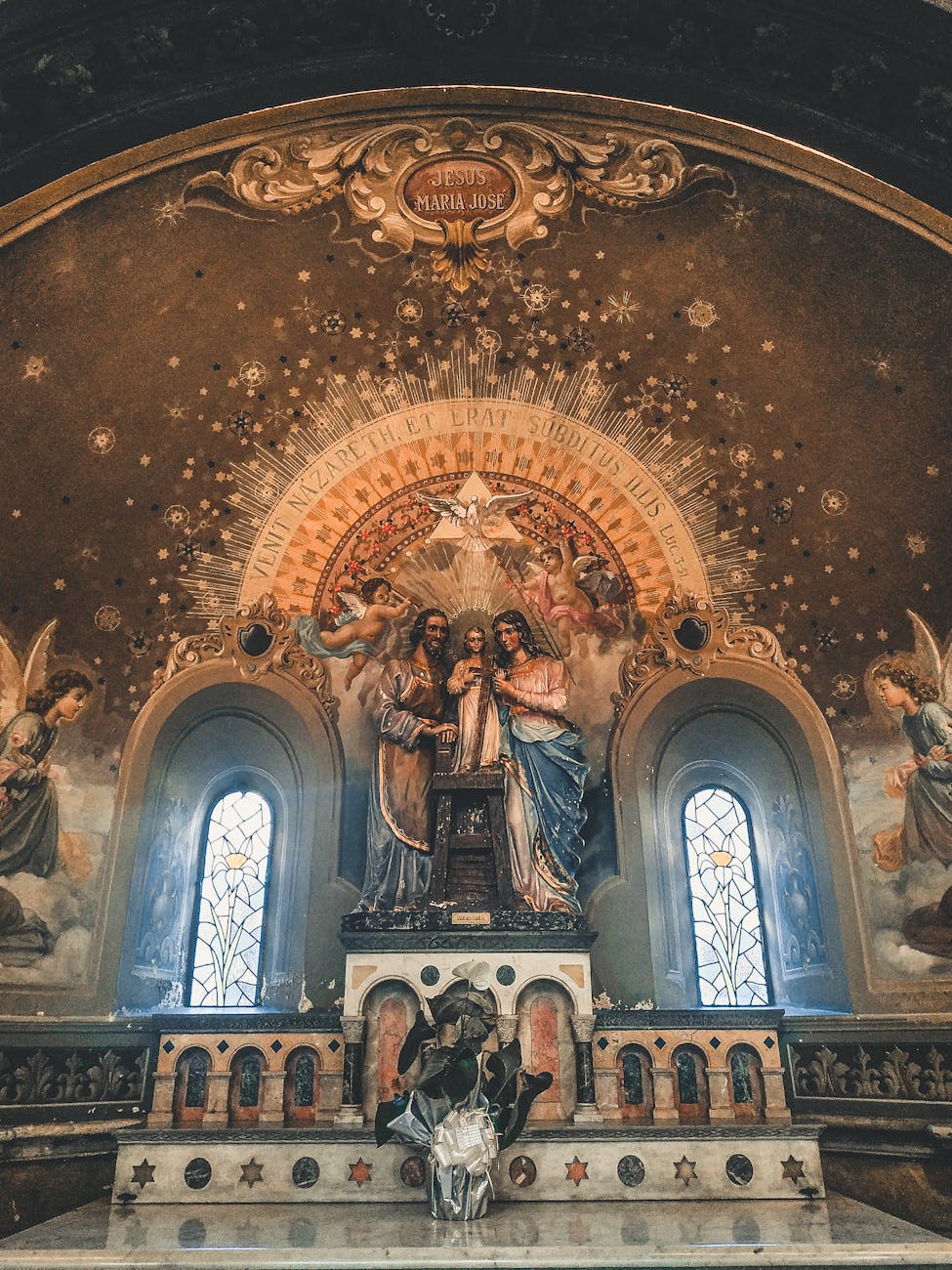


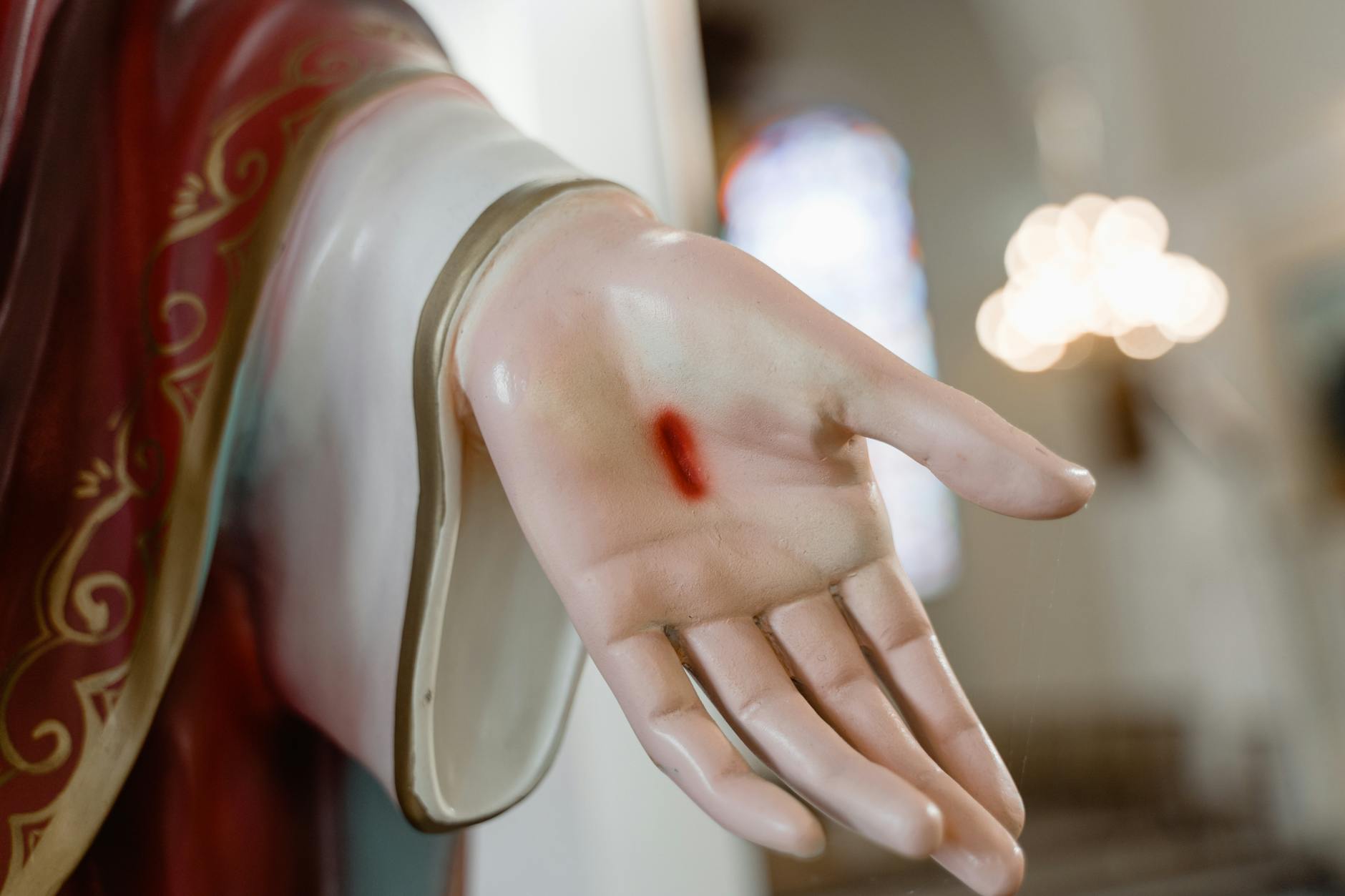
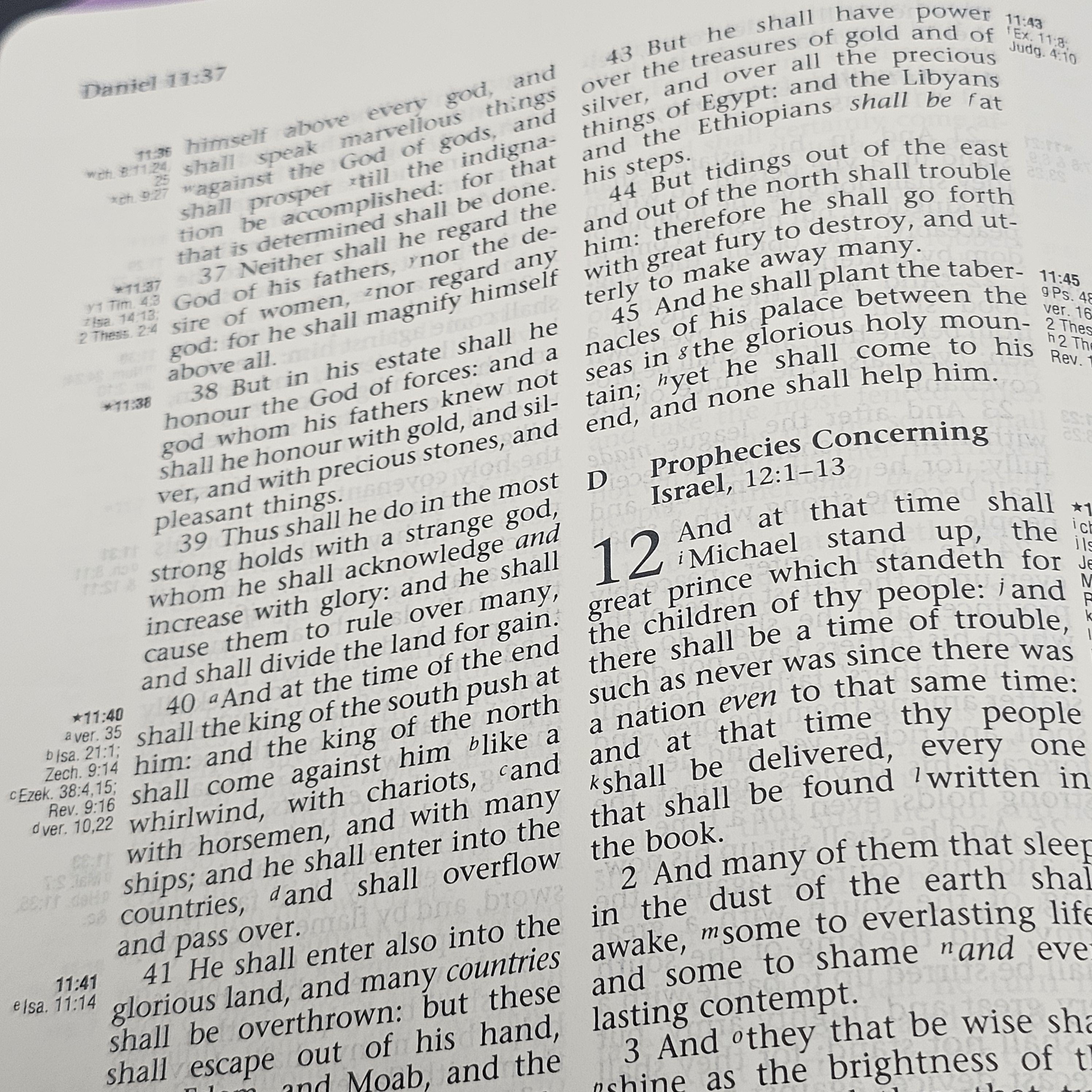


 The Way of Christ Ministries