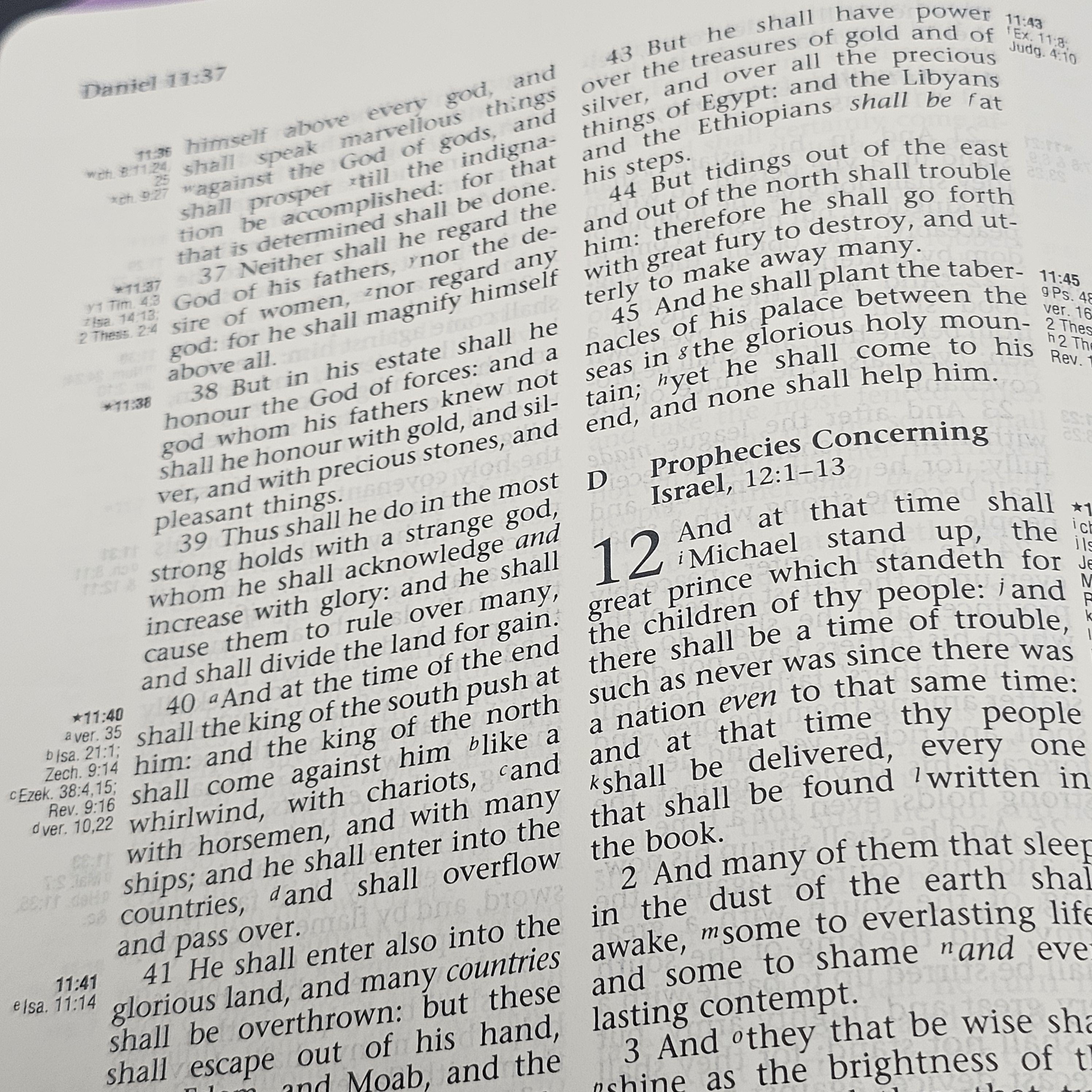
Introducing the Book of Daniel

The Book of Daniel is found in the Ketuvim (Writings) or the third section of the Hebrew scriptures or in the Prophets of Old Testament of the Bible. It details the events of the prophet Daniel and the various kings that he served under during the Babylonian Exile of the Jews, between 597 B.C and 538 B.C. During this time Daniel served under five different kings (Nebuchadnezzar, Merodach, Belshazzar, Darius, and Cyrus). The book is written in two languages.  It starts with Hebrew then in the second to seventh chapters it is written in Aramaic, and then it finishes the final chapters in Hebrew.  This is quite telling considering the story begins in Jerusalem, then moves to Babylon, and ends with the Jews returning to Jerusalem.  The first 6 chapters contain the accounts of the experiences of Daniel under the first four kings shows Daniel’s faithfulness to God and the influence that he has with the kings because of God.  He excels in training, teaching, and in dream interpretation.  God delivers him and his faithful friends from death and persecutions.  The second half of the book primarily deals with the apocalyptic visions of Daniel and give insight into the period called the 70 weeks of Daniel.  

Many see the book of Daniel as a call to faithfulness on part of the people of God.  However, it is much more than that.  It is an instruction an example of how to be faithful to God in heart and purpose.  Daniel and his friends who us what faithfulness looks like, what it feels like, and the source of how to be faithful.  This is because the main theme in Daniel is not the faithfulness of Daniel and his friends, but in the sovereignty and faithfulness of God.  The faithfulness of God is seen throughout this book; it is in the fiery furnace, the lion’s den, the fulfilment of the prophecies and the predictions of the future Messiah. We see the faithfulness and sovereignty of God in the day-to-day affairs of the Israelites under captivity. We understand that Daniel, Shadrach, Meshack, and Abednego all trusted in the faithfulness of God.  They learned this faithfulness from their previous study of God’s Word and the examples of the faithfulness of their own parents.

Photo by Tina Nord on Pexels.com

Unlike other books of the Old Testament, there is no call for repentance from Israel echoing from its verses.  Instead, Daniel is concerned with consistency in faithfulness among the believers in Jehovah.  Obedience is what God desires, and Daniel is the teacher on this point. Scripture makes a minimum of 38 references to God preferring obedience over any other form of worship.  Obedience is required whether under the Law or under Grace.  Moses said that to live under the commandments is to be obedient to the Law.  Paul and James say that to submit to Grace is to be obedient to the will of God in Christ.  1 Samuel 15:22 tells us that, “to obey is better than sacrifice”. Jesus said, “If ye love me, keep my commandments.” (John 14:15) Grant it that Jesus was still talking to Jews.  However, he was looking forward to after his resurrection, when the Holy Spirit would be given. Jesus was looking forward to the dispensation of Grace through his blood sacrifice. See. Romans 5:19. Paul even adds, “Know ye not, that to whom ye yield yourselves servants to obey, his servants ye are to whom ye obey; whether of sin unto death, or of obedience unto righteousness?” (Romans 6:16).  Obedience is therefore a demonstration of faith, we call that faithfulness. Therefore, faithfulness (obedience) is a demonstration of faith.  Grace must be received in faith, because we who are sinful cannot produce righteousness of ourselves. Grace is a gift from God.  Obedience through faith is an acknowledgement of that gift. (Ephesians 2:8-9)

This book is unique in another way, it is the only Old Testament book that is written completely in apocalyptic language.  This makes this book an essential part of any study of the end times and especially the study of the Revelation of Jesus Christ written by John the Apostle. As part of the eschatology of Daniel we see the main theology of the sovereignty of God throughout time, from everlasting to everlasting and the outline of how God will be faithful to his promise to redeem Adam.

The everlasting Kingdom of God, ruled at the hands of his Son as conqueror and King of Kings will subjugate and replace the earthy rulers and worldly powers and bring about his millennial kingdom; and a new heavens and a new earth.

Scholars identify four themes found in this book.  They consist of: The Sovereignty of God; The Pride of Man; The Coming of the Messiah; and The Ultimate Victory of God.  This book is filled with all kinds of hidden gems.  For example, we get a glimpse of God’s plan to redeem the gentiles in the redemption of Nebuchadnezzar after his repentance.  Therefore, we find in this text that God is not just the God of Israel, but of the whole world.  He is ultimately the God who rules the nations, and who formed the whole of Creation. 

Key People in Daniel

  • Daniel the author and prophet
  • The Five Kings (Nebuchadnezzar, Belshazzar, Darius, Cyrus)
  • Shadrach, Meshack, Abednego
  • The Angel Gabriel
  • The wisemen and officials to the kings

In the KJV there are:

  • 12 Chapters
  • 357 Verses
  • 11,602 Words

Version Comparison Zechariah 13:6

THE JPS TANAKH-1917 (Hebrew Bible) is recognized as the most authoritative and preferred English translation of the Hebrew Bible according to The Jewish Publication Society.  For almost a century this has been the prominent English version of the Hebrew Bible.  In it Zechariah 13:6 reads, ” And one shall say unto him: ‘What are these wounds between thy hands?’ Then he shall answer: ‘Those with which I was wounded in the house of my friends.’”

  • The King James reads:

And one shall say unto him, What are these wounds in thine hands? Then he shall answer, Those with which I was wounded in the house of my friends.

  • The Holman Christian Standard Bible reads:

If someone asks him: What are these wounds on your chest?—then he will answer: I received the wounds in the house of my friends.

  • The American Standard Bible reads:

And one shall say unto him, What are these wounds between thine arms? Then he shall answer, Those with which I was wounded in the house of my friends.

  • English Standard Version

And if one asks him, ‘What are these wounds on your back?’ he will say, ‘The wounds I received in the house of my friends.’

  • Contemporary English Version

And if any of them are asked why they are wounded, they will answer, “It happened at the house of some friends.”

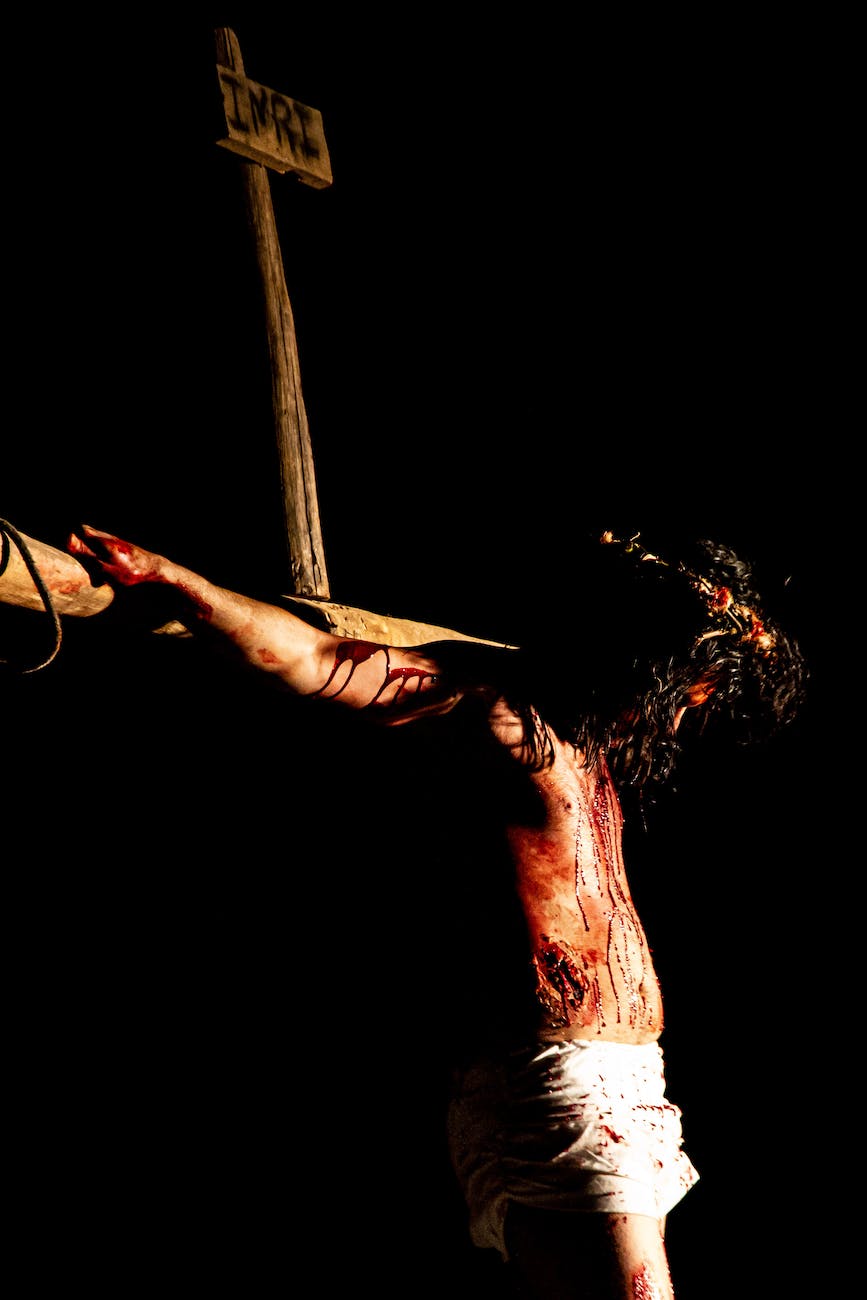
This verse and the context which comes with it, is a clear prophecy to the crucifixion of Jesus Christ.  In fact the Gospel of Matthew, Jesus refers to Zechariah 13:7 when he says, “All ye shall be offended because of me this night: for it is written, I will smite the shepherd, and the sheep of the flock shall be scattered abroad.” (Matthew 26:31).  This pointing to the crucifixion is clearly indicated in the Hebrew Tanakh (1917) and in the King James Version.  However, as we can see with these few samples above, almost every modern translation fails to show the piercing of the hands.  This is an important part of the gospel.  So important that God mentions it more than in just this passage.

  • “For dogs have compassed me: the assembly of the wicked have inclosed me: they pierced my hands and my feet.” (Psalm 22:16).
  • My bones are pierced in me in the night season: and my sinews take no rest. (Job 30:17)
  • And I will pour upon the house of David, and upon the inhabitants of Jerusalem, the spirit of grace and of supplications: and they shall look upon me whom they have pierced, and they shall mourn for him, as one mourneth for his only son, and shall be in bitterness for him, as one that is in bitterness for his firstborn. (Zechariah 12:10)

Is this not how the serpent beguiled Eve?  By taking what God said and twisting it into something similar; but not the truth?  Tell me again how it doesn’t matter what translation you are using. How they all say the same thing.  Because these do not say the same thing.  Were his wounds on his hands, his chest, somewhere between the arms, on his back, or just some unmentioned location (as in the CEV)? This removes one of the most important prophecies concerning the method in which the messiah would suffer.

I will stick with the King James Version.

H.R.6090 – Antisemitism Awareness Act of 2023

My dear friends. This is not the normal kind of post that I put on this site. However, I think that there are some forces working underhandedly in the world. These forces would strip us of our Christian rights to worship and also to possess a Holy Bible. They know that a straight out attack on Christianity has never worked in the past, and have moved to more subtle approaches. One of which is a progressive warming of the waters to a slow boil. If you have heard of the analogy that a frog will jump from a boiling pot of water, but he will stay an die in a pot that is slowly heated until it boils him alive. This is the tactic I am speaking of. The changing of a definition. Making it unbinding so no one will care how it is worded. Then later accept the poorly written definition as an accepted policy. Now make the policy a law. This is what is happening right before your eyes.

There is a bill that is silently making its way through Congress.  It has already passed the House of Representatives and is awaiting its vote in the Senate.  If this bill is passed, it will potentially change the face of Christianity in the US and consequently in the world.  This has been a slow multistep progression to silence Christianity in the US and to make the Bible illegal in the US.  It made a non-binding definition that was made in Bucharest, Romania a policy of the US State Department.  Now this legislation will arm the federal government against Christians in the US.

HR 6090 “Antisemitism Awareness Act of 2023” made the State Departments “Defining of Antisemitism” policy, which is based on the Bucharest, May 2016, unbinding definition of antisemitism, into a criminal offense.    This is declared in Sec. 4 Definitions of ZHR 6090.  Where it reads,

“For purposes of this Act, the term “definition of antisemitism”—

(1) means the definition of antisemitism adopted on May 26, 2016, by the IHRA, of which the United States is a member, which definition has been adopted by the Department of State; and

(2) includes the “[c]ontemporary examples of antisemitism” identified in the IHRA definition.” (https://www.congress.gov/bill/118th-congress/house-bill/6090/text)

I am not anti-Semitic, and I think that the Jews should be free of oppression, and allowed to live free of harm, just like any other people.  I believe that God has not abandoned them and that he is working actively in the life of Israel to restore his people and blesses those who bless them, and curses those who curse them.  However, in this referred to definition, the US Congress makes Christians into criminals, and so opens the door for corporate persecution of Christians in the US and in the world. 

The referred to definition in HR 6090 is the one adopted by the US State Department that includes the following line in it’s definition.  

Using the symbols and images associated with classic antisemitism (e.g., claims of Jews killing Jesus or blood libel) to characterize Israel or Israelis. (US Department of State) Defining Antisemitism https://www.state.gov/defining-antisemitism/)

That would make such scripture and the preaching here on a hate crime.  This sharing or maybe even just having a Bible that reads the following from Acts and 1 Thessalonians could put you in danger of the government.

Be it known unto you all, and to all the people of Israel, that by the name of Jesus Christ of Nazareth, whom ye crucified, whom God raised from the dead, even by him doth this man stand here before you whole. (Acts 4:10).

For ye, brethren, became followers of the churches of God which in Judaea are in Christ Jesus: for ye also have suffered like things of your own countrymen, even as they have of the Jews: Who both killed the Lord Jesus, and their own prophets, and have persecuted us; and they please not God, and are contrary to all men: (1 Thessalonians 2:14-15).

I know that there are some Arians who use these verses to bring violence against the Jewish people.  It is wrong and should be stood up against.  However, this bill and definition also says that the Jewish people should not be held accountable for the actions of one or even a few Jewish people or activists, so the Christians should not be held accountable for a few cultic followers or activists. 

The thing about this bill is that in it’s definition, it refers to a definition that is outside of the bill itself.  It is even a definition that is not under the scrutiny of any US legislation.  So as the international community may change the definition, the definition would automatically be changed in the US legal system.  How foolish is this?  On the face this legislation is something that most lawmakers would want to sign their name to.  Who wouldn’t want to be associated with a bill that stands up for the oppressed and the needy, the wrongly accused through history.  Every Jewish and Christian legislature would love to have their name on this document.  However, would they have done the homework and looked at the source of the definition, then the Christian representative would have seen that in voting for this, they vote away their own freedom of religion, and the freedom of speech would be stripped from every pulpit in America.  

I say that if such a bill is to be passed there should be some changes first. (1) The applicable definition should be fully defined within the bill itself, and not refer to an outside document, especial not an international document. (2) Provisions should be given to protect other religious texts and speech that also allow protection for the Jewish community.

Please contact your US Senator to at least have them do the research into the definition of the bill and to see it they would still support such a piece of legislation.  There are ways to protect the Jewish members of our society against Antisemitism without criminalizing other religious groups.  I just do not fee this bill is what it claims itself to be.

Once again I believe and affirm that the descendants of Abraham, Issac, Jacob, and King David are the blessed and chosen people of God, and that they should be protected.

Now the LORD had said unto Abram, Get thee out of thy country, and from thy kindred, and from thy father’s house, unto a land that I will shew thee: 2And I will make of thee a great nation, and I will bless thee, and make thy name great; and thou shalt be a blessing: 3And I will bless them that bless thee, and curse him that curseth thee: and in thee shall all families of the earth be blessed. (Genesis 12:3)

Let us find a good way to bless the people of God. Let us help Israel have true peace. Pray for the peace of Israel. Stand in defense of Israel. Share the hope in Jesus Christ with Israel.

Comment on Psalm 77

Psalm 77 is to the chief musician, to Jeduthun and is a psalm of Asaph. Jeduthun and Asaph were Levites and two of three Masters of Music appointed by king David. (1 Chronicles 16:41-42; 25:1-6)

This is an awesome psalm of one crying out to God and having full confidence that his supplications have been heard. There is also a certain amount of spiritual maturity shown in the writer. Right off we see that he is willing to wait for and to accept the will of the Lord. He has full confidence in the Lord and his capabilities, cares, and goodness towards him.

Photo by Brett Jordan on Pexels.com

The psalmist starts with a message of pure hope, “I cried unto God with my voice, even unto God with my voice; and he gave ear unto me.” He is very specific. I cried unto God, with my voice, and he listened. What a glorious faith that is, to know that God hears his children when they cry.

We also see the consistency of the prayer made. He says that he prayed hard all night, he ceased not. His soul could not be comforted. He remembered God in his distress, and he complained, he was overwhelmed with is plight. Here in this we see the confidence and confoundment the seeker has, he says that God sees him, he knows all that he does. Even when he sleeps, God knows when he awakes. So there is no mistaking that God knows what vexes his soul. He is confused as to when God will deliver him, or if at all. But he takes comfort in remembering what God has done for him in the past. So that even if God does not deliver him, he still knows that God is good. He is willing to accept the will of the Lord, for he trusts the judgement of the Lord.

In his remembrance of what the Lord has done he remembers that God is the same God who declared his strength to his people in how he delivered the sons of Jacob and Joseph. How he controls the seas, and the storms have no strength against his will. His ways are as unknown as the depths of the oceans. His plans are undiscoverable. His will is above all. Yet he chose to lead his people like a flock by the hand of Moses and Aaron. How beautiful is our God. How perfect is his way.

Photo by cottonbro studio on Pexels.com

The Psalm Reads:

1 (To the chief Musician, to Jeduthun, A Psalm of Asaph.) I cried unto God with my voice, even unto God with my voice; and he gave ear unto me. 2 In the day of my trouble I sought the Lord: my sore ran in the night, and ceased not: my soul refused to be comforted. 3 I remembered God, and was troubled: I complained, and my spirit was overwhelmed. Selah.4 Thou holdest mine eyes waking: I am so troubled that I cannot speak. 5 I have considered the days of old, the years of ancient times. 6 I call to remembrance my song in the night: I commune with mine own heart: and my spirit made diligent search.7 Will the Lord cast off for ever? and will he be favourable no more? 8 Is his mercy clean gone for ever? doth his promise fail for evermore? 9 Hath God forgotten to be gracious? hath he in anger shut up his tender mercies? Selah. 10 And I said, This is my infirmity: but I will remember the years of the right hand of the most High. 11 I will remember the works of the LORD: surely I will remember thy wonders of old. 12 I will meditate also of all thy work, and talk of thy doings. 13 Thy way, O God, is in the sanctuary: who is so great a God as our God? 14 Thou art the God that doest wonders: thou hast declared thy strength among the people. 15 Thou hast with thine arm redeemed thy people, the sons of Jacob and Joseph. Selah. 16 The waters saw thee, O God, the waters saw thee; they were afraid: the depths also were troubled. 17 The clouds poured out water: the skies sent out a sound: thine arrows also went abroad. 18 The voice of thy thunder was in the heaven: the lightnings lightened the world: the earth trembled and shook. 19 Thy way is in the sea, and thy path in the great waters, and thy footsteps are not known. 20 Thou leddest thy people like a flock by the hand of Moses and Aaron.

What a great place to be. On our knees, pleading our case before God. What a great assurance we have to know that he has bent his ear towards us. He has not simply nodded his head as he reads the morning headlines. He has not just read the summary of the book. He has instead given his full attention. In knowing all that is in our hearts, nothing was assumed. He has cherished every word that slipped through our trembling lips. Every tear cried, every agonizing groan had been felt by God, even my God… our God. 

We can rest assure as the psalmist that we have been heard. That our cause has been understood and is under the perfect consideration of the one who is perfect in all of his ways. He who chose to deliver Israel, he who chose to deliver our very souls from sin and death. Surely we can have confidence that no matter what his decision may be, that our best interests are in his heart. Selah…

Psalm 88 The Song of A Trouble-Filled Soul

Photo by Ivan Samkov on Pexels.com

Psalm 88 is a frightening Psalm.  It is a song for the sons of Korah, to the chief Musician upon Mahalath Leannoth, Maschil of Heman the Ezrahite.  It is subtitled in the King James Version as A Trouble-Filled Soul.  The description is of the desperate situation the psalmist is in and the abandonment he feels from the lack of the presence of God.  He fears that he will soon die and therefore calls to God for his salvation.  He begs for God to hear him. 

(A Song or Psalm for the sons of Korah, to the chief Musician upon Mahalath Leannoth, Maschil of Heman the Ezrahite.) O LORD God of my salvation, I have cried day and night before thee: Let my prayer come before thee: incline thine ear unto my cry; For my soul is full of troubles: and my life draweth nigh unto the grave. I am counted with them that go down into the pit: I am as a man that hath no strength:

This is one Psalm where there is no answer from God.  God has hidden his face from the psalmist.  So it is that we see what it is like to be put into the grave for the unbeliever.  They lie in the grave and are no more remembered by God.  Cry as they may, they are not heard.

Photo by Lucas Pezeta on Pexels.com

Free among the dead, like the slain that lie in the grave, whom thou rememberest no more: and they are cut off from thy hand. Thou hast laid me in the lowest pit, in darkness, in the deeps. Thy wrath lieth hard upon me, and thou hast afflicted me with all thy waves. Selah. Thou hast put away mine acquaintance far from me; thou hast made me an abomination unto them: I am shut up, and I cannot come forth. Mine eye mourneth by reason of affliction: LORD, I have called daily upon thee, I have stretched out my hands unto thee.

They are in a pit of darkness that is too deep to crawl out of.  Everyone they know have been put far from them.  Their name is not spoken.  They are corrupted by the grave and covered over, there is no escaping death.  The dead call daily upon the Lord, but he does not hear them.  He shows no wonders to the dead.  His loving kindness is not declared in the grave. He hears no prayers from the dead. God has hidden his face.

Wilt thou shew wonders to the dead? shall the dead arise and praise thee? Selah. Shall thy lovingkindness be declared in the grave? or thy faithfulness in destruction? Shall thy wonders be known in the dark? and thy righteousness in the land of forgetfulness? But unto thee have I cried, O LORD; and in the morning shall my prayer prevent thee. LORD, why castest thou off my soul? why hidest thou thy face from me?

The psalmist says that he was always headed to death. For the grave is the fate of all men. (Job 5:26) Job tell us that the older we get, the closer to the grave we are, “Yea, his soul draweth near unto the grave, and his life to the destroyers.” (Job 33:22). Here the psalmist, like so many of us, allowed himself to get distracted and was not ready.  To many of us get distracted by the pride of life to prepare for the grave ahead. The psalmist perhaps thinks like many of us, in our times of trouble.  Rather than face them we think that it would have been better if we were not even born, then to suffer this place.

Photo by Andrea Piacquadio on Pexels.com

He remembers the embraces of loved ones and friends, the joys that the Lord gave him when he was alive, now they have been taken from him in this prison. “Lover and friend hast thou put far from me, and mine acquaintance into darkness.” (v,18). How sad it is that many have been fooled into the lure of death before their time.  Thinking that it would be a welcome release from this life.  Some think that it would be a party, or that they could visit their loved ones, but this does not seem so. 

I think of the heartbreak when Jesus cried out from the cross, My God, my God, why hast thou forsaken me? (Matthew 27:46; Psalm 22:1) Psalm 22 reflect the same sentiment from a different perspective.  This psalm makes it a little more personal in the feeling of the afflicted.  When scripture says, “Surely he hath borne our griefs, and carried our sorrows: yet we did esteem him stricken, smitten of God, and afflicted.” (Isaiah 53:4). We see that Jesus is familiar with this pain also.  We are reminded by the author of Hebrews that Jesus experience everything that a man can experience in this life… even the feeling of when God turns his face away. “For we have not an high priest which cannot be touched with the feeling of our infirmities; but was in all points tempted like as we are, yet without sin.” (Hebrews 4:15)

This psalm truly shows the hopelessness of the soul who has rejected salvation and therefore who God has turned away his face from.  Without God there is no salvation.  Without Jesus there is no salvation. “Neither is there salvation in any other: for there is none other name under heaven given among men, whereby we must be saved.” (Acts 4:12) Our hope, those who believe upon the salvation of the Lord, Jesus Christ, is that we are not held captive by the grave. “But God will redeem my soul from the power of the grave: for he shall receive me.” (Psalms 49:15).

Photo by Murilo Soares on Pexels.com

In his gospel account, the Apostle John tell us why he wrote to us, “But these are written, that ye might believe that Jesus is the Christ, the Son of God; and that believing ye might have life through his name.” (John 20:31) The Apostle Paul tells us that we must believe and confess that belief, “For with the heart man believeth unto righteousness; and with the mouth confession is made unto salvation.” (Romans 10:10) This is because the mouth confesses what is in the heart. God is not cruel in turning away his face.  He leaves the choice to you.  You can choose to believe, or you can choose to not believe.  Interesting thing is that both paths take faith. 

“I call heaven and earth to record this day against you, that I have set before you life and death, blessing and cursing: therefore choose life, that both thou and thy seed may live:” (Deuteronomy 30:19)

Psalm 73 – It is Good to Draw Close to the Lord God

Psalm 73 starts the 3rd book of the Psalms.  It is a Psalm of Asaph.  It discusses the prosperity of the wicked, the chastening of the righteous, and God’s view of wickedness.  It is easy for us to overlook the goodness of God in our lives.  This is because what we think is good to have and to be like, and how to be treated is based on the things we see around us and are taught of in this worldly like. 

Photo by Valentin Antonucci on Pexels.com

1 (A Psalm of Asaph.) Truly God is good to Israel, even to such as are of a clean heart.

2 But as for me, my feet were almost gone; my steps had well nigh slipped.

3 For I was envious at the foolish, when I saw the prosperity of the wicked.

4 For there are no bands in their death: but their strength is firm.

5 They are not in trouble as other men; neither are they plagued like other men.

6 Therefore pride compasseth them about as a chain; violence covereth them as a garment.

7 Their eyes stand out with fatness: they have more than heart could wish.

8 They are corrupt, and speak wickedly concerning oppression: they speak loftily.

9 They set their mouth against the heavens, and their tongue walketh through the earth.

10 Therefore his people return hither: and waters of a full cup are wrung out to them.

11 And they say, How doth God know? and is there knowledge in the most High?

12 Behold, these are the ungodly, who prosper in the world; they increase in riches.

So when we see the wicked prosper and how quickly they are rewarded for their evil works, we can become envious of their lifestyles.  We see the corruption of the politicians who mock God and steal from the poor and line their pockets, openly violating the laws and yet there seems to be no consequences, no justice. They speak evil of God and of holy things, and yet they are not punished.  Their violence is rewarded with great plunder at the cost of the lives of the weak and defenseless.

13 Verily I have cleansed my heart in vain, and washed my hands in innocency.

14 For all the day long have I been plagued, and chastened every morning.

15 If I say, I will speak thus; behold, I should offend against the generation of thy children.

16 When I thought to know this, it was too painful for me;

It seems that the righteous have sanctified themselves in vain.  The righteous are plagued and chastised continuously. They are mocked by the corrupted.  Victimized by the aggressors and the sinful.  In turning the other check the Christian is often forced to face humiliation, physical harm, emotional distress, and even death. When scripture says to present ourselves a living sacrifice, it is often very literal. For the ones who look at the world and how the wicked prosper it seems futile to remain chased. There seems to be no point in remaining innocent of blood.  If the payment for sin is so lucrative, then what is the downside? However, when we turn our eyes away from the world and look to the Lord, we see his sanctuary.  This is a place of rest, and security.  It is a place of safety.

17 Until I went into the sanctuary of God; then understood I their end.

18 Surely thou didst set them in slippery places: thou castedst them down into destruction.

19 How are they brought into desolation, as in a moment! they are utterly consumed with terrors.

20 As a dream when one awaketh; so, O Lord, when thou awakest, thou shalt despise their image.

For God does not see the exploits of the wicked in the same manner as the world does.  The Lord tell us in Proverbs, “There is a way which seemeth right unto a man, but the end thereof are the ways of death.” (Proverbs 14:12). The lifestyle that the wicked live in is a slippery slope that only leads to destruction. The very things that they are rewarded with are temporary. They lead them astray, and give them false confidences. The Word of the Lord again states, “Labour not to be rich: cease from thine own wisdom.” (Proverbs 23:4). The wicked are blinded by their own desires. When they finally see their end, it is too late.  We see that the Lord does not reward them, he despises the wickedness of their hearts. He leaves them to their own ends. Their end is death eternal. This is the fate of the wicked as recorded in Revelation 21:8 – “But the fearful, and unbelieving, and the abominable, and murderers, and whoremongers, and sorcerers, and idolaters, and all liars, shall have their part in the lake which burneth with fire and brimstone: which is the second death.”

21 Thus my heart was grieved, and I was pricked in my reins.

22 So foolish was I, and ignorant: I was as a beast before thee.

23 Nevertheless I am continually with thee: thou hast holden me by my right hand.

24 Thou shalt guide me with thy counsel, and afterward receive me to glory.

25 Whom have I in heaven but thee? and there is none upon earth that I desire beside thee.

26 My flesh and my heart faileth: but God is the strength of my heart, and my portion for ever.

27 For, lo, they that are far from thee shall perish: thou hast destroyed all them that go a whoring from thee.

28 But it is good for me to draw near to God: I have put my trust in the Lord GOD, that I may declare all thy works.

But the ones who seek righteousness.  They are filled through the steady leading of the LORD. For he does chastise in order to correct in love.  His chastisement brings wisdom, in the fear of the LORD and the working of his hands.  When his flesh is tired and worn out, the LORD is his strength to continue on the way of righteousness, which delivers him from the wrath of God.  This grooming by the Lord God is what brings a man to Jesus Christ the righteous. Those who see the value of the sacrifice made for them by the death, burial, and resurrections of Jesus Christ have this righteousness imputed to them. So this very chastisement is a sanctuary protecting us and causing us to continue in righteousness. It keep us close to the heart of God. But those who do not listen to the chastisement of the LORD, they are far from him. They do not fear him. They do not seek his righteousness in Jesus Christ. Instead they follow the god of this world. Instead of seeking eternal peace with God they seek the temporary rewards of this dying world. Scripture calls them idolaters, adulterers who whore themselves out to Satan. All those who whore themselves after the god of this world, they “shall perish”.  So as Asaph declares, “it is good for me to draw near to God: I have put my trust it the Lord God, that I may declare all thy works.”. God has provided a pardon and dismissal of your unrighteousness in Jesus Christ, and only Jesus Christ. This is the declaration of the work of God. “For he hath made him to be sin for us, who knew no sin; that we might be made the righteousness of God in him.” (2 Corinthians 5:21)

And The Virgin’s Name Was Mary

Photo by Guilman on Pexels.com

Luke 1:26-27 – And in the sixth month the angel Gabriel was sent from God unto a city of Galilee, named Nazareth, to a virgin espoused to a man whose name was Joseph, of the house of David; and the virgin’s name was Mary.

What an amazing introduction to this young couple.  The betrothed couple of Joseph and Mary.  This is a very important presentation that has valuable information.  This was a couple, that according to Jewish law was no longer viewed by society as two individuals, but as one family.  To break a betrothal, there would have to be a formal writ of divorce.  This is such a foreign concept to almost all cultures in modern society.  Especially with modern Western Culture who hold the concept of sex before marriage is an acceptable and necessary practice. However, this is not the view of historical Judaism, Islam, or Christianity.

Still, this is not just a practice of non-premarital sex, but a purposeful dedication to the one you are espoused to, so much that to desire another would be considered adulterous. Even with this acceptance of being basically already wed to one another they’re wedding day and consummation had not yet occurred.  Both Joseph and Mary were unknown to one another, or anyone else.  They are both virgins. To this couple was sent a messenger, Gabriel.

Gabriel was a messenger of God that was sent to Daniel to give an interpretation of a vision that was received in Daniel chapter 8.  We also find out from Luke that the angel Gabriel also appeared to Zachariah and Elizabeth to let them know that their son would be filled with the “spirit of Elijah (Luke 1:17). Who was prophesied to come before the coming messiah. (Isaiah 40:3; Matthew 3:1-3) This preceding of the messiah was prophesied by Isaiah and was fulfilled in John the Baptist.  The messenger from God, Gabriel was assigned with explaining the fulfillment of the prophecy to the baby’s parents.

Likewise in such a manner, Gabriel had to explain the rest of the fulfillment to Joseph and Mary.  Elizabeth was barren and past the age of delivery, but God made her barren womb to bear the child named John, who would become John the Baptist.  The messenger Elijah who bore witness to the Lamb of God who takes away the sins of the world.  He would finger Jesus of Nazareth as the Messiah. 

His birth would be glorified by angels, witnessed by shepherds and wise men who would bring gifts to celebrate the birth of the King of Heaven. Simeon would remark, “For mine eyes have seen thy salvation, which thou hast prepared before the face of all people; A light to lighten the Gentiles, and the glory of thy people Israel.” (Luke 2:30-32) Oh what a wonderful day for this elder of Israel to have his prayers answered, to lie down to sleep knowing that the salvation of the Lord God had finally come.  God had come to his people and fulfilled the promises and prophecies.

One of which was the sign of his coming.  Not only the fulfilling of the messenger before the message of salvation, but the method of his coming.  He will be born flesh and blood.  In a way more miraculous than a barren woman giving birth.  This sign would be something impossible to reproduce, it God were not involved.  It would ensure the holiness of the baby.  This baby would be born of a virgin.  This to would not be a last-minute detail, but a promised sign that is unique to this messiah.

Once again, the prophet Isaiah is called on to give this account of the Word of the Lord. “Therefore the Lord himself shall give you a sign; Behold, a virgin shall conceive, and bear a son, and shall call his name Immanuel.” (Isaiah 7:14; Matthew 1:23) and once again Gabiel would be called to explain to Mary and Joseph that they would be the ones by which the prophecy would be fulfilled.  You see when Jesus said, “That which is born of the flesh is flesh; and that which is born of the Spirit is spirit.” (John 3:6) he was standing on earth as the only one who had been born of the flesh and of the Spirit.

What a shame that some rogue translations of the English bible remove this word “virgin” from their translations.  It is to their detriment that they alter the Word of God.  They will be judged for this crime against God and for the souls they have mislead.  They try to hide the facts, that Jesus is the Son of God, born of the virgin as prophesied.  They try to dissuade you from the miraculous and powerful hand of God.  They seek to make his word untrustworthy.  But his word remains. “For verily I say unto you, Till heaven and earth pass, one jot or one tittle shall in no wise pass from the law, till all be fulfilled” (Matthew 5:18) The penalty for altering his word is severe.  They bring the judgement and wrath of God upon themselves. (Deuteronomy 4:2; Revelation 22:18-19).  The sad thing is that their in no excuse.  Everyone who has altered the word of God is well aware of the consequences, they just have no fear of God, and therefore lack knowledge. For, “The fear of the LORD is the beginning of wisdom: and the knowledge of the holy is understanding.”(Proverbs 9:10)

Therefore, the scripture reads; “And in the sixth month the angel Gabriel was sent from God unto a city of Galilee, named Nazareth, to a virgin espoused to a man whose name was Joseph, of the house of David; and the virgin’s name was Mary.”

In the sixth month!  The sixth month in the Hebrew calendar is a special month.  It is a representation of the relationship of God to his people. Dvora Waysman wrote in the Jerusalem Post, September 2022, “There is a rabbinic allusion that the month was named from the initial letters of Ani le’dodi ve’dodi li (I am my beloved’s and my beloved is mine), describing the relationship between God and His people.” [1]

With this special time of the year when Jews are considering their relationship to God, how much more fitting is the precious story of the arrival of Gabiel to the homes of Mary and Joseph.  The special relationship between God and his people Israel just got “real”!  God is coming in person!  He has chosen you, a virgin!  Even better… Mary… he knows your name.  Joseph… he knows your name! How wonderful it is that Jesus says, “Are not two sparrows sold for a farthing? and one of them shall not fall on the ground without your Father. But the very hairs of your head are all numbered. Fear ye not therefore, ye are of more value than many sparrows.” (Matthew 10:29-31)

Photo by Haley Black on Pexels.com

The area of Galilee is also of great importance.  The prophets Micah, Elijah, and Jonah are all mentioned as coming from the area of Galilee (Micah 1:1; 1 Kings 17:1; 2 Kings 14:25; Joshua 19:13) Many believe that Nahum and Hosea may have also come from the Galilee area. Isaiah prophesied that the messiah would come out of Galilee in Isaiah chapter 9.

Isaiah 11, Jeremiah 23, and 33 all indicate that the Messiah would come from the lineate of David, from the tribe of Judah.  Even way back in Genesis 49:10 God promises that the scepter will not depart form Judah that the tribe is the Law giver is with them. In 1 Samuel 20:6 the scripture further solidifies the Messiah coming from the House of David, from Bethlehem. (1 Samuel 20:6; Micah 5:2)

This message is a divine orchestration of time and circumstance. It is important to showing the working of the divine will and authority in working in heavenly wisdom.  God must fulfill his complete word.  In a broken people, in a rebellious world, with an active enemy trying to make him break his word.  Yet God put all the pieces together in his own time and in the manner he foretold.  On top of this, he did it with a willing virgin.  He did not violate anyone’s free will to complete his will.

What great lengths the God Almighty will go to so that he can keep his word. We can trust the Word of God.  He is faithful.  He is not bound by our understanding, or even our lack of faith.

Bibliography

WAYSMAN, D. (2022, September 17). Jewish Holidays. Retrieved from Jerusalem Post: https://www.jpost.com/judaism/jewish-holidays/article-717249


[1] (WAYSMAN, 2022) Article: What is special about Elui…

I Corinthians 11:17-34 – The Heart and the Manner of The Lord’s Supper

I Corinthians 11:17-34 – The Heart and the Manner of The Lord’s Supper

When most of us look at the sacrament of the Lord’s Supper we reference I Corinthians 11:23-34.  In this we gain the specifics of how the ceremony should be performed.  We also gain an insight into the heart of the participants and the Lord’s seriousness of this ceremony.  One thing we miss in starting at verse 23 is the intention that the church should come together, no matter what the circumstances of the church or the individual trials of the member are. 

We should come together in unity of the local church, in Christ, and perform this ceremony before the Holy Spirit who testifies with our spirit that we are the children of God.  This is an encouragement to us, to solidify our faith, and to give a continuous testimony of Jesus Christ until he returns. 

Below is the passage I Corinthians 11:17-34.  Read it and pray about it.  Meditate upon its meaning.  I have put my personal summary afterward.  I pray this is a blessing to you, and a help in you daily walk.

17 Now in this that I declare unto you I praise you not, that ye come together not for the better, but for the worse.

18 For first of all, when ye come together in the church, I hear that there be divisions among you; and I partly believe it.

19 For there must be also heresies among you, that they which are approved may be made manifest among you.

20 When ye come together therefore into one place, this is not to eat the Lord’s supper.

21 For in eating every one taketh before other his own supper: and one is hungry, and another is drunken.

22 What? have ye not houses to eat and to drink in? or despise ye the church of God, and shame them that have not? What shall I say to you? shall I praise you in this? I praise you not.

23 For I have received of the Lord that which also I delivered unto you, That the Lord Jesus the same night in which he was betrayed took bread:

24 And when he had given thanks, he brake it, and said, Take, eat: this is my body, which is broken for you: this do in remembrance of me.

25 After the same manner also he took the cup, when he had supped, saying, This cup is the new testament in my blood: this do ye, as oft as ye drink it, in remembrance of me.

26 For as often as ye eat this bread, and drink this cup, ye do shew the Lord’s death till he come.

27 Wherefore whosoever shall eat this bread, and drink this cup of the Lord, unworthily, shall be guilty of the body and blood of the Lord.

28 But let a man examine himself, and so let him eat of that bread, and drink of that cup.

29 For he that eateth and drinketh unworthily, eateth and drinketh damnation to himself, not discerning the Lord’s body.

30 For this cause many are weak and sickly among you, and many sleep.

31 For if we would judge ourselves, we should not be judged.

32 But when we are judged, we are chastened of the Lord, that we should not be condemned with the world.

33 Wherefore, my brethren, when ye come together to eat, tarry one for another.

34 And if any man hunger, let him eat at home; that ye come not together unto condemnation. And the rest will I set in order when I come.

1 Corinthian 11 has a lot to say about the sacrament of the Lord’s Supper. The gathering of the fellowship should include the sacrament of the Lord’s Supper.  It should be a reverence to the Lord, not for the filling of the belly.  The Lord’s Supper should not be a time of gluttony.  It is therefore not a feast, or celebration like that of Thanksgiving, nor is it a festival like that of a wedding or a birthday.  One should have eaten your normal portion prior to attending, or perhaps after the ceremony.  No drunkenness or excess should be exhibited.  Greed in not a virtue of God.   

There is no favoritism before God.  So, in the church there is no special treatment or special arranging of seats, or unequal portions for prominent church members of guests. There is not a separation of Jew, to Gentile, free man to slave, nor rich to poor. All who come to the table should be fed equally of the Lord’s portion. One should not come to be served but to serve.  If any must wait, surely it is the Pastor who should partake last, to ensure all believers have their portion of participation.  The Pastor is after all the utmost servant of the local church in direct service of office to Jesus Christ. 

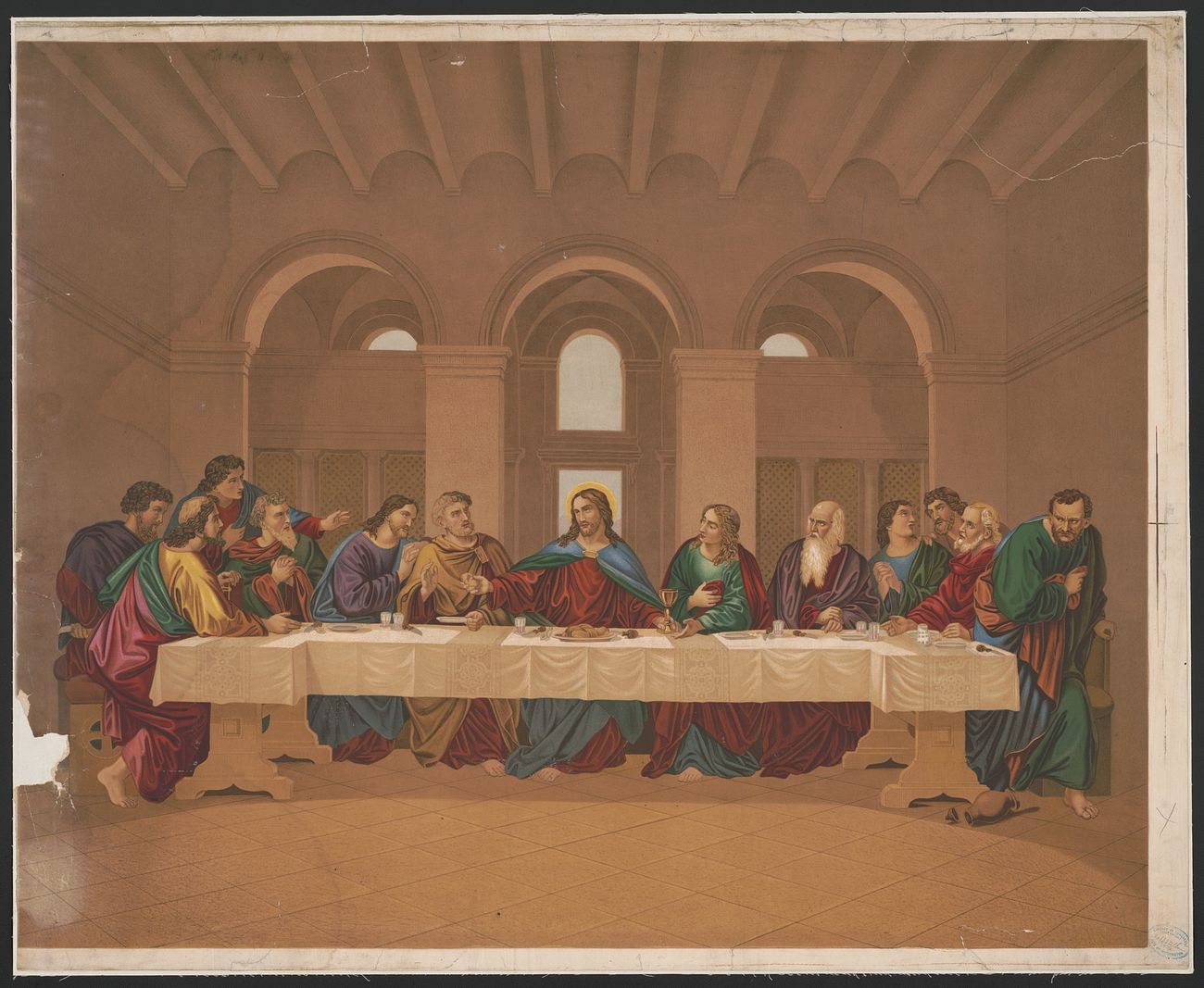
[The last supper] by Library of Congress is licensed under CC-CC0 1.0

The sacraments of the Lord’s Supper should be taken in reverence and remembrance with a pure heart.  One must be clean of conscience, confessed of sin, and with a heart of repentance.  One should not be holding of anything against his brother, instead one should be forgiving at heart, as he was forgiven by God in Christ Jesus.

This is a time of reflection and of hope in his death and his return. It should have a ceremonial atmosphere, and in accordance with the manner in wick it was handed down from Jesus to the Apostles.  Thanksgiving should be given for the ceremony, the sacraments provided, and the blood and the body sacrificed by the death of Jesus Christ.  By whose blood we have atonement. 

We should also be warning of others to not take this lightly.  Participation in this ceremony is only for the true believer.  To partake of this sacrament unworthily brings death.  It is a mockery and a blasphemy of the Holy Spirit to partake unworthily.  Each man should examine himself, to see of he is worthy to participate.  Is his heart of clean conscience before the LORD?  If not then he must leave his gift at the altar and make it right.  All things must be done in faith, or they are sin. 

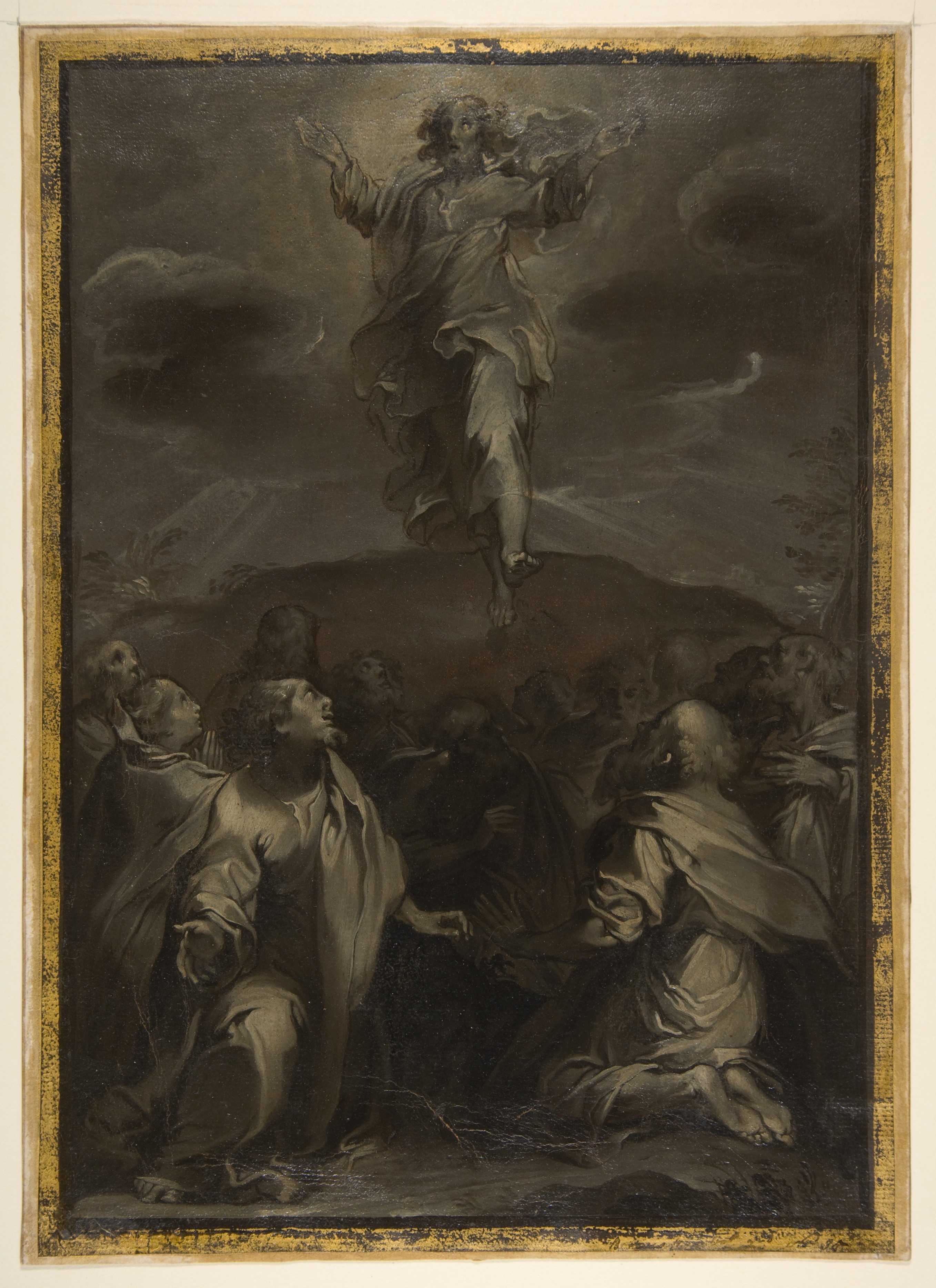
The Ascension of Christ by Ventura Salimbeni is licensed under CC-CC0 1.0

Therefore, the participant must believe that Jesus is the Christ, the Son of God who came and lived among us as a man, who died for our sins, was buried, and rose again, overcoming death once and for all men.  He then ascended to heaven with a promise of return.  This is what you testify to when you participate in the Lord’s Supper, until his return.  Participation says I trust you LORD and I await your return, doing the work of a good servant. In obedience to your commandments.  I await you Holy bridegroom with my lamp filled with oil, and the light of hope burning, piercing the darkness of this world in trust and hope in you, Jesus Christ. 

Survey I Timothy

The name Timothy is found two different ways in the New Testament.  Timothy is found 7 times in the bible.  Timotheus is found 17 times in the scripture. Listed below are the references I have found.  In them you can see how instrumental Timothy was in the establishment of the church.  He had the distinct pleasure of being associated with many charter ministers of the church.  His fellowship includes, Paul, Silas, Erastus and many other founders. He is seen in Ephesus, Philippi, Corinth and many places in Macedonia.  

Photo by Mehmet Turgut Kirkgoz on Pexels.com

Timotheus Found:

  • Acts.16

[1] Then came he to Derbe and Lystra: and, behold, a certain disciple was there, named Timotheus, the son of a certain woman, which was a Jewess, and believed; but his father was a Greek:

  • Acts.17

[14] And then immediately the brethren sent away Paul to go as it were to the sea: but Silas and Timotheus abode there still.

[15] And they that conducted Paul brought him unto Athens: and receiving a commandment unto Silas and Timotheus for to come to him with all speed, they departed.

  • Acts.18

[5] And when Silas and Timotheus were come from Macedonia, Paul was pressed in the spirit, and testified to the Jews that Jesus was Christ.

  • Acts.19

[22] So he sent into Macedonia two of them that ministered unto him, Timotheus and Erastus; but he himself stayed in Asia for a season.

  • Acts.20

[4] And there accompanied him into Asia Sopater of Berea; and of the Thessalonians, Aristarchus and Secundus; and Gaius of Derbe, and Timotheus; and of Asia, Tychicus and Trophimus.

  • Rom.16

[21] Timotheus my workfellow, and Lucius, and Jason, and Sosipater, my kinsmen, salute you.

  • 1Cor.4

[17] For this cause have I sent unto you Timotheus, who is my beloved son, and faithful in the Lord, who shall bring you into remembrance of my ways which be in Christ, as I teach every where in every church.

  • 1Cor.16

[10] Now if Timotheus come, see that he may be with you without fear: for he worketh the work of the Lord, as I also do.

  • 2Cor.1

[19] For the Son of God, Jesus Christ, who was preached among you by us, even by me and Silvanus and Timotheus, was not yea and nay, but in him was yea.

  • Phil.1

[1] Paul and Timotheus, the servants of Jesus Christ, to all the saints in Christ Jesus which are at Philippi, with the bishops and deacons:

  • Phil.2

[19] But I trust in the Lord Jesus to send Timotheus shortly unto you, that I also may be of good comfort, when I know your state.

  • Col.1

[1] Paul, an apostle of Jesus Christ by the will of God, and Timotheus our brother,

  • 1Thes.1

[1] Paul, and Silvanus, and Timotheus, unto the church of the Thessalonians which is in God the Father and in the Lord Jesus Christ: Grace be unto you, and peace, from God our Father, and the Lord Jesus Christ.

  • 1Thes.3

[2] And sent Timotheus, our brother, and minister of God, and our fellowlabourer in the gospel of Christ, to establish you, and to comfort you concerning your faith:

[6] But now when Timotheus came from you unto us, and brought us good tidings of your faith and charity, and that ye have good remembrance of us always, desiring greatly to see us, as we also to see you:

  • 2Thes.1

[1] Paul, and Silvanus, and Timotheus, unto the church of the Thessalonians in God our Father and the Lord Jesus Christ:

Timothy Found:

  • 2Cor.1

[1] Paul, an apostle of Jesus Christ by the will of God, and Timothy our brother, unto the church of God which is at Corinth, with all the saints which are in all Achaia:

  • 1Tim.1

[2] Unto Timothy, my own son in the faith: Grace, mercy, and peace, from God our Father and Jesus Christ our Lord.   

[18] This charge I commit unto thee, son Timothy, according to the prophecies which went before on thee, that thou by them mightest war a good warfare;

  • 1Tim.6

[20] O Timothy, keep that which is committed to thy trust, avoiding profane and vain babblings, and oppositions of science falsely so called:

  • 2Tim.1

[2] To Timothy, my dearly beloved son: Grace, mercy, and peace, from God the Father and Christ Jesus our Lord.

  • Phlm.1

[1] Paul, a prisoner of Jesus Christ, and Timothy our brother, unto Philemon our dearly beloved, and fellowlabourer,

  • Heb.13

[23] Know ye that our brother Timothy is set at liberty; with whom, if he come shortly, I will see you.

Photo by Z4Free Z4Free on Pexels.com

Timothy was one of Paul’s ministry team members.  Paul had originally met Timothy and Timothy’s mother and grandmother in Lystra. Timothy was a half Jew and half Greek. His family overall was well spoken of in the region (Acts 16:1-3). Paul took Timothy with him on his journeys and circumcised Timothy because of the common knowledge of his father being Greek.  So Paul circumcised him for his Jewish heritage from his mother’s side.  This allowed Timothy to go places where normally a Greek could not enter.  

Scripture tells us that together, Timothy and Paul would go from church to church throughout the region and pass along the decrees that were ordained by the apostles and elders in Jerusalem. Eventually Paul developed Timothy into a mature disciple and evangelist.  He soon confidently sent him on mission to different areas to act on Paul’s behalf and to establish and encourage churches in proper doctrine.  Paul recognized that Timothy had exceptional character and an acute understanding of scripture for his age. When a church needed strength and encouragement in the face of persecution, Paul sent Timothy. When a church needed an example of godliness, Paul sent them Timothy. When Paul wrote letters of correction to churches, he included Timothy’s name next to his. 

Paul even sent Timothy to the church in Ephesus to restore the proper teachings of the gospel of Jesus Christ after some false teachers had corrupted the original teachings. This letter was sent to Timothy, from Paul, at Ephesus to give him guidance on how he should fulfill his mission.  Tradition says this letter was written from Laodicea. This letter is effectively a leadership manual. I Timothy opens and closes with the commission of Timothy and has two sections that have instructions for the young pastor to aid him with the issues he will face. There are also 3 poems that exalt Jesus as the risen savior and King of the world.

1 Timothy is written to give Timothy encouragement in fighting the good fight. (1:18).  He is warned against false doctrines and encouraged in the Grace of God.  Then the Letter turns to the instruction of how the church should conduct themselves. It is always easier for a new manager to come in with an official letter of policy from his higher ups, then to come in and try to create policy on his own.  So this letter establishes Timothies authority and the policies of the conduct of church members according to Paul who appointed him. The letter concerns with worship in the church to include prayer and the effective role of women in the church.  Then it gives instructions on church leadership and the qualifications of the offices of the church.  This all sets the foundation for the next part of the letter on the dangers to the church.  Paul gives warning signs of the lurking dangers, and gives the proper defenses with which the church deploy. Part of this is how we should act with regard to one another.  How we treat the elders, widows, and the younger alike.  Then we see how we treat those around us in society, how we are to react in civil society and how we treat our masters and servants.  Paul even goes further to tell us what the proper attitudes of a believer are towards False Teachers, Money, and Godliness.  Then Paul gives one more encouragement to keep to the good doctrines that he has been entrusted with and to not be distracted by worthless pursuits into philosophy, false sciences, of other religious teachings.

Written ~65-68 A.D.

Written by Paul

1 Timothy has:

6 Chapters

113 Verses

23269 Words

Titus: An Introduction and Summary

Photo by RODNAE Productions on Pexels.com

The letter from Paul to Titus is considered as part of a group of writings known as the Pastoral Epistles.  These Pastoral Epistles include 1st and 2nd Timothy, and Titus. These letters are grouped in this manner because they all deal with information surrounding pastors, pastoral and elder duties, and the organization of church authority, mission, and conduct of its members.

Titus was a Greek follower of Jesus. Likely a direct convert of Paul who calls him a son in the faith.  The Epistle to Titus was written by Paul sometime between his two imprisonments by Rome.  Paul had visited Crete and left Titus there to supervise the churched there and then went to southern Greece, to Nicopolis in Achaia, where he wrote this letter (3:12).  This letter is written between the writings of 1 Timothy and 2 Timothy.

Titus was a traveling companion and confidant of Paul and Barnabas, from early in his ministry.  It appears he may have even accompanied them to the Jerusalem council which concerned themselves on whether the gentile converts should need to be circumcised.  As a result of that counsel, he was never forced to be circumcised. (Galatians 2:1-3; 2 Corinthians 15:1-11) Titus is mentioned in several places in the New Testament writings as a man of honor and as a great encouragement to Paul.  Paul was even discouraged one time when he went to Troas to preach because he was expecting to find Titus there but did not. (2 Corinthians 2:12-13).  He was Paul’s delegate to the church at Corinth (2 Corinthians 7:6-7; 8:6,16).  Paul had sent for Titus to join him in Nicopolis in this letter (3:12). From there Paul sent Titus to Dalmatian (former Yugoslavia, modern day Serbia and Montenegro). Tradition says that Titus returned from there to Crete where he died in the ancient town of Gortyna.

This letter from Paul to Titus was very personal and heart felt.  This is one of the last letters that Paul would write.  Tradition tells us that the last letters Paul wrote were to Timothy and Titus.  Paul considered both his sons in the faith (1 Timothy 1:2; Titus 1:4). You can see the importance that Paul has in ensuring that Titus will continue diligently the discharge of his duties, as quickly as possible.  There is a passing of the guard, so to speak as Paul commissions his young apprentice to pick up the mantle of leadership in the region.  Paul presents his confidence in the message he has received and passed to Titus, and shows the importance of passing on the message, through the preaching of the Word. (1:1-3). Paul passes on his advice to Titus on setting things in order (1:5), the ordination of elders in every city (1:5), the teaching of sound doctrine (2:1), the importance of avoiding foolish discussion on the importance of tradition and genealogy (3:9) because those that rely on them are condemned already (3:10). Christians are not bound by such things and should live free of such constructs whether Jewish or Pagan.

Paul speaks of the Elders in the Church, their desirability, and their qualifications (4:5-9). He also discusses some issues with false teachers that must be immediately dealt with in the church (1:10-16). Then he moves to discuss the operation of the Church to include duties of the ministers, living in response to God’s grace, and what good works are.

The churches need to have Elders to govern them and to keep them in order. So that the churches can be exemplary and are not defective.  Create is lacking in godly leaders and they need effective leadership immediately (1:5).  This leadership should meet certain qualifications that include:

  1. They should be blameless;
  2. Be married to one wife. They should be a one-woman man.  This reasoning means that elders should be men;
  3. Their family should be examples of the one Faith;
  4. Be Self-disciplined
  5. Not a drunkard
  6. Not abusive
  7. Hospitable
  8. Be faithful to the Word of God in Jesus Christ
  9. Love what is good, holy, just.
  10. Able to, by knowledge of the scriptures, confront false doctrine and gainsayers.

These ministers should teach things that are conducive to good moral behaviors in accordance with sound doctrines of the church.  Their teachings cause behavior to be in harmony with their belief in Jesus Christ.  Elders should set patterns of goodliness by being restrained and not given to wine.  The older ladies should also set example to the younger and cease from slander and gossiping.  A Christian should deny ungodliness and worldly lusts in their lives.  Instead The believer should seek the blessings of the hope we have in God and our savior Jesus Christ (2:11-14). 

Since we have been delivered from such sinfulness, we should speak evil of no man.  We must remember also that since Jesus is the Lord of all, and has appointed governments over men, as he has elders over the church, that we must be respectful of the government. We must always remember that we were not saved by works, but by the mercy if God in Jesus Christ, and evidenced in the washing of regeneration and renewing o the Holy Ghost (3:4-6).  Knowing these things we should avoid foolish questions, genealogies, and contentions about the law of Moses because they do not contribute to sound doctrine concerning faith.

To be from Crete was to be synonymous with being a liar. It is even said that they were cursed by the gods of Greece to never tell the truth.  Crete is also fabled to be the place where Zeus grew up, and they took pride in their cleverness and crafty or should I say, shiftiness, because Zeus had been that way. This is likely the reason Paul makes it a point to say that God cannot lie, unlike Zeus who is legendary to the people of Crete. for his lies. There piracy was renowned and was the cause of two wars in 71 and 69-67 BC.  They had a reputation for lies, cheating, and sexual immorality.  This island was in the heart of major trade routes and had multiple harbor that were used by many visiting lands.  The churches here were small house churches that were heavily influenced by the culture around them.  It is no wonder that Paul sent one of his most trusted companions to set things in order, and to change the mentality of the local churches.  Titus’ task was to appoint up new leadership that would help the church to live alongside, but not become a part of the culture surrounding it.

The overall message is this; If the message of the gospel is to prove itself in a society, then it has to be different then the society surrounding it.  God is not like other gods, and Christians should not be like those who serve other gods.  They should honor God with their public and private lives and with how they treat one another, dress, attitudes, and their manner of speech. Christians values should look different because they serve a different God. For this to happen, the Pastors, and Elders needed to have a righteous backbone, and teach solid doctrine.

In the KJV there are:

  • 3 Chapters
  • 46 Verses
  • 896 Words