
I would like to draw your attention to a matter that we should all consider in the living out of our faith. In the letter Paul wrote to Philemon, he makes a defense for Onesimus. Onesimus was a slave to Philemon who had apparently ran away. On his journey he apparently ran right smack into the Apostle Paul who had previously converted Philemon to Christianity. Now Onesimus had his appointment with Jesus Christ through the evangelism of Paul. Now that Onesimus was a believer, Paul sought to return him to Philemon. Paul asked that Onesimus be received as a brother in Christ, and forgiven of his wrong doings, as Philemon had also been forgiven in Christ.
If he hath wronged thee, or oweth thee ought, put that on mine account;
I Paul have written it with mine own hand, I will repay it: albeit I do not say
to thee how thou owest unto me even thine own self besides. (Philiemon 18-19)
It is clear that Paul is showing to Philemon that Onesimus
should have nothing put to his account, and that Paul himself will reimburse
Philemon of any costs that he deemed should be paid by the actions of Onesimus
or the costs incurred by his absence from his duties. However; is what Paul
says – albeit (notwithstanding, although)
I know I do not need to mention that you are indebted to me. What exactly that debt was is not
specified. However, being that Philemon
owned slaves it is not likely a financial debt.
It is more likely that Paul was making a spiritual reference to the
conversion of Philemon. In this manner,
Philemon’s very soul would have been what Paul was referring to. His salvation was brought through the
evangelistic efforts of Paul, and Paul was reminding him of the great debt that
was relieved when Paul led him to Christ.
In this we see that Paul is reminding him that those who have been
forgiven must also forgive. Moreover we
should not add to the debt of fellow believers.
In the early development of the church the office of the
Deacon was established. Do you know
why? The church was in an uproar because
the distribution of needs to the believers was not being distributed
properly. So the apostles told the church
to select men to appoint over this duty of distributing to the needs of the
church. These men were the deacons of
the church. It was their responsibility
to ensure the benevolence ministry was ran properly. Now something related to this is the fact
that all the believers of the church gave towards the needs of the church and
they shared all things in common. I know
where are you going with all of this? I gave you all of this background to say
this. If a member of the body of Christ
has a need, and you can assist them, then you should, and you should NOT charge
for your services. You should not as a believer put a debt onto any believer’s
account for something that you freely volunteered to do to assist them in their
time of need.
If this were the case and the church assisted you, for
anything, then you should expect to make amends to the church. Now I am not saying that if you want to repay
the church you cannot, quite the opposite.
You are to assist the church and its body of believers out of gratitude,
not debt. Once again I wish to be clear on this matter. I am not talking about a professional service
where it is agreed upon that the believers are in a business agreement. I am speaking of a need that was requested to
the church, and members of the church responded to the need, and then wanted reimbursement. Especially if the member who is asking for reimbursement
has received gifts and support from the church body in the past to cover
finances, food, lodging, counseling, or anything else.
What would the church be like if when you, as a believer and member of the congregation, needed assistance after a personal disaster, or a natural disaster like a hurricane or a fire, and then the church shows up and says we will help you if you pay us? What of that? Would that be considered the “Christian” thing to do? Even so, an individual member should never show up to assist another member and then demand money for their services.
If the offer is made from the requester to pay, that is another matter, and it is not what I am speaking of either. We who are indebted to Christ are to look after our brothers and sisters in Christ as we would our other relatives. I would never charge my brother to assist him in moving, or in repairing his home, or even looking after his pets when he was out of town. To receive payment for such services in his time of need it to strong-arm him. How is that love? When Jesus said that they will know you are my disciples by you love…. I think we can say that this would be a demonstration of our love.
We need to be ever mindful of the debt of which we have been forgiven. We also need to keep in mind that most all of us have an inherent debt we owe to our fellow members in the body of Christ. We should be willing to unashamedly seek the assistance of the fellowship, and to freely give assistance as needed to the fellowship with a joyous heart.
Palm Sunday is the observance of the day Jesus entered into
Jerusalem prior to his arrest, trial, and subsequent execution. It is commemorated on week prior to the
Resurrection Celebration of Jesus’ rising from the dead. Many Christians refer to this week as
Passion Week and it is the end of the period of Lent. This entry into Jerusalem
is a demonstration of the King entering Jerusalem and Jesus’ submission to his
role in the redemption of Israel, and all of mankind. This is a deliberate move by Jesus in
fulfilling prophecy.
In the book of the prophet Daniel we see in chapter 9 that
there will be 483 years from the command to rebuild Jerusalem to the coming of
the Messiah. Nehemiah chapter 2 records
for us, “And it came to pass in the month Nisan, in the twentieth year of
Artaxerxes the king,” (Nehemiah 2:1), Historical documents from the
Babylonian era puts this date at March 14, 445 B.C. This brings us 483 years later, (using Jewish
calendars) to April A.D. 32. [1]
The timing of the arrival of Jesus in Jerusalem was of not
just to take in the sites and see family and friends. The arrival of Christ at this time had
significant theological, political, and prophetical implications. Jesus came to
Jerusalem during the time of Passover.
This was a special celebration of the Israelites delivery from
death. Passover was a time of special
pilgrimage. Jerusalem’s population of
40,000 would swell to over 240,000 in anticipation of this great festival of
thanksgiving. The term Passover comes from the Jewish word Pesach, which means
“to pass over”. In Exodus we are relayed
the story of how God delivered the Israelis from slavery in Egypt through 10
plagues, the last of which was death itself.
They were sparred the death of the first born by sacrificing a lamb and
spreading it’s blood on the door posts, top, and both sides. When death came and saw the blood of the
lamb, death passed over that house. Any
home that was not covered with the blood of the lamb was entered by death and
the life of the eldest son was taken. So
when we consider the offering of Jesus as a lamb for the slaughter, and in
whose blood we are covered, we know that death passes over us also. Death is the penalty for sin. In Egypt, death was the penalty for disobedience
to God. Sin is disobedience to God. Let us take a look at the entrance of Jesus
into Jerusalem on start of Passion Week and the Passover. What Jesus was about
to do in the manor he chose to enter Jerusalem would not only have an effect
not only on Jesus and his followers, not the Jewish and Roman leaders, but
mankind and all of creation.
In entering Jerusalem on a little donkey, Jesus declared
himself the long awaited Messiah, and the deliverer of Israel and the nations
of the earth as promised to Abraham thousands of years in advance. If you are not familiar with the telling of
the events witnessed in scripture you can find them at:
Luke 19:29-44
John 12:12-19
Mark 11:1-10
Matthew 21:1-11
I know that some reading this do not have a bible to
reference these events so here is Matthew’s account.
And when they drew nigh unto Jerusalem, and
were come to Bethphage, unto the mount of Olives, then sent Jesus two
disciples, Saying unto them, Go into the village over against you, and
straightway ye shall find an ass tied, and a colt with her: loose them, and
bring them unto me. And if any man say ought unto you, ye shall say, The Lord
hath need of them; and straightway he will send them. All this was done, that
it might be fulfilled which was spoken by the prophet, saying, Tell ye the
daughter of Sion, Behold, thy King cometh unto thee, meek, and sitting upon an
ass, and a colt the foal of an ass. And the disciples went, and did as Jesus
commanded them, And brought the ass, and the colt, and put on them their
clothes, and they set him thereon. And a very great multitude spread their
garments in the way; others cut down branches from the trees, and strawed them
in the way. And the multitudes that went before, and that followed, cried,
saying, Hosanna to the son of David: Blessed is he that cometh in the name of
the Lord; Hosanna in the highest. And when he was come into Jerusalem, all the
city was moved, saying, Who is this? And the multitude said, This is Jesus the
prophet of Nazareth of Galilee. – Matthew
21:1-11
Both John and Matthew make reference to something. Nestled
in their accounts is a reminder of the faithfulness of God and the importance of
the study of his Word. In here is
another prophecy from the Old Testament.
The prophet Zechariah proclaimed, “Rejoice greatly, O daughter of Zion; shout,
O daughter of Jerusalem: behold, thy King cometh unto thee: he is just, and
having salvation; lowly, and riding upon an ass, and upon a colt the foal of an
ass.” (Zechariah 9:9). Just as a
side note, for those of you who have read the Revelation 19 and Zechariah 14:4,
John tells us that when Jesus comes at his second coming, that he will place
his foot on Mount Olivet. I think it is
no accident that Jesus entered Jerusalem from the direction of the Mount of
Olives.
Now the meaning this manor that Jesus entered Jerusalem was
not lost on the Jews nor the Pharisees. The entering of a man into the city on
an ass was probably not such a big deal.
This had everything to do with who the man was and what he represented. Jerusalem was ripe with rumors of a
messiah. They were looking for the
return on the throne of David. They anticipated
to have a great man of God to deliver a message from Jehovah. They desired to have an Israelite above all
other Israelis to liberate them from the oppression of Rome and bring God’s
judgement to the world. The fame of
Jesus as a man of God was all out the region.
There were witnesses the asserted he could heal the sick, even those
afflicted by the incurable diseases like leprosy. Others told how he had restored sight, a sign
that God was with him. Then there were
the ones who told how Jesus had cast out demons, and how he stood up to the
religious hierarchy, and that even the authority of the Pharisees could not
supersede his. This man possessed
authority both in heaven and in earth.
Then, came the stories of his raising at least two people from the grave. This man, Jesus of Nazareth, had authority
even over death. Surely this is the Son
of David, the Son of God who has come to deliver his chosen people. Wow what an exciting day!
As Jesus entered into the city in such a symbolic way, the
message was receive loud and clear. The
common people of Jerusalem and all of Israel that were gathered began to tear
the branches from the trees and lay the branched and their cloaks in to the
path of their king. Like a red carpet
event in Hollywood, California, people were in a fanfare of the undeniable
message being given to them by Jesus.
They worshiped him and called out loudly, “Blessed be the King that cometh
in the name of the Lord: peace in heaven, and glory in the highest.” (Luke
19:38). The Gospel of St.
Matthew gave another point of view of these events when the author wrote, “The
crowds that went ahead of Him and those that followed were shouting: ‘Hosanna
to the Son of David!’ ‘Blessed is He who comes in the name of the Lord!’
‘Hosanna in the highest!’”(Matthew 21:9)The term “Hosanna” is from
the Hebrew hishi’a na and had the
intent of “save”, but; the meaning is
that of a complete thought. The
expression means, “Salvation, Thank You”
and is intended as a show of recognition and gratitude to Jehovah for his “saving us”. It was clearly a great time
of jubilationfor Jesus and the
crowd. But not everyone was happy with
the proceedings. The religious
leadership in Jerusalem were greatly trouble by this display of public
affection for Jesus. They feared a riot
and the inevitable consequences that would be inflicted upon them from Rome,
and the challenge to their authority presented in this bold challenge. Surely
they must have also feared the wrath of God from the apparent blasphemy of this
Jesus of Nazareth.
The Pharisees quickly challenged Jesus’ motivations for
entering Jerusalem in such a public manor; and told him to tell the crowds to
be quiet. They wanted him to deny that
he was the messiah and that he was the Son of God. Instead, Jesus insisted that he is who he is,
and that if the crowds were silent then the stones would cry out to give him
the honor he deserves. Wow, can you see
this. Jesus was saying that he is the
creator of the world. Creation itself
recognized its creator, but not man.
Jesus in essence told them I cannot deny who I am and even if the crowd
did not, then the rest of creation would testify that I am the Son of God, the
Word who was in the beginning, the creator of everything that is seen and
unseen in heaven and in earth. This
laying of the palm leaves at the triumphant entry of the promised Messiah into
the city of Jerusalem, and the confrontation at the gate, marks the beginning
of the Passion Week and the advent of Palm Sunday.
The Book of Isaiah has always fascinated me. There is so much to discover in these pages. Isaiah among other things discusses the future tribulation and the millennial kingdom; the salvation of the Servant-Messiah and God’s plan for peace. There has been allot of debate over who authored the Isaiah scrolls and when they were made. The debate is very important because it either validates or lays to naught the prophetic aspects of the book of Isaiah. The prophetic nature of Isaiah is extremely important to Judaism and Christianity alike.
For Christianity the importance of Isaiah can be revealed in
the number of times it is references.
The prophet Isaiah is referred to approximately eighty-five times in the
New Testament. While some of these are repeated references
there are still at least sixty-one passages in Isaiah that are used as a single
reference.
Jesus launched his ministry by reading from the school of
Isaiah. This shows the necessity of the
accuracy of the book of Isaiah. Jesus
could not have said that he is fulfilling this scripture if it was not already
accepted as scripture by the Jews of his time. Here is the portrayal recorded
by Luke.
And he came to Nazareth, where he had been brought up: and, as his
custom was, he went into the synagogue on the sabbath day, and stood up for to
read. And there was delivered unto him the book of the prophet Esaias. And when
he had opened the book, he found the place where it was written, The Spirit of
the Lord is upon me, because he hath anointed me to preach the gospel to the
poor; he hath sent me to heal the brokenhearted, to preach deliverance to the
captives, and recovering of sight to the blind, to set at liberty them that are
bruised, To preach the acceptable year of the Lord. And he closed the book, and
he gave it again to the minister, and sat down. And the eyes of all them that
were in the synagogue were fastened on him. And he began to say unto them, This
day is this scripture fulfilled in your ears. (Luke 10:416-21).
The New Testament the Book of Acts chapter 8 refers to a
Eunuch that was converted to Christianity by the use of the scriptures recorded
in Isaiah and how they related to prophecy fulfilled by Jesus Christ. The Lord sent Phillip to meet with this man
to teach him from Isaiah all the things concerning Jesus. The man believe and
was subsequently baptized.
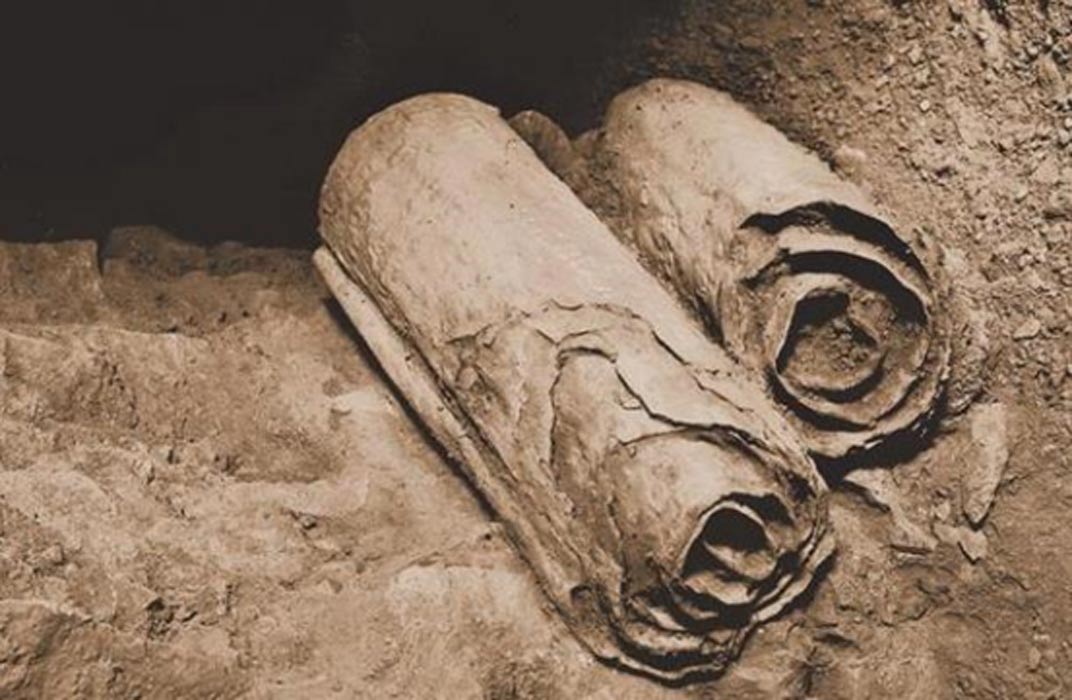
How great a find was discovered in 1947 among the Dead Sea
Scrolls. In this archeological find was
located an intact and in “perfect” condition, 2nd Century BC scroll
of the text of Isaiah. It has been
compared to the oldest know text, about 980 AD and is astonishingly
accurate. In fact, scholars have
concluded that it is an exact copy. This lays waist to claims that the
prophecies of Isaiah concerning the Servant-Messiah, the Millennial Kingdom,
and God’s Plan of Peace were added later in time by editors of the text. You see if you believe in divine inspiration
then you must also believe in divine preservation. If God cared enough to inspire the writers of
the Bible then surely he would preserve that message also.
If he preserved it then we can trust what is written. We can trust the prophecies. We can trust the fulfillment of the
prophecy. We can look forward to the
restoration of Israel. We know that
Jerusalem will be the capital of the world because we know the prophecy of our
Lord establishing his kingdom here on earth in Jerusalem for 1000 years. Through the seed of Abraham the whole world, every
nation, all of creation will be blessed.
We know this because the scripture has been preserved by God
himself.
We also know this.
That Jesus fulfilled the prophecy of Isaiah 53. When it says, “Surely he hath borne our griefs,
and carried our sorrows: yet we did esteem him stricken, smitten of God, and
afflicted. But he was wounded for our
transgressions, he was bruised for our iniquities: the chastisement of our
peace was upon him; and with his stripes we are healed” (Isaiah 53:4-5).
That means that Jesus did actually take
our burdens of sin and he carried our sorrows and despairs to the cross. It also means that we witnessed the
chastisement of God that he took for us.
He was beaten, and mocked, and died for his love of mankind. Jesus took our punishment like a loving older
brother takes the blame for his siblings.
He died for us. We know this
because scripture prophesied this. We
know this because the New Testament recorded it for us. We can trust it because God himself preserved
the witness in the accuracy of the text.
This is the truth that sets you free.
Jesus was sacrificed to pay the debt of sin for you and for me. We are indebted to Jesus for our very lives. By
accepting this truth he promises to give us a life that we cannot
comprehend. He said a more abundant
life! More life than we know of. That is amazing love.
What I relay to you is a true story of a young couple. It was told as a matter or confession, not to
a priest, but to any who would listen. I
don’t feel the necessity to identify the couple, as this could be any couple in
modern society.
This young man was seeing a young lady, and their attractions
grew to one another as often young people do.
They were both working and soon decided that it would be best to move in
with one another and therefore save on some of the costs of living. This would make things financially better for
the both of them, plus there would be other “fringe benefits”.
The young man admitted he was self-centered and was
concerned more about having freed up money to have a good time and to have the
benefit of sexual pleasures at will. He
wasn’t concerned about taking precautions to avoid pregnancy; that was her
problem, not his. He remember how great
it was to be living with her indulging one another’s fantasies without regard
to God or anyone else. Until she got
pregnant.
The pregnancy alarm “slapped him in the face”, as he put
it. They were both shocked and caught
off guard. Suddenly life stopped for them.
All of their future plans, their relationship, and collage would all
have to change. He remembered thinking
that his whole life was suddenly snatched from him with the realization of this
permanent change. He regretted his
foolish arrogance and disregard for not avoiding this predicament by listening
to his parents warnings. He was
scared. She asked what to do. He lined up the options: marriage, bail on
her, abortion, or just ignore it.
She wanted marriage and to keep the baby, but he wasn’t ready,
so he just pushed her away ignoring the issue.
She moved in with another friend but still sought his advice. He wouldn’t
return her calls. In fear and desperation
she scheduled an abortion.
When he found out his heart was sickened. Guilt flooded over his whole mental and
emotional state. He was shamed that he
had failed her and the baby. He wanted
to tell her not to go through with it.
But his cowardice had left him unable to move, he had forsook his
responsibilities and left the burden to his girlfriend. Eventually he mustered up the strength to accompany
his girlfriend to the clinic.
When he walked in there were others like him waiting with their
family members. He could feel their eyes
on him. He knew that they knew that he was the father of the baby that was
being aborted. He was murdering his own
child. He was sacrificing his own baby
for what he perceived would be a better lifestyle for himself. He knew that his girlfriend was struggling.
She want to keep the baby, but was afraid that without his support it would not
be possible. She thought that he loved
her. She realizes now, too late, that he
loved himself more.
The abortion was quick.
After the abortion she left with other friends who had come to support
her. He left all alone. They never spoke again. The guild and shame of the murderous act had
destroyed their relationship. Decades
later this time period of his life would still haunt him. Wondering what his child would have been
like. Wondering what his marriage with
this young lady could have been. How
many memories did he forsake for his selfish act?
Later he married a Christian lady. He started going to church. He would here the pastor teach on how God
said that children are an heritage of the Lord (Psalms 127:3-5). He read how scriptures like John 16:21
remarked on what a joy it is that a man can be born. He heard in Provers 17:6 where it said that
Children’s children are the crown of old men; and they glory of children are their
fathers. He felt such sorrow and
remorse. He had missed out on those
blessings. The blessings of seeing the
birth of his baby. He missed out on the
joys of running with a kite with his baby.
He missed the times of teachings, like riding a bike, or driving a
car. More than that he missed out on the
joy of having his grandbabies sit on his lap.
Unable to keep his façade up any longer. He spent hours confessing to
his wife.
He confessed his selfishness to her. He relayed the shame of his cowardice
avoidance of his responsibilities to his girlfriend and to his baby, and to God. In tears he poured out his regrets and a
lifetime of torment that he has lived with all of those years. His wife took him in her arms and for two
hours she told of the forgiveness available from God in Jesus Christ. He eventually pleaded his cas before God, and
poured out his sorrows to him. He
repented of his selfishness and lack of courage in doing what he knew was
wrong. He confessed the murder of his
own child.
He received forgiveness.
He has reached out with the support of his wife and his church to the
once young lady, who he had failed before.
She too had spent a life time of dealing with the guilt and anguish that
comes from the shameful act of murder we call abortion. She too has been
redeemed by Jesus Christ.
It is a terrible thing when society and governments condone
the murder of innocent babies. It is a
terrible testimony to the state of a nation that prefers mothers to kill their babies
for profits to be fed to special interest corporations. Surely they will be held accountable before
Christ in the final judgement. So will
the Christians who stop silently and watched this atrocity unfold before their eyes. Especially those who live in countries where
they have the right to vote on such matters of conscience. It is not just those who need forgiveness. God
forgive us all.
In this letter the author
skillfully outlined how the bible cannot be trusted. If you look at the evidence they put forward
then it would be easy to convince yourself that there is no reason to put any
trust in the bible, or any of its translators or scribes for that matter.
This is not necessarily a
direct response to this article, but rather it did get me thinking how many
young Christians are attacked with such half-truths and then told that they don’t
have a leg to stand on. Indeed this article goes so far as to start the article
in such a manner as to silence ignorant Christians from the very first few
paragraphs.
The author uses phrases
like, “They are God’s frauds, cafeteria Christians…”. In addition the article states that “clergy
invoke a book they seem to have never read and words they don’t understand”. The only true thing the author reveals is
ignorance of what Christianity is all about.
That is probably our fault. We do
know that not everyone who calls themselves a Christian, is in fact a disciple of
Christ as required in scripture. Despite
the stereo types we have been granted by modern day Nero’s we do have some real
assurances that the Word of God is in fact just that.
Here is the thing. Most critics do not have an issue with the
original scriptures being divinely inspired by God. The reason is that none of
these original text have survived. What
most arguments center on is the accuracy of the text we have received. Here is the fundamental Christian view of
scripture. If God divinely inspired the writers
of the Bible, then he (God) also can preserve it. We have been given warnings
from God, not to alter his revelation of himself to us.
Ye shall not add unto the word which I command
you, neither shall ye diminish ought from it, that ye may keep the commandments of the LORD your God
which I command you. Deuteronomy 4.2
Numerous times the
different authors of the Bible asserted that they received direct guidance from
God on their writings.
Leviticus 1.1
– the Lord called unto Moses, and spake unto him… “saying”
Jeremiah 1.4
–(Jeremiah) “the word of the Lord came…. “saying”
Revelation
1.1 – The Revelation of Jesus Christ … which God gave unto him (John)
Throughout the bible the
authors warn of the dangers of altering the text of the scriptures.
Moses the 1st
author warns against adding or taking away from the Words of God.
What thing soever I command you, observe to do
it: thou shalt not add thereto, nor diminish from it (Deuteronomy 12.32)
The Apostle John gives a
clear warning with a consequence on adding or taking away from the words of the
prophecy.
For I testify unto every man that heareth the
words of the prophecy of this book, If any man shall add unto these things, God
shall add unto him the plagues that are written in this book: And if any man
shall take away from the words of the book of this prophecy, God shall take
away his part out of the book of life, and out of the holy city, and from the
things which are written in this book. (Revelation 22:18-19)
This statement tells us:
Not to add to
the prophecy or you will receive the judgement of God
Not to take away
from the prophecy or the Lord will take away you part in the book of life, and
the holy city, and from the blessings that are written in this prophecy
This also
tells us that there is no further revelation to be accepted, because God is not
sending anymore revelation.
Even in the middle of the
Bible God commands us:
Every word of God is pure: he is a shield unto
them that put their trust in him. Add thou not unto his words, lest he reprove
thee, and thou be found a liar. (Proverbs 30.5-6)
Solomon reminds us that
the word is:
Pure
Trustworthy
There is a
consequence for changing the Word
God will
reveal you as a liar
The importance of these warnings and
reverence of the word of God is demonstrated in archeological findings. The Isaiah text (700 B.C.) when compared to
the copied text of Isaiah found in the Dead Sea Scrolls (200 B.C.) are almost identical
with only punctuations added. So the
idea that original texts are necessary to get direct inspiration from God is
foolish. God has preserved his message
to us.
Mathew 5:18 – reminds us that not one jot or tittle will be removed until
the law is completely fulfilled.
Some proofs of accuracy
in prophesy Recorded in history:
Prophecy
Book
Written
Fulfilled
Expanse
Babylon ruled over Judah
Jeremiah 25:11-12
626-586 B.C.
609-539 B.C.
~50yrs
Babylon’s Gates Open for Cyrus
Isaiah 45:1
Between 701 and 681 B.C.
539 B.C.
Hundreds of years after prophecy
Babylon permanently overthrown
Isaiah 13:19
Between 701 and 681 B.C.
539 B.C.
Hundreds of years after prophecy
Babylon Reduced to Swampland
Isaiah 14:23
Between 701 and 681 B.C.
539 B.C. and Archology confirmed in 1800s
Hundreds of years after prophecy
Jews survive Babylonian Rule
Jeremiah 32:36-37
From 626 and 586 B.C.
536 B.C.
~90 yrs
Add to this over 300
prophecies fulfilled in the birth, death, resurrection, and ascending of Jesus
Christ to the throne room of God.
How can we know what we
received is accurate? Jewish tradition takes place after the fall to Babylon
and Assyria. The scribes located the books of the Law and began making
copies. This custom of copying the text
was a show of extreme respect and detailed scribing of the Word of God. Scott
Manning published an article in March 17, 2017 that gives the following
requirements for copying the Old Testament by Jewish Scribes.[i]
Jewish
requirements for scribes:
They could only use clean animal skins, both to write
on, and even to bind manuscripts.
Each column of writing could have no less than
forty-eight, and no more than sixty lines.
The ink must be black, and of a special recipe.
They must verbalize each word aloud while they were
writing.
They must wipe the pen and wash their entire bodies
before writing the word “Jehovah,” every time they wrote it.
There must be a review within thirty days, and if as
many as three pages required corrections, the entire manuscript had to be
redone.
The letters, words, and paragraphs had to be counted,
and the document became invalid if two letters touched each other. The
middle paragraph, word and letter must correspond to those of the original
document.
The documents could be stored only in sacred places
(synagogues, etc).
As no document containing God’s Word could be destroyed,
they were stored, or buried, in a genizah – a Hebrew term meaning “hiding
place.” These were usually kept in a synagogue or sometimes in a
Jewish cemetery.
Some unique things about
the bible verses other ancient scripts
Bible’s claim
that God is the author
Over 1500 statements in the text claim divine
origin
Bible’s Internal Unity of Message
40 Different Authors
Written over 1500 years
3 Different Continents
Message from cover to cover: God saves through
Jesus Christ
Historical
Accuracy – some examples
There has never been any archeological evidence
to dispute any historical claim in the scriptures
Moabite Stone found in 1868 documents Moab
rebellion against King Jehoram soon after the death of Ahab (2 Kings 3)
Lachish Letters found in 1930s are documents
found of a communique between two Hebrew commanders concerning the oncoming of
the Babylonians impending invasion under King Nebuchadnezzar
Hezekiah’s tunnel discovered in 1867 recorded in
(2 Samuel 5:6-8)
Textual
Accuracy – No other ancient text has as many resources to draw upon to test its
accuracy as the Bible does.
Over 5300 manuscripts fo the New Testament
10,000 Latin Vulgate
Over 24,000 manuscript copies of portions of the
text
No other ancient text has close to the amount of
verifiable copies for comparison of accuracy – including Homer’s Iliad (643
surviving manuscripts)
Concerning
Christ in Archeology
Codex Mediceus 68 II – Roman historian Tacitus
wrote in a major work titled Annals (116-117 A.D.) giving credit to Pontius
Pilate for executing Jesus.
Famous and Memorable Works of Josephus (including
Jewish War and Jewish Antiquities Book 20) – Jewish historian Flavius
Josephus’, (37-100 A.D.), account of the martyrdom of James, identifies James
as “the brother of Jesus who-is-called Messiah” being executed by the high
priest Ananus in 62 A.D.
Tetimonium Flavianum – 15th Century
manuscript contains the testimony of Josephus referring to Jesus as a wise man,
“if one out to call him a man.” It further speaks about his crucifixion, and
resurrection. (authenticity contested – however it is an ancient text that has
been recovered).
Ossuary of East Talpiot a district in Jerusalem
inscribed, “Jacob, son of Joseph, brother of Yeshua” (published in 2002).
These tell us:
Jesus existed as a man
His personal name was Jesus (Greek translation)
He was called Christos (Greek translation)
He had a brother named James
His followers multiplied in both Jew and
Hellenistic cultures
Jewish leaders did not approve of him
Pilate decided to execute him
Pilate was the governor of Judea 26-36 A.D.
Other not so
famous people in history
Celsus a philosopher thought Jesus was a majician
Piny the Younger a Roman governor wrote about
worship of Christ as a god.
Suetonius a Roman writer, lawyer and historian, wrote
of riots in 49 A.D. among Jews in Rome thought to be incited by Christians
Mara bar Serapion, a POW held by Rome wrote a
letter describing the wise Jewish king, indicating Jesus as the subject.
Why is this so important?
But these are written, that ye might believe
that Jesus is the Christ, the Son of God; and that believing ye might have life
through his name. (John 32.31)
We can trust what is written
We can trust that it came from God
We can trust that we have the complete
revelation from God
We know that Jesus Christ is the Son of
God
We know that we can please God in
obedience through Jesus Christ
We know that we can believe in Jesus
Christ for salvation
We know that this belief in Jesus is all
we need to have life
The 1st chapter of John refers to 2
different reactions to the Light (Word).
Rejection and darkness
Believe and Life
John 1:10-13 says:
Some received Him
Some believed Him
Those who believe were empowered to be the
sons of God
We cannot determine who will believe our report. However; this must not stop our witness. In the Book of Exodus it speaks of God hardening Pharaoh’s heart. But; if you take a closer look you will see that God in his mercy revealed Himself to Pharaoh multiple times and gave him many chances. The scripture says that first Pharaoh repeatedly hardened his heart toward God. God so then with no other recourse left, let Pharaoh have his way. Pharaoh’s disbelief led to his death, and the death of many others. Unfortunately, those who do not believe and have a public forum will lead many to their own death because of unbelief.
The good thing is that those of us who do believe. To us has been given the message of
redemption. This message is ours and
ours alone to deliver it. Angels are not
given so great an honor as to lead others to Christ. If you have ever wondered what God has for
you to do, it is this, love God (Mark 12:30), love your neighbor (Mark 12:31),
and make disciples of Jesus Christ (Matthew 28:18-20).
In December ago I watched a Christmas concert video where one of the performer is my little foster sister, Sandra. I very impressed and proud to see him sitting in the front of grand piano playing a classical Christmas repertoire accompanied by an orchestra. Elegantly her fingers danced swiftly on the piano keys. While I watched Sandra on the stage, I remembered when she was under 17, I often took her to watch music concerts. She was interested in music especially classical music. I still remember when we were watching a concert, I whispered to her, “Someday you’re not only sit as audience but you must sit on the stage as a player” she replied firmly, “Yes! I must…!”
Now Sandra has proven her words a few years ago, now she has moved from the viewer to be the real player. Sandra is in the right position according to…
James talked about enduring trials, but what kinds of trials was James talking about? I found this in Hebrews and thought that it was applicable to what we are discussing. It is important for us to understand that faith results in actions. Sometimes these actions are quite sever. However, going through these trials build us up in Christ and gives us the endurance needed to run our race well. Below is a table that shows some people in the Old Testament who were tested.
Two things of note. First, in Hebrews 11:29 the author briefly mentions when Israel crossed the Red Sea. Now something that may be overlooked in the casual reading of this little verse… each individual had to make a decision to trust God and pass through the waters. Any one who would have stayed behind, even though they would be “elect” of God would have died at the hands of Egypt (the World system). Those who truly believed God and used that faith to move forward were spared death. Without faith in God they would have never moved.
Second is the entirety of Hebrews 11:35-40 shows the trials that others before us have had to go through. These things they endured not only demonstrated their faith, but; gave a benefit for us. Without these martyrs we would not have examples of what faith looks like in action. We would not have the benefit of being able to trust in the Lord without seeing the faithfulness of God in their sufferings. We could even go so far as to say that without the trials of the faithful who have gone before us, we would not know God. Why then do we go through trials.
Hebrews 11:17-33
Faith
Who
Action
By Faith
Abraham
Offered Isaac in obedience of faith and trust in God
By Faith
Isaac
Blessed Jacob and Esau’s future trusting the promise of God
By Faith
Jacob
When dying Blessed his sons future trusting the promise of God
By Faith
Joseph
Commanded his bones be brought out of Egypt; believing God
By Faith
Moses’ Parents
Hid him 3 months without fear
By Faith
Moses
Refused to be a son of the Pharaoh’s daughter
By Faith
Moses
Forsook Egypt
Through Faith
Moses
Kept the Passover in obedience through faith
By Faith
Moses and Israel
Passed through the Red Sea in obedience through faith
By Faith
Joshua and Israel
Fell the Walls of Jericho by obedience to the Lord
By Faith
Rehab
Received mercy salvation
Through Faith
Various Judges
Subdued kingdoms, wrought righteousness, obtained promises, etc… all through obedience in faith
Take some time this week to search out these examples and see what these saints did because of their faith. If we believe that Jesus is the Lord and stand in that faith, then we will receive trials. Trials are a good thing. Trials help us to grow and mature in our faith. Trials help us to trust more on the Lord and his promises. Trials help others to trust in the Lord and give an opportunity for others to learn how to respond in trials, and to encourage their own faith and endurance.
Brother of Jesus, Leader of the Church of Jerusalem
James the brother of Jesus was not a believer of Jesus as the
Son of God until after Jesus was resurrected.
James was a devout man who was also known as James the Just. Clement of Alexandria and Hegsippus both
wrote epithets that refer to James as the Just. He was a devout man who
demanded the respect of both Christian and Jewish leaders.
Once converted, James is believed to have worked, in the
early church at Jerusalem, with the Apostle Peter (Cephas). The Encyclopedia Britannica explains the
James the brother of Jesus may have been a natural fill-in for the martyr James
of the son of Zebedee (Acts 12:2). James appears in the book of the Acts of the
Apostles to have been an influential member of the church Council in Jerusalem. Paul the Apostle received council from James
when he returned to Jerusalem. Paul
lists James and Cephas at pillars of the church in Jerusalem. Peter also when he had been released from
Prison in Acts 12 told them to go and tell James. Peter’s singling out of James puts an emphases
of the importance of James to the church in Jerusalem.
James died around 62 A.D.
Christian Historians put his death in Jerusalem where he was martyred
for his faith in Jesus as the Son of God.
Eusebius, a 4th Century Christian and historian chronicles 3
different sources of the death of James.
Clement of Alexandria, Hegesippus, and Josephus all have a different
version of the martyrdom of James.
Hegesippus’ version is the one Eusebius judges as most correct.
AND now Caesar, upon hearing the death of Festus, sent Albinus
into Judea, as procurator. But the king deprived Joseph of the high priesthood,
and bestowed the succession to that dignity on the son of Ananus, who was also
himself called Ananus. Now the report goes that this eldest Ananus proved a
most fortunate man; for he had five sons who had all performed the office of a
high priest to God, and who had himself enjoyed that dignity a long time
formerly, which had never happened to any other of our high priests. But this
younger Ananus, who, as we have told you already, took the high priesthood, was
a bold man in his temper, and very insolent; he was also of the sect of the
Sadducees, who are very rigid in judging offenders, above all the rest of the Jews,
as we have already observed; when, therefore, Ananus was of this disposition,
he thought he had now a proper opportunity [to exercise his authority]. Festus
was now dead, and Albinus was but upon the road; so he assembled the sanhedrin
of judges, and brought before them the brother of Jesus, who was called Christ,
whose name was James, and some others, [or, some of his companions]; and when
he had formed an accusation against them as breakers of the law, he delivered
them to be stoned: but as for those who seemed the most equitable of the
citizens, and such as were the most uneasy at the breach of the laws, they
disliked what was done; they also sent to the king [Agrippa], desiring him to
send to Ananus that he should act so no more, for that what he had already done
was not to be justified; nay, some of them went also to meet Albinus, as he was
upon his journey from Alexandria, and informed him that it was not lawful for
Ananus to assemble a sanhedrin without his consent. (24) Whereupon Albinus
complied with what they said, and wrote in anger to Ananus, and threatened that
he would bring him to punishment for what he had done; on which king Agrippa
took the high priesthood from him, when he had ruled but three months, and made
Jesus, the son of Damneus, high priest. [i]
Tradition holds that James was brought to the temple and
confronted on whether he believed that Jesus was the messiah. James’ stance of belief that Jesus was indeed
the Son of God infuriated the Sanhedrin and James was pushed of a high place of
the Synagogue and then stoned. It is
reported that James prayed for his attackers in the same way that Jesus did, “Father
forgive them, they know not what they do.”
Then his head was caved in by a club.
James the brother of Jesus had once doubted Jesus as the
messiah. He probably felt at one time
that he was crazy and was ashamed to call him his brother. This James who believed and followed the Law
of Moses to the last dash and the last dot of ink had given his life for his
belief. A belief that Jesus is indeed
the Son of God who takes away the sins of the world.
[i] “Josephus
on James.” Dr. Beth Elise Whitaker, 11 Apr. 2013,
pages.uncc.edu/james-tabor/ancient-judaism/josephus-james/.
I spoke with a friend a day or two ago. She was concerned because her son was getting
old enough to leave the fold now. She
was concerned with the usual things that we as parents get concerned
about. If you have lived through this,
or are currently going through this situation, then you know what I am talking
about. This is a heart wrenching time
for a parent. It has been 18 years where
the mom and dad have been caring for the needs of their child. They have tried hard to prepare them for this
inevitable day. All their hopes and
aspirations are tied up in the fruition of the life of labor and love they have
poured into their little baby, who is now a young adult. Have they been good parents?
What if their young one fails? How will they be able to help? Will their child ask for help? Did I prepare them enough for them to be successful?
But probably the most heart wrenching question for a Christian parent is, “Will
they continue in their faith?” Will they walk away from God and never return?
In a study done by Lifeway Research, author Ed Stetzer,
relays that 70 percent of high school students who attended church on a regular
basis, for at least one year, will stop going to church during their years of
higher education. There are allot of
reasons for this, but most do not intentionally stop going to church. That is, it is not that they could not wait
to get away from their oppressive Christian parents so that they could leave their
archaic religion. Most just get caught up
in their new busy life. Juggling of
study, school, work, and the development of new friendships distract them from their
previous priorities. Some will get
distracted for a while, maybe some for several years, but most will eventually
return. Probably when they start their
own families. There are a few who will
get distracted far beyond measure. Some will
forsake their childhood upbringing in favor of some college professor’s views,
or do the world views on life, sex, and politics that permeate the college
campuses. We can find throughout scripture examples to prove that the Lord does
not abandon his children.
In Luke chapter 15 we find the story of the prodigal son. In this story the youngest son makes a plea
for his half of the inheritance and leaves home. This rebellious son then squanders his
fortunes in a foreign land and winds up being homeless and penniless. After much soul searching he decides to
return home and beg forgiveness in hopes that he can work on the family estate
as a hired hand. When he returns his
father is overjoyed. The father’s love
overflows from deep in his heart and he rejoices over the return of his son
with a great feast and a party. The
oldest son, who remained obedient is put off with this forgiveness his younger
sibling received. He is caught up in his
own selfish interests to see the miracle that has happened.
This story has many different points at which we can tear it
apart and find some universal truth or a great life application. I have many times used this parable as a part
of my testimony, because I was also a wayward son who had returned. If you are not familiar with this story it
can be found in Luke 15:11-32.
Here in this passage we see a man that did everything
right. He raised his kids in a
God-fearing home. He taught them the
value of good hard work. He taught them about the Lord. He taught him the customs of their people,
and how to be good men. He instructed
them in the way of their faith. Yet one
of his children fell away. This is the
case for many of us parents.
We can teach, and discipline, and hold our breath till we
are blue in the face, but some of our children will go away form their faith. We can do everything right. Still our loved one abandons the truth and
rebels against God. I should also
mention that we can do everything wrong, and yet our child finds God. The point here is that faith is a personal
decision. Our job is to pray for them,
teach them, and reinforce the instructions of life and hope in Christ. Teach them the wisdom of knowing God and the
advantages of living a godly lifestyle.
We are to give them an understanding of God that they can use in life’s
decisions. But the decision is up to
them. Each man (woman) is responsible to
God for themselves. This is why the father
rejoiced.
The father in Luke 15 knew when his son asked for his share
of the inheritance and left that he was already lost before his feet his the
road. He also knew that he could not
stop him. He knew that while his son was
in rebellion that he was already dead spiritually. I am sure that his heart was broken. Something that we cannot miss though. The father knew his son had to make the
decisions.
When his youngest son asked for the money his father did not
argue with him. His father could have
told him, that money is not yours yet, you do not have a right to it. His father could have drilled him with all
kinds of questions, he could told him how foolish he was, and what a bad son he
is. He could have struck out in
anger. The father had all of the
authority and right to do any or all of these things. Instead he listened. He gave his son an opportunity to learn a
life lesson that his son needed.
This father also trusted God to return his son to his faith.
The father knew that the son in his heart did believe in God and that this
little light of faith would be used by God to steer him home. I am sure he held onto Proverbs 22:6. The father had hope. He knew that God loved his son also, just as
much as he did. He knew that God would
not abandon his son.
This hope is evident in verse 20 of Luke 15. It says, “But when he was yet a great way
off, his father saw him.” This father was looking for the return of his
son. He expected the Lord to deliver his
son. He rose up and looked for him every
day! We don’t know how long the
timeframe is of the story, but it was long enough for the son to lose his
inheritance, take a slum job, deal with starvation, and finally repent. The son swallowed his pride and came with
full intention of making things write with his father no matter what the
consequences.
This story can tell us so much about the love of God. When the son returned the father did not care
where he had been, or what he had done.
He only say his son. His baby was
coming home. I think about this and I
think about my own son. He is a grown
man, but every time I look at him, I still see the little infant that I held
for the first time at his birth. I know
the heart of God by this memory. With
all that I love my son and no matter what he has done or where he has been, I
still see this little baby in my hands.
That I like to think is the way that God sees each of us. This father in our story just saw his baby,
crying and beaten up by life, returning home.
This father who loved his son, put his arms around him. Nothing else mattered.
This is what Jesus made possible. No matter how far we go. No matter what we have done. No matter how
rebellious we have been. Jesus made a
path home for us, for our children. Have
hope in the Lord. Your heavenly Father
has not abandoned you, and will not abandon your son or daughter. Yes there are some hard lessons in life to
learn. No we cannot shelter our children
from consequences of their own decisions.
However; we can have confidence that the Lord will never leave or
forsake them.
Exodus 20: What do the 10 Commandments Mean for the Christian?
It is true the Law cannot make one righteous. Neither does the keeping of the Law sustain our salvation. However, Paul on several occasions states that we should not let Grace be an occasion for sin. In other words we should not let our freedoms be taken to far, and thus make the reason for our Grace be lost. Turning to Exodus 20 we can get a good understanding of the 10 Commandments and how we can apply them in our Christian lives, not for salvation or works of justification, but because scripture says that we should do works of righteousness. James 4:17 “So whoever knows the right thing to do and fails to do it, for him it is sin.” How we choose to live out this freedom that has been given us in Jesus Christ is a direct reflection of the heart. These are just short paragraphs to get you thinking.
The first commandment “Thou shalt have no other gods before me.”(.3) is a pretty straight forward translation. The Hebrew words used here are quite easily put to the English text of the King James Version. The word “gods” is the plural form of Elohim. This word indicates that there will be no other rulers, judges, divine ones, angels, works or special possessions of God. The word “before” is the Hebrew word paniym, which means face and is used here to indicate “before my face”, or “in from of” or “in presence of”. So the command is quite clear, Thou (you) shalt (will not) have anything that has authority over you before me. A Christian should not let anything interfere with the sovereignty of God over their lives. No other authority is to reign supreme over the Word of God. No government, carrier, relationship, or other aspect of our lives should be allowed to stop us from obeying the Word of the Lord. We should live outward lives that indicate who has supreme authority over our lives. That supreme authority is God Himself.
The second commandment “Thou shalt not make unto thee any graven image (v.4) When looking at this commandment we can see that the meaning “to cut or engrave”. Specifically it comes from the Hebrew pecel (peh’-sel) meaning idol or image. So the understanding is that we are not to make any image as an idol. The command goes on to include any likeness of anything that is in heaven, or in the earth, or in the sea, in fact it goes so far to say not even under the earth. Nothing should be made that is to appear to represent God, or any other idol. One should note that an idol is something that is obsessed over. We cannot use anything made by hands or in creation to represent God for worship of any kind. Our affections should be solely placed on God, nothing should be used to represent God, because we run the risk of worshiping what is created rather than the creator. We do not bow to crosses, the Eucharist, or to anything other than God himself. God will not share his worship with anything else.
The third commandment “Thou shalt not take the name of the Lord thy God in vain” (v.7) This commandment is a warning that we should not take (bear), or lift up either literally or figuratively the name of the Lord. The meaning is that we should revere the name of the Lord, and should not take it lightly. We are not to frivolously use the name of the Lord to seal an oath, or to in effect evoke the Lord on our behalf. God is not a djinn to be uses as we will or conjured up for our purposes. With this comes a sense of respect and personal accountability. If we cannot use the Lord for an oath, then we must be honest and trustworthy in our speech and actions. We are to have a name that brings respect to the Lord. We are to honor the name of the Lord. The end of this commandment is frightening. The Lord says that He will defend His own name. Anyone who disrespects Him will be held accountable to Him. We should then live in truth and in Spirit giving honor and respect to the name of the Lord in our speech and our actions.
The forth commandment “Remember the Sabbath day to keep it holy.” (v.8) The Hebrew word for remember is zakar (za-kar’), and is used to cause to remember or as a memorial. The later verses further explain that there were seven days that God used to create the earth, and on the last day, God rested. This is a day to be kept in memorial of the provisions of God. In six days he created everything that was needed to sustain his creation. Then he rested. God took a break for his labors because they were completed. The Sabbath is referred to in the Jewish culture as a
Holly day which means basically an intermission. Much like where we get the word sabbatical. This is a time to get away from everything, to make a complete break to clear the mind, and spirit. This is a time of renewal. Even batteries need to be re-charged or replaced from time to time. Jesus said that the Sabbath was created for man, not man for the Sabbath. God knows we need a time to recharge and get away from all or our labors and worried. We need a time to clear our minds and to “just be still”. We need time to relax and remember why we are working so hard. Spend some downtime with the family. Take time off from all work and all work related items. Relax and enjoy the blessings the Lord has brought. If not you will weary yourself and suffer burn out. You will lose productivity. You will lose your joy, and you relationship with Christ will suffer, along with your relationship with your church, family, and friends. Your ministry will suffer if you do not take time away, and push the reset button.
The fifth commandment “Honor they father and thy mother.” (v.12). The word honour in is from the Hebrew kabad (kaw-bad’) and can be used in a positive or negative manner as most root words can. Given the context of the verse, mainly, that it will add longevity to your life or a better quality of life, it can be understood that it is to be used in a positive manner. So then it can be meaning to abound with, or to promote, be rich in, or to be honorable. So then we are to treat our father and mother with abundant honor. How then do we do this? The showing of respect is the primary way that a king is honored. Shows of respect mean; proper use of language in their presence, bringing of gifts, sharing of blessings from God (resources, food, income, health benefits, lodgings, etc…), spending time with them (sharing special moments, letters, birthdays, celebrations), showing affections towards them, respecting and supporting their decisions, understanding that without their guidance and provisions you would not be where you are today. Showing honor is a lifestyle of respect and gratitude.
The sixth commandment “Thou shalt not kill.” (v.13) The sixth commandment seems like such a simple statement. Yet often times it is added to in order to say that capital punishment is not biblical. However, this commandment says that you shall not “kill”. The Hebrew word is ratach (rä·tsakh’) meaning to slay, or murder. To murder is to deprive of life according to the Webster’s Dictionary of the English Language 1828. 1 John 3:15 does specify that the application of this is more than just a physical act. The writer tells us that “Whosoever hateth his brother is a murderer:” This is because God looks into the intentions of the heart. Not only do I need to refrain from murdering someone in a physical sense, but I need to rebuke hatred in my own heart for others that may or may not have offended me. If I have allowed prejudice to establish a beachfront of sin in my heart, to hate, thus to be guilty of murder. This commandment has nothing to do with the power or authority of the government or of law enforcement, but everything to do with love of others; instead of selfish hatreds.
The seventh commandment “Thou shalt not commit adultery.” (v.14) This command is actually pretty straight forward. The word for adultery here is the primitive root na’aph (nä·af’) in Hebrew. This word is “to commit adultery” it is usually meant from a man and always refers to the wife of another man. It is a strong word and is associated with idolatry. You will not worship (love, adore) another man’s wife. Wow this is so beyond the physical act of sex with another man’s wife. Now we can see why Jesus said that to look after another man’s wife in lust is to commit adultery. That is because the original command actually says the same thing. No looking at another man’s wife to worship her in your heart, to love her in an ungodly manner. No actual sexual contact either. To do so you actually break not only this commandment, but the first, second, and tenth commandments as well. How dangerous the lusts eyes and the desires of our hearts can be.
The eight commandment “Thou shalt not steal.” (v.15) Now here is one that we always try to shorten, however; when we look at the Hebrew word use here we can see that there is no short order to this command. Ganab (gä·nav’), the Hebrew root, means to thieve (literally or figuratively) by implication, to deceive, or carry away; to get by stealth or deception. What then do we say to this? You will not practice theft either literally or figuratively by obtain by stealth or deception. You cannot take what is not yours literally you cannot. Neither can you take what is not yours through con, or ruse. You cannot take what is not yours through deceptive trade practices. You cannot be dishonest in your dealings would not be too far of a stretch. I think it could be summed up as this, if you want it, work for it. If you agree someone can earn a wage, then give them a fair wage. If you work for a fair wage then give the work that is do.
The ninth commandment “Thou shalt not bear false witness.” (v.16) To bear here means to answer (respond, testify, speak, sing, cry, give). The word for false is pretty simple and it means to lie (false, falsehood, falsely, vain, wrongfully, deceitful). Finally we can see the word witness which in the Hebrew means to evidence either abstractly (conceptually), specifically (explicitly, practically) or in record (as a source). This means you cannot lie about anyone, or any event either as a matter of oath, or as a matter of speculation. Jesus put it this way, let your yes be yes and your no be no. When you start to talk about things or people that you do not know you put yourself in danger of being judged in the same manner that you judged them. If you have to give witness as a matter of record for a court or an incident at work then you should speak plainly, never speculate and only relay the facts. You should avoid answering open ended questions, as these questions are designed to make you speculate. Being a witness is to present the details as you saw them, not others. Keep your conversation clean, no gossip. Be honest in word and in deed. Never lie and never listen to rumor, so you do not spread a lie and become a false witness. Remember loose lips sink ships. More than one church has been destroyed form the inside out because of rumors and innuendo.
The tenth commandment “Thou shalt not covet.” (v.17) To covet is to from the root chamad (khä·mad) in Hebrew and means to desire (take pleasure in). It is meant in a form that means to delight greatly or find desirable of precious. It can be used to mean delight, desire, or to lust after. I think we all know what this means. We can enjoy our neighbor’s good fortune, and celebrate with him in his blessings. We are not to desire to have the blessings that he has though. We should be content with what the Lord has blessed us with. We do serve the same God and we can never be happy for others if we are always comparing what they have to what we do not. The verse gets pretty explanatory, you will not desire your neighbor’s wife, servants, his means of living, any of his possessions, or his lifestyle. Ok that’s my neighbor’s stuff, what about the guy in TV? What about the guy done the block? Well lucky for us the definition of neighbor has already been litigated before the Messiah. Take a look at Luke 10:25-37. In there a lawyer sought to define what a neighbor was with Jesus. Jesus put is simple, everyone is our neighbor and we are to show mercy to our neighbors. We are then to be content with what we have. We are not to look to anyone else but God.
In summation I quote Romans 13:9. “For this, Thou shalt not commit adultery, Thou shalt not kill, Thou shalt not steal, Thou shalt not bear false witness, Thou shalt not covet; and if there be any other commandment, it is briefly comprehended in this saying, namely, Thou shalt love thy neighbor as thyself.” We are to treat everyone as we want to be treated. We are to love everyone as God loves us. You see if I love someone, then I want the best for them. I don’t desire to take what they have, because it makes them happy, and I love them and want to see their happiness. This is indeed to true sign of a believer, that we should love one another because God is love and everyone that loves is born again from God and knows God (1 John 4:7).
................... for lovers of ice cream. Your free on line magazine for sweet frozen treats. Recipes, inspiration, artisanal ideas for your delectation.