And The Virgin’s Name Was Mary

Photo by Guilman on Pexels.com

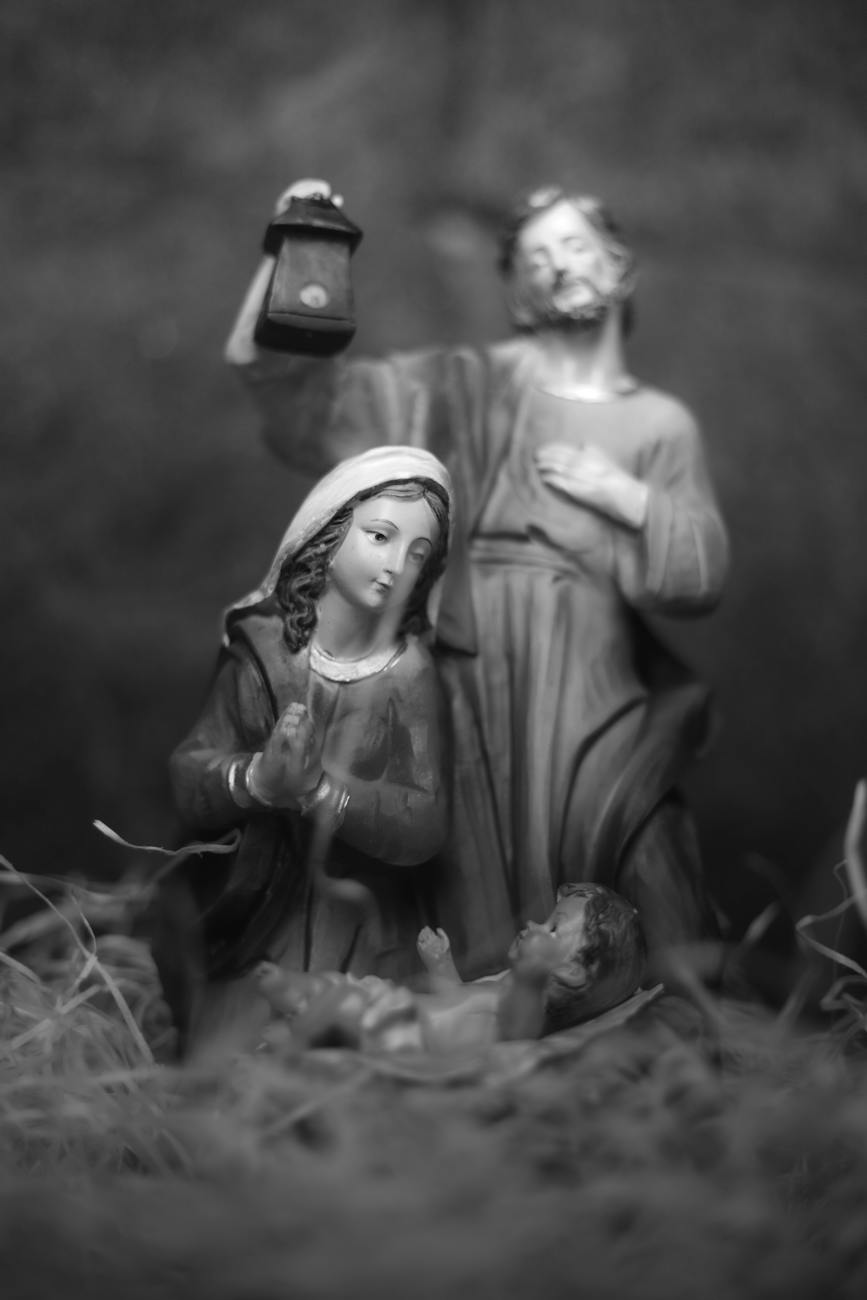
Luke 1:26-27 – And in the sixth month the angel Gabriel was sent from God unto a city of Galilee, named Nazareth, to a virgin espoused to a man whose name was Joseph, of the house of David; and the virgin’s name was Mary.

What an amazing introduction to this young couple.  The betrothed couple of Joseph and Mary.  This is a very important presentation that has valuable information.  This was a couple, that according to Jewish law was no longer viewed by society as two individuals, but as one family.  To break a betrothal, there would have to be a formal writ of divorce.  This is such a foreign concept to almost all cultures in modern society.  Especially with modern Western Culture who hold the concept of sex before marriage is an acceptable and necessary practice. However, this is not the view of historical Judaism, Islam, or Christianity.

Still, this is not just a practice of non-premarital sex, but a purposeful dedication to the one you are espoused to, so much that to desire another would be considered adulterous. Even with this acceptance of being basically already wed to one another they’re wedding day and consummation had not yet occurred.  Both Joseph and Mary were unknown to one another, or anyone else.  They are both virgins. To this couple was sent a messenger, Gabriel.

Gabriel was a messenger of God that was sent to Daniel to give an interpretation of a vision that was received in Daniel chapter 8.  We also find out from Luke that the angel Gabriel also appeared to Zachariah and Elizabeth to let them know that their son would be filled with the “spirit of Elijah (Luke 1:17). Who was prophesied to come before the coming messiah. (Isaiah 40:3; Matthew 3:1-3) This preceding of the messiah was prophesied by Isaiah and was fulfilled in John the Baptist.  The messenger from God, Gabriel was assigned with explaining the fulfillment of the prophecy to the baby’s parents.

Likewise in such a manner, Gabriel had to explain the rest of the fulfillment to Joseph and Mary.  Elizabeth was barren and past the age of delivery, but God made her barren womb to bear the child named John, who would become John the Baptist.  The messenger Elijah who bore witness to the Lamb of God who takes away the sins of the world.  He would finger Jesus of Nazareth as the Messiah. 

His birth would be glorified by angels, witnessed by shepherds and wise men who would bring gifts to celebrate the birth of the King of Heaven. Simeon would remark, “For mine eyes have seen thy salvation, which thou hast prepared before the face of all people; A light to lighten the Gentiles, and the glory of thy people Israel.” (Luke 2:30-32) Oh what a wonderful day for this elder of Israel to have his prayers answered, to lie down to sleep knowing that the salvation of the Lord God had finally come.  God had come to his people and fulfilled the promises and prophecies.

One of which was the sign of his coming.  Not only the fulfilling of the messenger before the message of salvation, but the method of his coming.  He will be born flesh and blood.  In a way more miraculous than a barren woman giving birth.  This sign would be something impossible to reproduce, it God were not involved.  It would ensure the holiness of the baby.  This baby would be born of a virgin.  This to would not be a last-minute detail, but a promised sign that is unique to this messiah.

Once again, the prophet Isaiah is called on to give this account of the Word of the Lord. “Therefore the Lord himself shall give you a sign; Behold, a virgin shall conceive, and bear a son, and shall call his name Immanuel.” (Isaiah 7:14; Matthew 1:23) and once again Gabiel would be called to explain to Mary and Joseph that they would be the ones by which the prophecy would be fulfilled.  You see when Jesus said, “That which is born of the flesh is flesh; and that which is born of the Spirit is spirit.” (John 3:6) he was standing on earth as the only one who had been born of the flesh and of the Spirit.

What a shame that some rogue translations of the English bible remove this word “virgin” from their translations.  It is to their detriment that they alter the Word of God.  They will be judged for this crime against God and for the souls they have mislead.  They try to hide the facts, that Jesus is the Son of God, born of the virgin as prophesied.  They try to dissuade you from the miraculous and powerful hand of God.  They seek to make his word untrustworthy.  But his word remains. “For verily I say unto you, Till heaven and earth pass, one jot or one tittle shall in no wise pass from the law, till all be fulfilled” (Matthew 5:18) The penalty for altering his word is severe.  They bring the judgement and wrath of God upon themselves. (Deuteronomy 4:2; Revelation 22:18-19).  The sad thing is that their in no excuse.  Everyone who has altered the word of God is well aware of the consequences, they just have no fear of God, and therefore lack knowledge. For, “The fear of the LORD is the beginning of wisdom: and the knowledge of the holy is understanding.”(Proverbs 9:10)

Therefore, the scripture reads; “And in the sixth month the angel Gabriel was sent from God unto a city of Galilee, named Nazareth, to a virgin espoused to a man whose name was Joseph, of the house of David; and the virgin’s name was Mary.”

In the sixth month!  The sixth month in the Hebrew calendar is a special month.  It is a representation of the relationship of God to his people. Dvora Waysman wrote in the Jerusalem Post, September 2022, “There is a rabbinic allusion that the month was named from the initial letters of Ani le’dodi ve’dodi li (I am my beloved’s and my beloved is mine), describing the relationship between God and His people.” [1]

With this special time of the year when Jews are considering their relationship to God, how much more fitting is the precious story of the arrival of Gabiel to the homes of Mary and Joseph.  The special relationship between God and his people Israel just got “real”!  God is coming in person!  He has chosen you, a virgin!  Even better… Mary… he knows your name.  Joseph… he knows your name! How wonderful it is that Jesus says, “Are not two sparrows sold for a farthing? and one of them shall not fall on the ground without your Father. But the very hairs of your head are all numbered. Fear ye not therefore, ye are of more value than many sparrows.” (Matthew 10:29-31)

Photo by Haley Black on Pexels.com

The area of Galilee is also of great importance.  The prophets Micah, Elijah, and Jonah are all mentioned as coming from the area of Galilee (Micah 1:1; 1 Kings 17:1; 2 Kings 14:25; Joshua 19:13) Many believe that Nahum and Hosea may have also come from the Galilee area. Isaiah prophesied that the messiah would come out of Galilee in Isaiah chapter 9.

Isaiah 11, Jeremiah 23, and 33 all indicate that the Messiah would come from the lineate of David, from the tribe of Judah.  Even way back in Genesis 49:10 God promises that the scepter will not depart form Judah that the tribe is the Law giver is with them. In 1 Samuel 20:6 the scripture further solidifies the Messiah coming from the House of David, from Bethlehem. (1 Samuel 20:6; Micah 5:2)

This message is a divine orchestration of time and circumstance. It is important to showing the working of the divine will and authority in working in heavenly wisdom.  God must fulfill his complete word.  In a broken people, in a rebellious world, with an active enemy trying to make him break his word.  Yet God put all the pieces together in his own time and in the manner he foretold.  On top of this, he did it with a willing virgin.  He did not violate anyone’s free will to complete his will.

What great lengths the God Almighty will go to so that he can keep his word. We can trust the Word of God.  He is faithful.  He is not bound by our understanding, or even our lack of faith.

Bibliography

WAYSMAN, D. (2022, September 17). Jewish Holidays. Retrieved from Jerusalem Post: https://www.jpost.com/judaism/jewish-holidays/article-717249


[1] (WAYSMAN, 2022) Article: What is special about Elui…

Pagan Christmas – Who Cares?

There are those who try to discredit Christmas as a Christian holiday because some aspects of the modern celebration are imported from pagan holidays that existed prior to Christianity. Even the Puritans had the celebration of Christmas outlawed for several years. The reason was because they thought that the Christmas celebration borrowed to much from pagan religions and was therefore no longer Christian. They considered that this made it ungodly to celebrate Christmas, for fear that they would be guilty of actually be worshiping a false god. That is a strawman argument. 

Cultures all over the world and in different time periods have always had an impact on other cultures when they came into contact.  Even the dominant cultures have been affected by those of whom they have conquered and absorbed customs and even beliefs. Rome was undoubtedly influenced by the many cultures that it met with, including the Christian culture.  In return, ancient Rome has had a great impact on the whole world. This impact has reached all the way into modern societies, and with it has come it’s version of Christianity.  As the Roman Empire flourished it affected, art, architecture, language, and even legal systems and military strategies.  With this came the other influences that came from the pagan societies that impacted ancient Rome. The catalyst for this particular season of joy is the winter solstice.

Photo by Oleg Magni on Pexels.com

The winter solstice was celebrated by many ancient cultures including the Celts, Romans, and Druids. They would celebrate winter solstice (or the shortest day of the year) in December.  With this celebration and Christmas being adopted during the same timeframe we will see many similarities between the pagan traditions of Rome and that of Christmas.

Photo by Arina Krasnikova on Pexels.com

The winter solstice was extremely important to the agricultural life of the pagan.  This solstice marked the end of the long harvest season and gave a momentary rest from the harvest labors and the planting season ahead.  It also marked the onset of winter. Long hard days surviving the isolation and scarcity of food and interaction lay ahead. The celebration was a chance to celebrate and enjoy the company of family and friends and wish them well through the winter.  The Roman celebration was referred to as Saturnalia.

Saturnalia was dedicated to the Roman god Saturn.  Saturn is like the Greek god Cronus. The Roman and Greek gods have been so interlaced that many confuse them for being the same gods.  This is an example of the cultural influences that occurred over time. This festival’s influence is still felt throughout the modern world.  While the Winter solstice is generally the 22 of December, the Roman’s celebration was originally on the 17th of December. 

Photo by Rachel Claire on Pexels.com

Saturnalia was the most popular festival in Rome and lasted for seven days.  It was originally celebrated for one day and was eventually extended to seven days. With the extension of the celebration, we can see how this is like our Christmas to New Year celebration in the United States. All work and businesses were suspended, and slaves were temporarily free during this time. In fact, the roles of master and slave were temporarily reversed.  Slaves were allowed to order their masters around, within reason of course. The end of the festival culminated with the giving of a gift, presents like candles, fruit, or statuettes were primary gifts.  The gift was usually given from one person to another, and were meant as a means of obtaining favor from the god Saturn  

Photo by Lum3n on Pexels.com

Another cultural influence on Christmas came from the Roman honoring of Saturn with mistletoe. To appease Saturn, they would perform fertility rites beneath branches of mistletoe.  Other pagan cultures used mistletoe as a sacred plant and associated it with a stay of hostilities or a truce, much like we see the use of a white flag.  Enemies would meet under a mistletoe as a sign of truce. Along with that the Romans would exchange wreaths made of holy as a sign of good luck and well wishes.  Ornaments in the forms of idols also decorated the exterior of the Roman homes during this celebration. This custom was also seen in the Germanic areas where they would decorate trees in honor of Odin during the winter solstice.  This custom of ornaments and lights on the Christmas tree was undoubtedly adopted from their influence.

Photo by Skitterphoto on Pexels.com

It is no wonder that when Rome took over Christianity and converted their holidays into Christian holidays that they would take the traditions they used to and apply them into the official state religious celebration of Christmas. However, this does not take away from the current or Christian meaning for celebrating Christmas.  The pagan meanings and worship of false gods have long lost their meaning and have been overtaken by either Christendom or commercialism.  Frankly I am more concerned with the commercialism as this does specifically go against Christian values. However, this does not diminish Christians who celebrate Christmas, nor does it mandate that the holiday be renamed from “Merry Christmas” to “Happy Holidays” to be inclusive or more historically accurate. 

Christians do not lose their Christianity just because the Romans (Catholic Church) have incorporated aspects of pagan traditions into the holiday.  Christians actually celebrate the arrival of God in the flesh, the birth of Jesus Christ, his death, burial, and resurrection through out the year, every Sunday.  In addition, having a special day to celebrate his birthday is a great remembrance of this miracle event, when God became his own creation.  It does not even really matter if it is on his actual birthday.  I am sure that God appreciates the time of remembrance and celebration for his amazing gift to mankind.  In addition, this gives us a venue to invite pagans and atheist into our homes and churches, our Christian culture. We have an opportunity to let them experience the grace of God the Father in Jesus Christ, God the Son, and to experience the presence of God the Holy Spirit in the heart of the believer.  Christians should celebrate Christmas with all humility and generosity that they can. We need not be ashamed of the gospel of Jesus Christ. Who cares if they unsuccessfully tried to discredit our celebration?  We celebrate the birth of our Lord Jesus Christ.  Let them see Jesus!   

Covetous Conversation: A Thought While Shopping

I was walking through Walmart about 2 days after Christmas, we needed some small food items, so I thought I would just kill some time while Dana Smith shopped. As I was walking I noticed a child and his mother, he was leading her by the hand and pointed to a toy that he wanted.

I thought how strange that this soon after Christmas they should be buying him a toy. Considering this I had to stop and evaluate my own reasons for looking around, when I really did not need anything. Was I too, just looking to consume something else that I did not need?

Then something else hit me. How often do I talk with others about things that I wish I had? How often do I look at someones car, or some other item for sell and say, wow I wish I had that? Maybe I don’t say it out loud, but I still say it in my heart. If so, then am I really believing that I have everything I could possibly need in Christ?

Covetousness can lead us into a form of idolatry. Idolatry is putting making a graven image (man-made) and making it more important than God. I know we all know the pitfall this can be. But let us consider the scripture on our words. 

Let your conversation be without covetousness; and be content with such things as ye have: for he hath said, I will never leave thee, nor forsake thee.
Hebrews 13:5 KJV

You see our conversation reveals our hearts. Everyone knows this simple truth. If you have conversations with unbelievers or other believers and all you talk about is what you do not have, this is a tell-tale sign that you are not walking in the Spirit. It also tells others that either you are a hypocrite or that the Jesus thing is not all it’s cracked up to be.

We should guard our conversations. Lucky for us this verse shows us how to change our motivations in our heart. It says that we should be content because we know that Jesus said that HE will never leave us, or forsake us. This means that he is always looking out for our best interests. We can have confidence in him that we lack nothing that is needed. 

Let our conversations so reflect the satisfaction we have in Christ. Let our mouths speak of the great and wondrous things he has done in creation, and in our very lives. Delivering us through storms, trial, and temptations. He keeps us from evil, sparing our hearts and minds of guilt and anguish. He was the one who sought us out, to deliver us from death, and restore a loving relationship with him. Life and I mean all of life is ours in him.

Immanuel

I remember one night, when I was very young that I had a terrible nightmare.  I had dreamed that my dad passed away.  I was in such turmoil, I woke from my nightmare, tears streaming down my face.  My heart was in such pain and agony.  I laid there looking into the darkness.  The dream was so real, that I didn’t know if it had actually happened or if it was just a dream.  I laid there and cried.  I wanted to get up and go to my dad’s room, but I was afraid he wouldn’t be there.  Even remembering the dream now, brings tears.

Finally I got up and walked to my parent’s door.  There room was right next to mine, but it seemed forever as I slowly crept into the hallway.  I stood there for a long time, wiped my eyes and took a deep breath. Gently I grabbed the handle and twisted the knob.  If he was there I dared not wake him up.  Quietly I opened the door, there was my mom lying asleep, she slept closest to the door.  I looked over for my dad.  My heart fell, he was not there.  I stood there frozen.

Then I heard him whispering from the kitchen, “Hey little buddy, what’s wrong?”  Man! I turned and saw him standing in the entrance to the dining area, and ran and put my arms around him and cried.  He picked me up and held me tight.  I told him about my dream.  He took me and laid me back in bed, and told me, “You don’t need to worry, I am with you, right here.”  Then he laid beside me until I fell asleep.  When I awoke the next morning, he was still there.  He was late to work, just to let me know he was with me.

I never miss the point in that.  It may seem silly, but every time I read in Matthew 1:23 where the angel tells Joseph that Mary is having a baby sent by the Lord and that he will be called Immanuel (God with us), I can remember the security of the feeling of my dad saying that he is with me and his big arms holding me, and how good it felt to wake up and know that he loved me enough to stay with me through the night.

This is the same love that our heavenly father has for us.  This year when you read the Christmas story and read through the verses, remember that God not only came here to be with us while Jesus was incarnate , but that he is risen from the grave, and that He is still with us.  When your done reading about the wise men and the shepherds, and the little baby in the manger turn over and read Matthew 28:20 where Jesus says, “I am with you always, even to the end of the age.”  Kiss your loved ones, and tell the Lord, thanks for always being there, even when He didn’t need to be.

Merry Christmas,-Harvey