
Islamic Apologist have made the claim that Jesus Christ was not the Son of God, nor God himself. They acknowledge that Jesus was a messenger of God. They equate him to Moses and other prophets. But they do not see Jesus as superior nor an equal prophet to Muhammad. Muslims maintain that Jesus was only sent to be a prophet to the Jews. Muhammad was a superior and final prophet that was sent to the entire world. There argument is a simple one that says there is no scriptural evidence that God would become a man. They point out that it is a fallacy of logic for the infinite to also be finite; like making a round square. They have said that there are no Old Testament scriptures that speak of the Son of God to come to the earth as a man. They argue that Jesus himself did not ever claim to be God, and so his disciples are wrong.
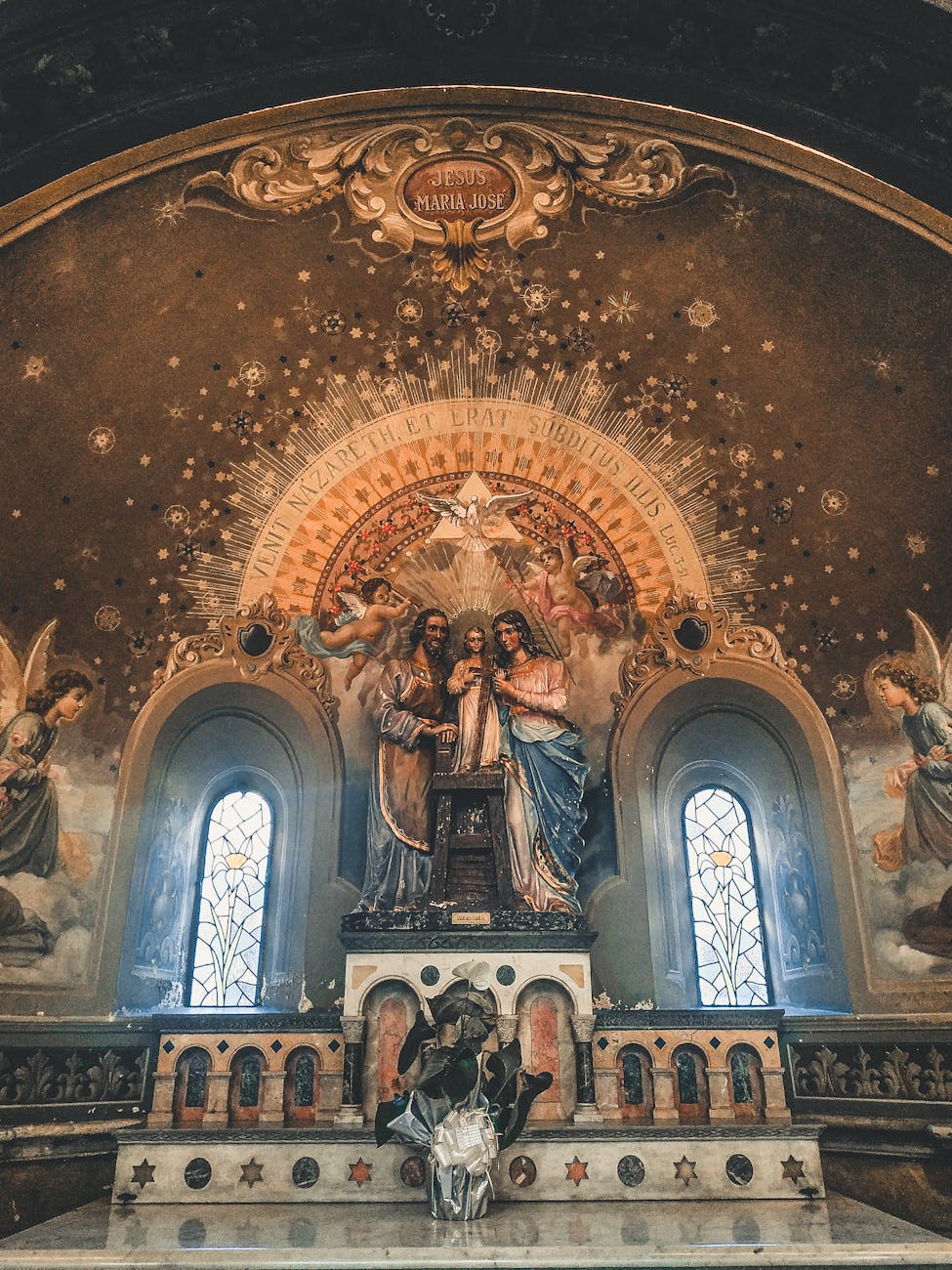
However, scripture does speak of God sending his Son as a child of men. Isaiah 9:6 specifically says that “a child is born” to us -to man. The title given to this child, born of men will be “the Mighty God, The everlasting Father”. This prophecy is in direct contradiction to Muslim claims that God never prophesied that he would come in the flesh. Here we see that God said a child is given and his name is God. The child is synonymous with the everlasting Father. This is a fulfilment of an earlier prophecy that God himself gives in the garden of Eden. Where, in Genesis 3, God speaks to the serpent and warns him that the offspring of the woman (child) would bruise the serpent’s head. Interestingly God says that a future descendant of the woman would bruise “his”, the serpent’s head. Not a future serpent offspring, but his head; the serpent that God is speaking to. Tied into this prophecy is the understanding that when the child bruises the head of the serpent, the serpent will also injure the child’s heal. The prophet Zechariah gives a chilling prophecy in relation to this point also. In speaking on God’s behalf he recounts what God said, in saying, “they shall look upon me (God) whom they have pierced” (Zechariah 12:10). This seems ample evidence from the Old Testament prophets that God said that he would not only come in the flesh, but that Israel themselves would look at him after they pierced him. What a clear reference to the crucifixion of Jesus, where they pierced his hands and feet and then stood there looking up at him as he hung on the cross. God hung on the cross while Israel looked upon his pierced hands with the blood of the sacrifice running down his arms. Then there is the sign that God told through the prophet Isaiah. “Therefore the Lord himself shall give you a sign; Behold, a virgin shall conceive, and bear a son, and shall call his name Immanuel.” (Isaiah 7:14) This maiden giving birth to the one who would be titled as Immanuel (God with Us) is the sign that God has given us his son, thus, God IS with us.
To alleviate the prophecy of the virgin birth they are willing to concede that Jesus was a significant prophet, the Messiah, and born of a virgin, but he was just a human servant of God, not divine and not equal to God. This approach is a weakness that even the Muslim can recognize, because they have to admit that God said the sign of his coming would be a miraculous birth that did not involve a human father, but a divine act of God. Once faced with this they will quickly switch to another approach. There next argument is that Jesus never claimed to be God.
As for the claim that Jesus never said that he was God, “In such words”. One can take a philosophical look at the error in this argument first. A claim to be someone or something is not necessary to be legitimate. Legitimacy is derived from a variety of sources. Claiming to be something or someone can give one limited credibility, however, true credibility is never accepted by one’s own mouth. There must be validations to establish the legitimacy of a claim. If someone claims to be a ruler, then they must have subjects to validate it. If one claims to be a teacher, then they must have students. If one claims to be a millionaire, then they must have financial statements. Witnesses, documentation, physical or historical evidence must be present to validate a truth claim. For instance, Muslim tradition attributes many physical miracles to Muhammad including the splitting of the moon, providing water and food for thousands, and healing the sick. However, the Quran itself presents a conflict for those claiming Muhammad performed physical miracles. Some Islamic scholars like Muhammad Asad argue the Quran establishes Muhammad never performed a single miracle other than bringing the Quran itself. It is not philosophically required of even profitable for Jesus to claim to be God. It is however necessary to have real witnesses, documentation, deeds, and historical, archaeological evidence, in this case, to validate the truth claim, that Jesus is God; of these we have no shortages.

Jesus may have never claimed to be the Son of God in the synaptic gospels. Nevertheless, there is no doubt that the author of the gospel of John viewed Jesus as God incarnate. John is very clear on his assertion that Jesus is the very Word of God who existed before the Creation, and who is the very Creator of everything that was created. He is, therefore, God (John 1:1-3). Furthermore, there is evidence in the Gospels that Jesus did make truth claims on being God. He said in John 14:12, “…because I go unto my Father.” . Making a direct claim to be the Son of God. In John 8:58 Jesus said, “Verily, verily, I say unto you, Before Abraham was, I am.” This statement says that he was the God that Abraham worshipped. These are just a few of many statements where Jesus affirmed his deity.
However, Islam does not accept the witness of the New Testament writings. They believe that the writings of the New Testament and especially the gospels have been altered and changed over time. They believe that the belief of Jesus being God was a slow change that occurred over time, after the ascension and after the death of the apostles. Of course, Muslims do not give credit to the Bible as a whole, not even to the New Testament. The Quran declares that the Injil (the Gospel) was revealed as the Word of God. The Muslim speaker, in the debate in question, quickly developed another argument: No matter what the other books of the Bible can say, Jesus is not God in the Gospels
The Quran expressly forbids the worship of Jesus, as Allah (God).
Those who say, “Allah is the Messiah, son of Mary,” have certainly fallen into disbelief. The Messiah ˹himself˺ said, “O Children of Israel! Worship Allah—my Lord and your Lord.” Whoever associates others with Allah ˹in worship˺ will surely be forbidden Paradise by Allah. Their home will be the Fire. And the wrongdoers will have no helpers. (Sura 5:72)
So this approach is common for the Muslim to take in controlling the parameters of what they will accept as suitable defenses to their argument. The Muslim has removed the Christian’s right to use his holy scriptures, yet asserts the authority of the Quran over the New Testament as being more reliable. While questioning the sacred scriptures of other religions, Islam cannot accept the scrutinizing of their writings. In continuation of this limiting of the scope, the Muslim apologist then turns to rely on the Textual Criticism theory of scholars like Bart Ehrman, who argues that the concept of Jesus’s divinity evolved over time, and that not even the apostles or the early church believed that Jesus was divine.
Cliffe Knechtle, and Christian apologist has numerous videos where Muslims have used this argument. When asking Cliffe to prove the deity of Chrit, they say that he cannot use the Gospel of John. The reasoning is that the Gospel of John is believed to be the last gospel written, around 90-95 AD and that it has subsequently been altered to agree with the new Christian view of the deity of Christ. This gospel speaks explicitly of the deity of Jesus. However, these anti-Christian apologists believed that all the previous writings in the New Testament did not call Jesus God, and the church did not believe nor worship Jesus as God until way alter and the Gospel of John was rewritten to include the deity for future generations. The reliability of this gospel is called upon, because of its strong announcement of the deity of Jesus.
Therefore, to the Muslim, the Gospel of John becomes a tainted argument for the deity of Christ. Scholars like Bart Ehrman, MDiv, PhD, a New Testament scholar focusing on textual criticism of the New Testament, and the historical Jesus and early development of Christology came about, also claim that the church did not believe in the deity of Christ until the Nicene creed was adopted in 325 AD. Dr. Ehrman commented in his Introduction to his book, How Jesus Became God: The Exaltation of a Jewish Preacher from Galilee,
One of my theses will be that a Christian text such as the Gospel of Mark understands Jesus in the first way, as a human who came to be made divine. The Gospel of John understands him in the second way, as a divine being who became human. Both of them see Jesus as divine, but in different ways.
This is a concept that is made more popular by the book and movie, The Da Vinci Code.

Hence the Islamic apologist will not listen to the Christian who turns to John 3:16 to defend his claim on the deity of Christ. He has deemed this gospel of no use in the debate. This is like telling a mechanic to repair an engine without using any tools. However, there is other evidence that can be used to see that Jesus is the Son of God. The anti-Christian is counting on the ignorance of the average Christian to be unable to overcome this layered attack, which is primarily based on inaccurate fact-finding and blatant lies.
The deity of Jesus Christ is not a last-ditch effort to deceive Jews and Muslims into converting to Christianity. The deity of Jesus Christ is a foundational truth of Christianity. Without the belief in the deity of Christ, there would be no such thing as Christianity. This belief is supported by compelling evidence from the New Testament, including Jesus’ self-proclaimed divine titles, the fulfillment of Old Testament prophecies, miraculous works, Jesus’ exercise of divine authority, historical records, and even archeological finds. The Apostle Peter wrote, “But sanctify the Lord God in your hearts: and be ready always to give an answer to every man that asketh you a reason of the hope that is in you with meekness and fear:”. (1 Peter 3:15) We should have a great understanding of the gospel of Jesus Christ because it is the power of God unto salvation to everyone that believes. (Romans 1:16). The Apostle John said that he wrote his Gospel so that you could believe on Jesus Christ as the Son of God, and in believing you could have eternal life. If we must not use the writings of John to prove the truth of Jesus as the Son of God, then how can we?
When confronted by these Islamic apologists Cliffe Knechtle used some very simple logical arguments. They did not depend upon flowing from one point to another. Which is good, because every time he started to answer a question, the Muslim would interrupt and change the condition of the question or move to another question altogether. Cliffe continued with his answer and incorporated the new question into his answer. His method was that he used an orderly framework on the understanding of Christ, his person, his works, the manner in which he was addressed, and even Jewish customs and practices at the time. This would most definitely include the strong-rooted monotheistic practices rooted in the Mosaic Law. His framework was similar to the HANDS method discussed by Robert Bowman Jr. and Ed Komoszeshi in their book, Putting Jesus In His Place: The Case For The Deity of Christ.
The HANDS method is a simple acronym used to organize your knowledge about Jesus Christ and is quite useful in giving an answer for the reason of your faith in Jesus, as the Son of God. The acronym can be easily adapted to things you already know and understand as a Christian. It can be easily recalled because it also is related to a story most of us know concerning “doubting” Thomas in the Gospel of John.
Bowman explains, “Just as an examination of the nail prints convinced Thomas he was beholding the hands of deity, a closer look at the Bible reveals Jesus shares the HANDS of God.” The acronym stands for: Honors, Attributes, Names, Deeds, and Seat of God. In looking at these you can organize your thoughts into arguments that are not impacted by the changing or rephrasing of the question. At the root of the answer is that Jesus has been given and accepts the same honors that are due God. Jesus also, has the same unique attributes that God exhibits which make him God. Attributes would be things like omnipotence, omniscience, omnipresence, eternal, holiness, and those things which originate from who God is. Jesus also identifies himself with the same names or titles that are only used by God to refer to himself; titles like “I AM”. In scripture Jesus also performs the same deeds that can only be done by God. An example of this would be the healing of the diseased, or the raising of Lazarus from the dead. Then also, Jesus has the same authority of God and therefore shares the same seat as God.
In using this framework an apologist does not need to memorize endless amounts of scripture. The believer in Jesus can find one or two scriptures per category and memorize those. He can even use the spelling out of HANDS in his mind to keep a logical flow to the argument. By way of example the H that represents HONORS we only need to consider how honors are shown to military commanders, foreign dignitaries, or magistrates. For those we see red carpets are rolled out for their entry, displays of military prowess are shown, trumpets and honor guards are presented, and gifts may even be exchanged. An awareness of importance in the dignitary is openly shown.
An example from the Old Testament can be found in Exodus 20:2-3 where God tells the Israelites that they will worship no other God, because he alone is God. This is an expectation of honor that is only due to God. He is supreme and honors will not be given to any other god. In the book of Hebrews, the author tells us that Jesus is more honorable than Moses. Moses was compared to a house, and Jesus as the one who built the house (Moses), so he has more honor than Moses. (Hebrews 3:1-5) When we see a feat of architecture, we might admire the building. However, all the praise and admiration go to the architect who designed and oversaw its construction. The book of Hebrews which was written somewhere between 64-68 AD also tells us that Jesus is to be glorified forever. (Hebrews 13:21) Remember in Exodus, cited above, the Jews were forbidden to worship anyone of anything as God except God himself, yet Matthew records, “Then they that were in the ship came and worshipped him, saying, Of a truth thou art the Son of God.” (Matthew 14:33) The gospel of Matthew was written somewhere around 50-60 AD. This is within 20-30 years of the ascension of Christ. Yet these lifelong Jews who were forbid by the Law of Moses, and the traditions of their ancestor to worship anything, or anyone else as God, worshiped Jesus as God before he was even crucified.
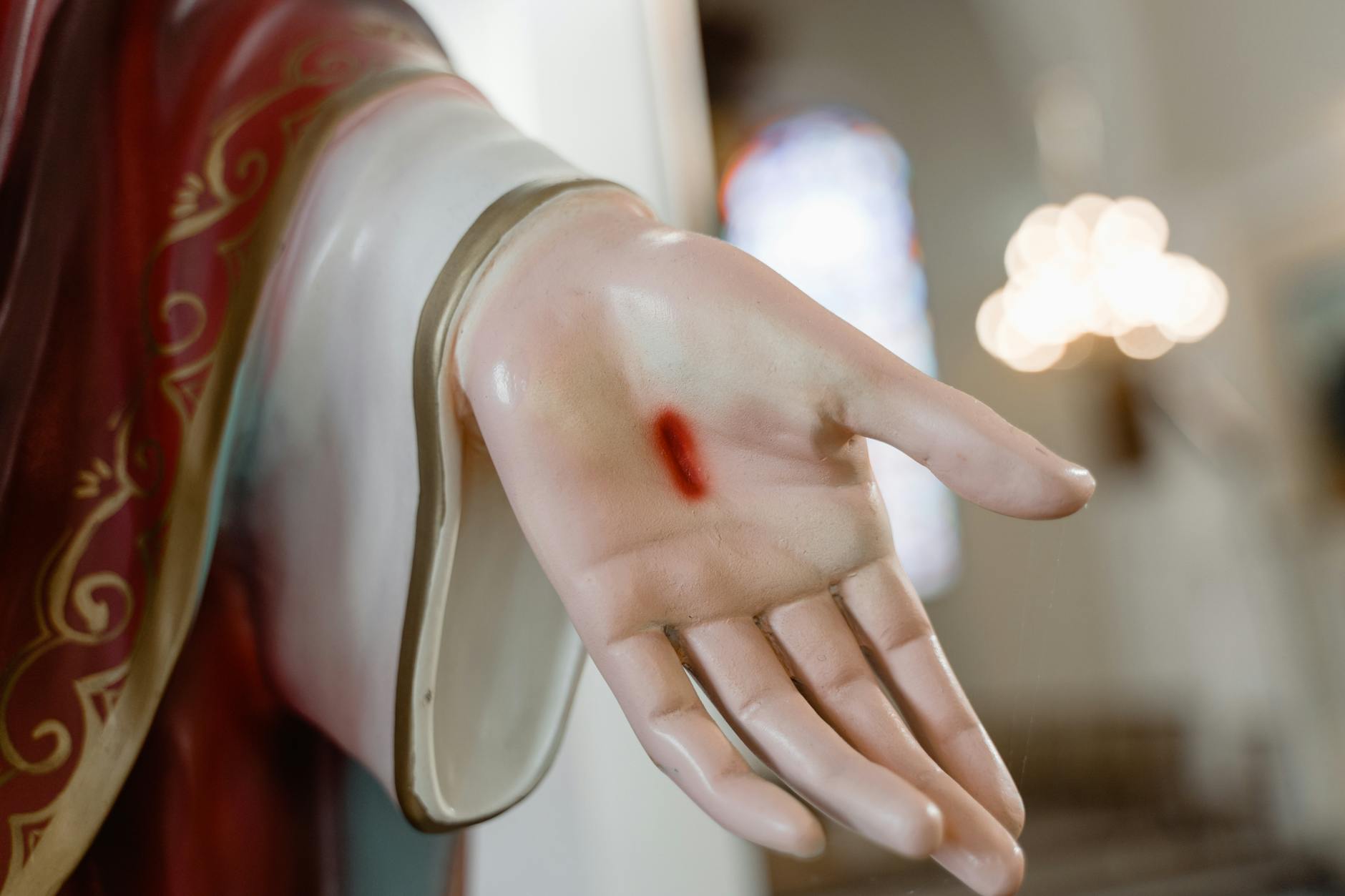
This basic technique of using the HANDS of God (Jesus) to defend one’s belief in the deity of Jesus is quite simple and easy to speak to. The same types of arguments can be progressed through the rest of the acronym to show scriptures from the Old Testament on the Attributes of God. Then you can match those with verses in the New Testament that show the same attribute of God in Jesus. The key thing here is that studying and memorization of the scriptures is principal. Many who do not believe on Jesus prey on the ignorance and unpreparedness of the believer. They exploit the believers lack of knowledge in their own bible and cultural history. To tell people about the Honors, Attributes, Names, Deeds, and Seat of God, you must know God and the honor that is due him. You must know what the attributes of God are. You need to be acquainted with the names and titles of God are and what they mean. You should also recognize the authority that comes with the seat of God. An ambassador cannot represent or speak to things that they do not know. Modern Christians are not the only ones who have been deceived because of their ignorance.
From a historical viewpoint it is true that some early people who called themselves Christians did not believe the same things concerning Jesus. The apostle Paul wrote the Galatians concerning these false gospels.
I marvel that ye are so soon removed from him that called you into the grace of Christ unto another gospel: Which is not another; but there be some that trouble you, and would pervert the gospel of Christ. But though we, or an angel from heaven, preach any other gospel unto you than that which we have preached unto you, let him be accursed. As we said before, so say I now again, If any man preach any other gospel unto you than that ye have received, let him be accursed. (Galatians 1:6-9)
Paul said, “so soon removed”, he had recently taught the Galatians the truths about the Gospel of Jesus Christ and the Kingdom of God and could not understand how they could listen to lies presented by others. These false teachers had no apostleship, and no connections with the true church. We suffer from the same issues today. Kieth Green, a Christian evangelist and musician, was fond of saying, “Going to church doesn’t make you a Christian any more than going to Mac Donald’s makes you a hamburger.” Jesus said, “Not every one that saith unto me, Lord, Lord, shall enter into the kingdom of heaven;…”(Matthew 7:21a) From the very 1st Century there were early departures from the true doctrines of the church that included Arianism, Adoptionism, and Docetism. However, this does not mean that the church did not believe that Jesus was the Son of God. Historical evidence for the belief in Jesus Christ’s divinity comes from both biblical sources and early Christian writings, as well as from the actions and writings of the early church, and writings of those who witnessed the church in action. These sources demonstrate that the belief in Jesus’ divinity was not a later development but was present from the earliest days of Christianity. The gospels and even the earliest books of the New Testament attest to Jesus as being worshiped and honored as the Son of God.
The apostle Paul was an avid evangelist who continued to stay in touch with the churches of Asia through letters that taught the doctrines of the church in his absence. His earliest writings of 1 Thessalonians are believed to have been between 49-51 A.D. This puts them within 15 years of the ascension of Jesus Christ into heaven. Prior to the writing of these letters Paul had been spreading the preaching of Jesus being the Son of God throughout the region. He had been to Antioch Syria, Cyprus, Perga, Pisidian Antioch, Iconium, Lustra, Derbe, Pamphylia, and even to Jerusalem by this time, suffering for the cause of the deity of Jesus Christ. Paul had been starved, beaten, stoned, left for dead all for the gospel of Jesus. Surely, he would not have suffered all of this if he did not fully believe in Jesus as God.
In 1st Thessalonians Paul opens with, “…unto the church of the Thessalonians which is in God the Father and in the Lord Jesus Christ: Grace be unto you, and peace, from God our Father, and the Lord Jesus Christ.”, Thus he equates Jesus with God. Later in chapter 3 Paul claims that Jesus is God again, “Now God himself and our Father, and our Lord Jesus Christ, direct our way unto you.” (1 Thessalonians 3:11). Colossians is another letter from Paul written from 60-62 AD where Paul says that Jesus is the Creator (God) who created everything. “For by him were all things created, that are in heaven, and that are in earth, visible and invisible, whether they be thrones, or dominions, or principalities, or powers: all things were created by him, and for him: And he is before all things, and by him all things consist.” (Colossians 1:16-17).
Paul, according to the book of Acts, was originally a zealous persecutor of the church. He was a devout Jew from a sect called the Pharisees. These members of the Pharisees were looked upon with great respect in the Jewish community because they were distinguished by their strict observance of the traditional (Oral) law and the written law (Torah). He was a well-educated man, from a proud tribe of Isreal, in the original line of King Saul. Perhaps even named after him. Saul (Paul in Greek) caused great fear in the Chrisitan, so much that they fled Jerusalem. Then he was given special papers of authority to hunt down and imprison Christians so that they could be brought back for trial. Paul thought that every Christian should be stoned to death for worshiping Jesus as God. Then he met the risen Jesus on the road. This meeting with Jesus changed what Paul believed concerning the deity of Jesus.
Paul, an early convert who at first did not believe in Jesus, came to believe that Jesus is the very God of Genesis who created and who sustains everything. This was written and distributed prior to the writing of the Gospel of John. In the book of Acts (9:20) it tells us that when Paul was converted, “straightway he preached Christ in the synagogues, that he is the Son of God.”. This means from the very start, the church taught that Jesus is the Son of God. Within a matter of months, Paul was persecuting Christians and having them stoned to death because they believed in Jesus as God, and then he himself began to teach the same thing after he met Jesus, as God.
In looking at extra biblical references of believers who believed that Jesus is the Son of God prior to the Nicene creed we can look at the writings of Clement of Alexandria (AD 150-215), Tertullian (AD 150-225), Polycarp (AD 69-155), and Ignatius of Antioch (AD 50-117). These are all church fathers who believed in the deity of Jesus Christ.
In 93 AD Josephus, an early Jewish Historian, published the Jewish Antiquities. In a portion of this known as The Tesitmonium Flavianum, Josephus records what many believe is a testimony about Jesus Christ and it shows that 1st Century Christians believed that Jesus was the Messiah and Son of God.
About this time there lived Jesus, a wise man, if indeed one ought to call him a man. For he was one who performed surprising deeds and was a teacher of such people as accept the truth gladly. He won over many Jews and many of the Greeks. He was the Messiah. And when, upon the accusation of the principal men among us, Pilate had condemned him to a cross, those who had first come to love him did not cease. He appeared to them spending a third day restored to life, for the prophets of God had foretold these things and a thousand other marvels about him. And the tribe of the Christians, so called after him, has still to this day not disappeared.- Jewish Antiquities, 18.3.3 §63(Based on the translation of Louis H. Feldman, The Loeb Classical Library.)
This and other comments made by Josephus, do not say that Josephus believed that Jesus was the Christ of the Son of God, but they do demonstrate that early Christians did believe in the deity of Jesus from the very beginning of Church history. Not only that it shows that they believed that Jesus was the fulfillment of prophecy concerning the Messiah, the Son of God. These letters are a small sampling of many more. There are also archeological finds that support the early belief the of the church that Jesus is God.
In the area of Megiddo Prison, a discovery was made in 2005. This discovery has been dubbed as the greatest find since the Dead Sea Scrolls. It is called the Megiddo Mosaic and dates to the early third century A. D. This site is one of the earliest found Christian worship centers in northern Israel. In this mosaic at this location is the earliest known inscription to identify Jesus as God. The inscription simply states it is to the “God Jesus Christ”.
Archeology can also refute the claims of the authenticity and reliability of the Gospel of John. Papyrus 52 (P52) is a witness discovered in Egypt which dates to the early mid-second century A. D.; approximately 125 A.D. This is long before the Nicene Creed. P52 is the oldest surviving manuscript evidence of any canonical text of the Christians. It contains on one side the verses of John 18:31-33 and on the other side, John 18:37-38. In these verses Jesus is on trial before Pilot. Jesus answers Pilots inquiries by stating that he “came into the world for this purpose”. He is fulfilling the will of the Father, he existed prior to his becoming a man. He is the truth of God. He came for this trial, this condemnation, this death on the cross, this resurrection.
When Jesus was asked what was his sign to show that he was the Messiah, he said, “An evil and adulterous generation seeketh after a sign; and there shall no sign be given to it, but the sign of the prophet Jonas:” (Matthew 12:39) Jesus told them that as Jonah was in the belly of the fish for three days and nights, so would the Son of Man (God) be in the heart of the earth (the grave) for three days and three nights. He also told them that if you destroy this temple, he will restore it in three days; meaning the temple of his body. The Apostle Peter recorded the importance of the resurrection in 1 Peter 1:3, “Blessed be the God and Father of our Lord Jesus Christ, which according to his abundant mercy hath begotten us again unto a lively hope by the resurrection of Jesus Christ from the dead.”
Paul reinforces this belief in Jesus being revealed as God and the hope that exists because of the resurrection many times. Once such reassurance is this, “And he is the head of the body, the church: who is the beginning, the firstborn from the dead; that in all things he might have the preeminence.” (Colossians 1:18) As if Paul had to confront the same questions in the past, as are asked today, he wrote the Romans from 56-58 A.D. this testimony,
Paul, a servant of Jesus Christ, called to be an apostle, separated unto the gospel of God, (Which he had promised afore by his prophets in the holy scriptures,) Concerning his Son Jesus Christ our Lord, which was made of the seed of David according to the flesh; And declared to be the Son of God with power, according to the spirit of holiness, by the resurrection from the dead: (Romans 1:1-4)
Paul is very clear about his office and relation to Jesus. He is his servant, his apostle. He was sanctified by God to share his gospel, the gospel of Jesus Christ. He is also clear that the gospel of Jesus that includes that he is the Son of God come in the flesh, crucified, buried, and resurrected was all foretold in the scriptures of what we call the Old Testament. Paul believes these things and these are very evidently things that he has been teaching from the beginning.
To preach a false gospel and Christ is to be damned (Galatians 1:8-9) If your Christology is not correct them you are not saved. Salvation comes from believing in Jesus as Christ and as the Son of God and the shedding of his blood for the atonement of sin. John 20:31 states, But these are written, that ye might believe that Jesus is the Christ, the Son of God; and that believing ye might have life through his name. This is why the Muslim seeks to remove the Gospel of John from the discussion of the deity of Christ. Because it is written that you might believe, and in believing, you have eternal life. Bless the Lord that God has recorded the truth in other parts of scripture, in historical testimonies, in archaeology, and in the hearts of men who believe.
The Apostle Peter recorded, “Simon Peter, a servant and an apostle of Jesus Christ, to them that have obtained like precious faith with us through the righteousness of God and our Saviour Jesus Christ:” (2 Peter 1:1). Clear words from Peter, a 1st hand witness to Jesus’ ministry, confirming his belief that Jesus is God and Savior. Paul, passed down to a young pastor Titus, “Looking for that blessed hope, and the glorious appearing of the great God and our Saviour Jesus Christ;” (Titus 2:13). Paul wanted to confirm the faith of this pastor and teacher that Jesus is God and Savoir.
The Deity of Jesus Christ is defensible. It is a true testimony that is given by the Holy Apostles from before Jesus was crucified. It is a true testimony given by the earliest of Jesus’ disciples as recorded in the Acts of the Apostles and the writings of John, Matthew, Peter, Mark, James, Jude, and Paul. It was believed and taught by the next generation of Pastors like Timothy and Titus. It was taught by Apollos, Percilla, and many other teachers within the first 10 years of the resurrection of Jesus Christ. Roman officials wrote letters back and forth on how to deal with these kindhearted worshipers of Jesus Christ, who worshiped him as the only God. Archeology shows shrines over a thousand years old that are dedicated to the God Jesus. Then there are the hundreds of written witnesses from the forefathers of the early church, like Clement of Alexandria, Tertullian, Polycarp, and Ignatius of Antioch.
There are those who will refuse to see the truth. Their hearts have been hardened, and their eyes have been blinded. The truth falls upon deaf ears. But to those who are seeking the truth. The truth is Jesus is the Christ, the anointed of God, who is the Word of God, the Lamb of God who was sent into the world to redeem the world. He is God incarnate. Those who want to know God and are willing to hear the truth, and have faith in God, will be rewarded. “But without faith it is impossible to please him: for he that cometh to God must believe that he is, and that he is a rewarder of them that diligently seek him.” (Hebrews 11:6). There comes a point where one has to make a choice to believe the truth, or to reject it. Jesus saith unto him, I am the way, the truth, and the life: no man cometh unto the Father, but by me. (John 14:6)
Works Cited
Bibleical Archaeology Society. earliest-new-testament-fragment. 1975. https://library.biblicalarchaeology.org/sidebar/earliest-new-testament-fragment/ (accessed September 11, 2025).
Bowman, Robert M Jr.., and J Ed Komoszewski. Putting Jesus in His Place: The Case for the Deity of Christ. Kregel Publications, 2007.
Ehrman, Bart D. How Jesus Became God: The Exaltation of a Jewish Preache From Galilee. First. Harper Collins, 2014.
Jesus-Islam.org. Jesus-Islam » Jesus Christ » Do the Gospels teach that Jesus is God? 2025. https://jesus-islam.org/questions/evangiles-enseignent-jesus-dieu/.
Josephus.org. Tesimonium. 1995. https://josephus.org/testimonium.htm.
King James Bible Online. King James Bible Online. Vers. King James Version:
Cambridge Edition 1769. 2025. http://www.kingjamesbibleonline.org (accessed 09 05, 2025).
Museum of the Bible. The Megido Mosaic Foundations of Faith. 2025.
https://www.museumofthebible.org/exhibits/megiddo.
Quran.Foundation. https://quran.com/5/72. 2025. https://quran.com/5/72.
 The Way of Christ Ministries